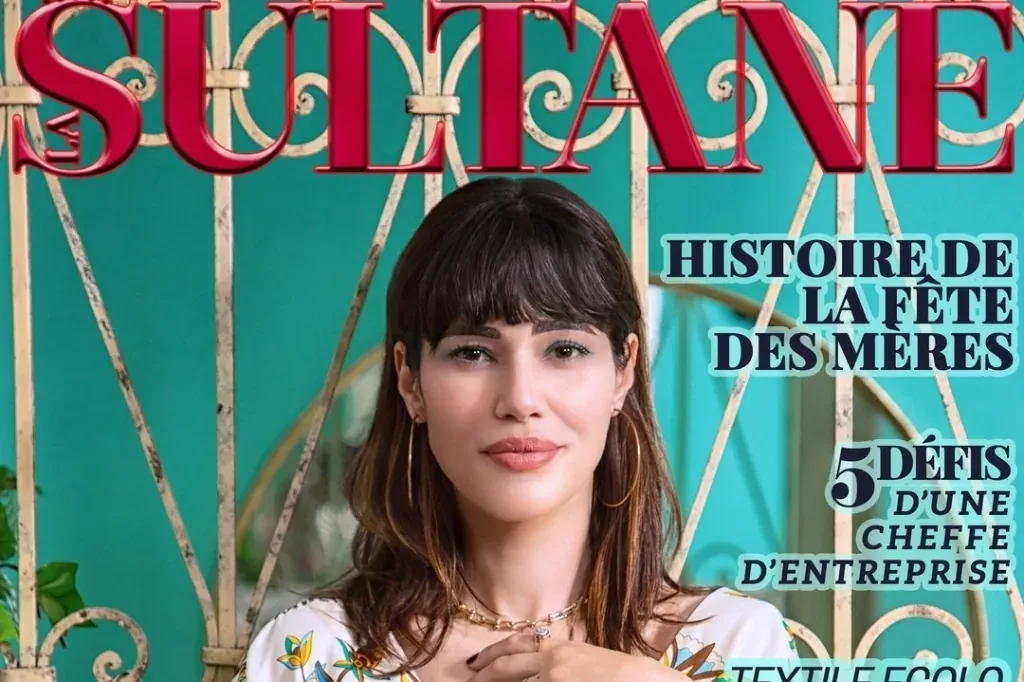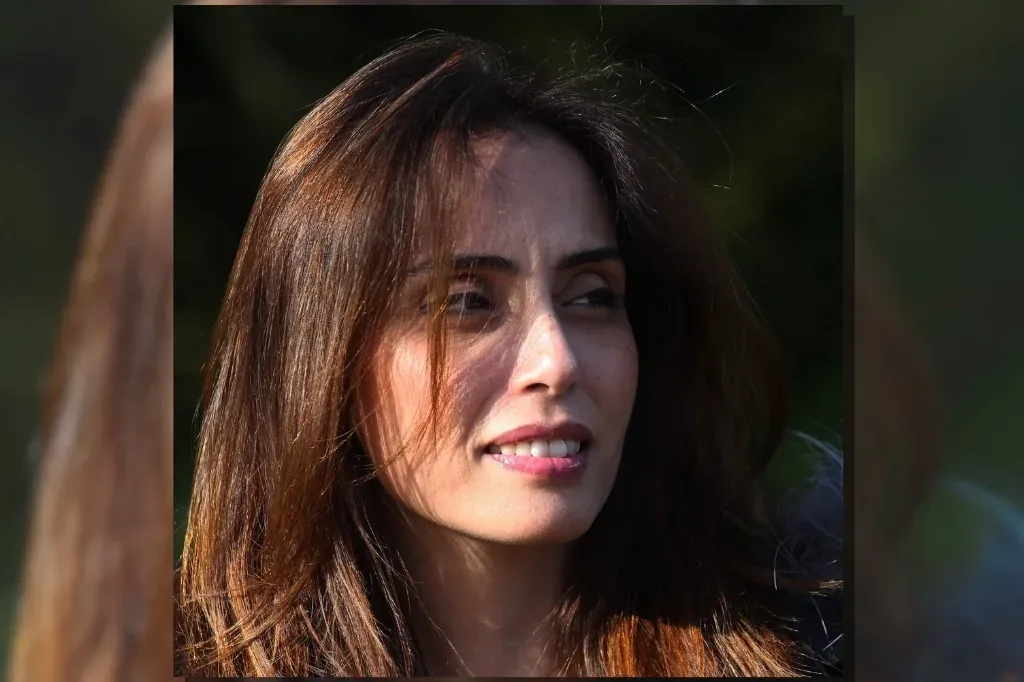
Manel Gharbi: A Remarkable Woman in the Service of Children
Manel Gharbi inspires admiration through her exemplary struggle. Her resilience, her courage in the face of adversity and the sense of sharing born of her own experience make her a remarkable woman. Vice-president of the Maram Solidarité association, she wages a relentless fight against cancer in children and adolescents.
Tell us a little about yourself
Manel Gharbi: A very difficult question! Gharbi Manel, a Tunisian woman, daughter, sister, wife, cousin, friend, niece...
My studies were in the field of finance. My professional career, in technology and telecommunications. I am currently vice-president of the Maram Solidarité association: an association fighting cancer in children and adolescents.
I am taking certified training in NLP (neuro-linguistic programming). I will probably enrol for an HR Business Partner certification and a diploma in business English. Maybe next year (the dream): an MBA in Health.
The Origin of a Struggle
My struggle began when I discovered that my two-year-old daughter had a metastatic neuroblastoma (a childhood cancer) after 6 false diagnoses. Six different doctors, between paediatricians and specialists — bearing in mind that the last one had operated on her for a condition that did not exist in her body.
A long journey began to raise roughly 300,000 euros to fund a paediatric autologous transplant that could not be carried out in Tunisia and was not covered by social security. Hell opened its doors and never closed them again!
The association was created mainly to secure the care Maram needed abroad. Then, after her death on 8 October 2014, it carried on to help these children and their families.
The Association's Achievements
We have provided care both abroad and in Tunisia. Psychological and financial support. We have made dreams come true. We have helped children return to the path of secondary school or university. We have refurbished paediatric oncology units.
Our pride was to have devised a strategy and put it into practice to carry out paediatric autologous transplants in Tunisia, in collaboration with Tunisian doctors. To that end, we arranged for some of them to train abroad, built and refurbished 1,000 m² at the Bone Marrow Transplant Centre, and bought the stem-cell collection machine.
Tunisia has now reached 12 autologous transplants (in 2 years, which is magnificent)!
Our association managed to change Article 44 of the Finance Act in 2018 (the only association to have done so since independence).
Dar Maram is a shelter for children and their mothers who are receiving care in the capital and have nowhere to stay.
| Achievement | Detail |
|---|---|
| Struggle triggered by | A metastatic neuroblastoma diagnosed in her two-year-old daughter, after 6 false diagnoses |
| Funds raised | About 300,000 euros for a paediatric autologous transplant abroad, impossible to carry out in Tunisia |
| Association created | Maram Solidarité, in tribute to Maram, who died on 8 October 2014 |
| Paediatric autologous transplants in Tunisia | 12 carried out in 2 years, with Tunisian doctors trained abroad |
| Bone Marrow Transplant Centre | 1,000 m² built and renovated; stem-cell collection machine purchased |
| Legal framework | Article 44 of the Finance Act amended in 2018 |
| New project | Dar Maram, a shelter for children and their mothers who come to the capital for treatment |
Dreams and Plans for the Future
My ultimate dream remains to build a paediatric oncology centre with a 100% Tunisian medical staff and to add a stone to the edifice of paediatric cancer research in Tunisia.
The simplest wishes for 2021: digital schooling integrated into hospitals, a support centre for parents whose children are affected by, or have died of, cancer and rare diseases, and finally to set up a strategy to bring our support to families who have little angels in palliative care.
What is the one thing you would do now if you had different resources? How do you see yourself in 5 years' time?
Manel Gharbi: On a universal scale, in a dream world, with the help of a magic wand, I would stop wars and find cures for every illness (some illnesses do not need medication to be healed — a single feeling is enough, like loneliness or sadness...), so that we could live in peace, harmony, love and serenity.
A Revolutionary Vision for Tunisia
In the real world, in Tunisia, the entire education system: I would make the arts and reading compulsory from nursery school onwards, and intellectual and creative games would become compulsory subjects.
From the age of 7: a subject on self-esteem and respect for others, and philosophy. At the ages of 8, 9 and 10: an introduction to creating computer software and to technological development, the history of religions and beliefs, sex education...
With a well-balanced child who is passionate about what they do and creative, you can develop an entire nation.
Then I would tackle the health system. First, I would completely overhaul the way patients are looked after. I would build hospitals worthy of receiving the sick, along with qualified staff.
But I would also develop research and grant the right to clinical trials for certain orphan and hopeless conditions.
I would put an enormous budget into technological development, medical research, art and culture. I would invent a ministry of happiness. I would develop other specialities I cannot talk about.
You refused to stand by with your arms folded. You decided to take on a hard struggle head-on. Tell us about the challenges you face day to day?
Manel Gharbi: How can I describe the tragedy a family lives through from the moment the illness is announced? I prefer to focus on the challenges families face rather than on my own.
The Ordeal of Families
The Collapse of Everyday Life
Everyone collapses. Future plans and one's whole outlook on life are turned upside down. In Tunisia, we have made no progress at all when it comes to helping these families. Doctors do their best with the limited means they have. But there is no real social and psychological support: neither for the child nor for the family.
A trauma, a chasm opening beneath their feet. Parents have no time to take in the terrible news before they find themselves facing the start of a heavy, exhausting course of treatment. The vocabulary of everyday life changes. You go from breakfast, travel, work, stress, going out, to chemotherapy, radiotherapy, surgery, scintigraphy, palliative care...
Systemic Obstacles
And the fight has not really begun: faced with the CNAM's refusals to cover certain therapies, operations, drugs, membrane implants...
Children are deprived of their schooling. Many teenagers end up on the street after a gruelling course of treatment lasting between 1 and 3 years, with no training, no education... Doctors battle against the lack of continuing education. The shortage of medicines and imaging equipment. The lack of transport for the mothers. Families with no financial resources, no housing for the child...
A child with cancer = the mother accompanying them every day throughout the entire course of treatment.
Tell us about the people around you and the encounters you have had. Whom do you admire most?
Manel Gharbi: My daily life is very simple: genetically speaking, I am the mother of two children. Emotionally, and in terms of my charity work, I am the mother of a good hundred little angels. I am surrounded above all by my family and close friends, and that is what matters most to me. As for the people I have met, I prefer to keep them to myself, because it enriches no one but me.
What matters most to me remains meeting the gaze of a child, their strength, their determination, which fulfils and carries me away more than anything else.
Inspiring Figures
I have no idol. I consider that we do not share the same circumstances, the same era. No one holds the truth. No biography or autobiography is ever (entirely objective) neutral, nor reflects a life exactly as it was really lived — so there are hidden parts or half-truths, and then everything is relative, and a narrator can never be neutral.
That said, I admire Nelson Mandela, Marie Curie, Rosalind Franklin, Gandhi, Bill Gates, Harland David Sanders, Robert Sternberg, Gisèle Halimi...
What do you take away from your journey? And what would you like people to remember about you?
Manel Gharbi: As for my human journey, I am still in the thick of the action, so I cannot see things clearly or objectively! But I would say that the impossible does not exist, and that you are the sole creator of your own story, by holding on to your dreams and trying to make them real.
A Philosophy of Life
The Impossible Does Not Exist
Life is a struggle at every moment, in the smallest details, and it would be wonderful to live that struggle with great passion. So never give up. To your very last breath, hold on to your challenges.
And as Churchill said: "Never give up, never, never, never, never!" W. Churchill
The second thing: after every "death", you can help "a life" or several lives. After every tragedy, you create a glory.
Accepting Our Humanity
What I would like people to remember about me: that I am only a human being, that I have the right to imperfection, to tiredness, to emotions.
That passion, tenderness and faith are the main wellsprings of life. To accept and help both ourselves and others, whatever our differences. To live out our follies to the full, as long as they harm no one... And that a sincere hug can change a world.
What is your favourite book? The one you loved this year? The one you recommend to those around you, without the slightest hesitation?
Manel Gharbi: It would be a real shame to name just one! A ritual I have set up, a goal I set myself every month. I MUST read between 4 and 8 books: it depends on the style/genre of writing, the author's pen, and my mood.
For this first half of the year, I would say: "Wabi Sabi: l'art de l'imperfection" (Wabi Sabi: The Art of Imperfection) by Thomas Navarro, "Homo Deus: A Brief History of Tomorrow" by Yuval Noah Harari, "Sufis of Andalusia" by Ibn Arabi and "Waiting for the Wild Beasts to Vote" by Ahmadou Kourouma.
If you had one message to pass on and wanted it heard everywhere, what would it be?
Manel Gharbi: Invest in childhood and youth. In art and culture. Technology and development. In health and research.
A Universal Message of Love
Do Not Judge Without Understanding
Every heart and soul has its hidden sadness and loneliness that even those closest do not know about. So we have no right to judge a person without walking in their shoes, putting ourselves in their skin and living through their past.
We have only a partial, surface knowledge of a human being. Any judgement would be distorted and inadequate. And it is because "one sees clearly only with the heart" that we should love one another! Let us share a present moment in which we are unique. Each for the other, let us love one another with (a) "pure love with no other purpose, love for love's sake, without possession and without jealousy."
The Art of Sharing
Let us be happiness for someone, even with a simple smile.
Relentless perseverance and hard work eventually pay off. Miracles do exist and can change a destiny.
The ultimate happiness comes down to sharing — above all a sincere moment, a helping hand. We will not drive a thousand cars at once. We will not live in a thousand palaces at once.
And I will end with a quote from Imam Chafii: "Never refuse to reach out to help someone when you have the means to do so. For happiness does not last. And thank Allah for having placed you where people need you, and not in need yourself." Imam Chafii
In the future, how do you see your life?
Manel Gharbi: In 20 years' time, if I survive, I see myself in a chalet on a mountain with my vegetable gardens, the visitors to my restaurant (I love cooking and sharing tender moments amid bursts of laughter). A riding, martial arts and shooting school for children.
A little boat for a trip out to sea with my friends and lots and lots and lots of little children.
THANK YOU.