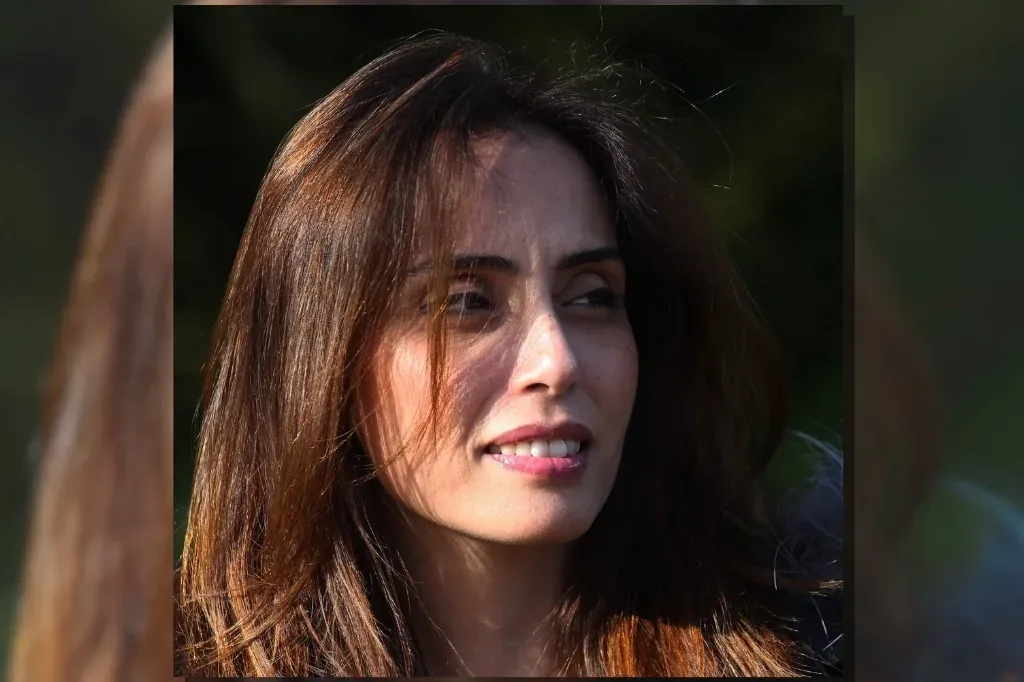
Houda Cherif, you are a woman with an exemplary career and yet a very great discretion. A communications specialist, a mediator and a former adviser to the President of the ARP (the Assembly of the Representatives of the People), you agreed to take part in a series of interviews conducted for La Sultane. We thank you for it.
1- Houda Cherif, tell us a little more about yourself.
Houda Cherif: First of all, I want to make clear that everything I express in this interview, as positions or opinions, represents nobody but myself.
Who am I? I am a Mother with a capital M. While every role we occupy in a lifetime remains temporary, the role of mother is there for ever. Next, I am — or aspire to be — a Citizen with a capital C. I love and revere respect for others and for those around me. I am a Teacher with a capital T. Even though I no longer teach. I deeply believe that teaching is not a job. It is a state of mind that you can never give up by giving up the profession. I am a Mediator with a capital M. I believe that this new technique for resolving disputes is our only salvation. In a world that has closed in on itself, forgetting the importance of dialogue and communication.
I am also a dreamer who, after living very far from her country for many years, alternating between Tokyo, Dubai, London and Casablanca, decided to come home and found herself on 14 January 2011 outside the Ministry of the Interior shouting "dégage" ("get out") with the greatest vehemence and certainty I have ever felt. We were as if in a trance.
That day, I thought we were going to turn Tunisia into the Singapore of Africa. And I still believe it was possible. So I decided to get involved in politics and threw myself into the Afek Tounes adventure, of which I am a co-founder. A genuinely fine political project, through which I hoped to change the image of politics from something unhealthy and full of scheming into a politics filled with the will to do well by one's country. A politics at the service of the people, not the other way round.
That brief spell in the senior bodies of Afek and then of the Joumhouri — that great party of the centre which we wanted to bring together all of Tunisia's progressive political forces at the time — allowed me not only to live political commitment, to see how difficult it is to practise it and to reach the conclusion that politics is not made for everyone. But also to observe that politicians are sometimes led to abandon their ideals in order to go on belonging to their institutions.
It is a whole world that I chose to leave one summer evening in 2013. By resigning from the presidency of the Comité des Sages (Committee of Elders) and from all the bodies of the Joumhouri, which was sadly falling to pieces. For various reasons. Within a Tunisia living under the shock of a double political assassination. That of the late Belaid in February and the late Brahmi in July. And so a chapter about which I could write an entire book was turned.
In one of his famous quotations, Churchill says:
As for me, I left politics in order to fight for my convictions.
In my resignation letter, I made clear that I was leaving party work. But not political work, which in fact touches every aspect of life. In truth, we do not realise it. But we do politics all day long. Through our thoughts, our discussions, our opinions, our decisions, our achievements...
On leaving the party, I decided to help women regain more confidence in themselves. To want more than a small walk-on part in parties and other institutions that do not give them the place they deserve.
Behind this idea was an observation that holds true for almost every political party. Every trade union, board of directors and various decision-making body here at home. And even, surprisingly, elsewhere in the highly developed world. Women tend to leave the floor and the speaking to men. As Sheryl Sandberg's "Lean In" describes. So the phenomenon is universal.
What had to be done was to talk with them. To boost their self-esteem and make them aware of those simple beliefs anchored deep within them since birth. This cultural conditioning is very hard to undo, not only among men but unfortunately among some women too. Surrounded by convinced and convincing women, I fought to encourage female talent to break the glass ceiling and to dislodge the conversation about women from the fields classically assigned to them, such as family and childhood. Women are everywhere and succeed everywhere too, so why not talk about it.
The Connecting Group, founded that same year, aimed to bring together women of different profiles, from various fields, in order to lead them towards acquiring the tools of good governance. Through the consolidation of their capacities, their visibility, and lobbying to secure their placement in positions of high responsibility. We worked a great deal. It is true that we were very discreet. But I can say that with few resources, we achieved great results. And I am proud of this experience, which taught me a lot about the role of civil society.
My time at Parliament, within the office of President Mohamed Ennaceur, was an excellent lesson in politics. Rubbing shoulders daily with a great statesman like Mohamed Ennaceur and watching him practise politics in the Bourguiba manner, which unites strength and benevolence, is a privilege. The Assembly was in itself a great lesson for me. In a very confined space I was able to find a Tunisia in miniature. With its politicians of every ideology, its civil society, its administration, its media, its international organisations. Everything was there in the same place.
| Milestone | Stage |
|---|---|
| 14 January 2011 | Outside the Ministry of the Interior, she decides to get involved in politics. |
| After 2011 | Co-founder of Afek Tounes, then a member of the senior bodies of the Joumhouri. |
| Summer 2013 | Resignation from the presidency of the Comité des Sages and from all the bodies of the Joumhouri. |
| 2013 | Founding of the Connecting Group, for good governance and women's leadership. |
2- Houda Cherif, what would you like to change around you?
Houda Cherif: If I have one wish today, it would be to rebuild public trust in political powers and in the media. I have the impression that we did not manage it, not for lack of goodwill, but rather for lack of any reference to democratic principles in our history. We had not lived the democratic experience before. What we had lived, rather, was the experience of founding the institutions of a State. Today we are responsible for preserving what has been built and for constructing a democratic model that future generations can follow and improve. What is happening today is genuinely worrying for the future, but that is not specific to Tunisia. The whole world is going through a crisis of governance.
With COVID-19, we realised how far populations, beyond their differences, share the same worries and the same challenges. We finally understood that we share a vast common space, that globalisation has made us dependent on one another despite the distances, that the differences between populations were beginning to dissolve without those populations even having to step outside their front doors. At the same time, we also realised that Leadership is in crisis on a global scale. We also realised that the malaise attached to existing education systems is not unique to Tunisia.
Indeed, if I had the means to change something around me, I would begin with Education, which in my view is truly the sinew of every war; political, economic, social and cultural. Everything is the fruit of the Education we receive. Without exception. All the good just as much as the bad that we live through.
If we pay attention to the origin of all our small and not-so-small misfortunes, we can clearly see that they are due to an alarming deterioration of our education system
Rethinking education must be among the most pressing priorities of our political powers today.
And he is quite right. Education leaves its mark on societies in both directions.
I would very much like to see an education that places the pupil at the centre of an innovative education system which, while instilling respect for knowledge, respects their pace of learning. I would very much like to see an education that favours learning through art and culture and that insists on the value of dialogue and empathy. An education that anticipates the dangers of an era that no longer controls the flow of information, which seems to be invading our societies like an enormous tsunami and which our children receive without the slightest protection to let them come through unharmed.
We need a revolution in education. Everything has to be redone. In the 21st century, we simply cannot reason the way our parents or grandparents did at the start of the 20th. We cannot maintain a format and syllabuses that are far from being in step with the demands and the particularities of our societies today.
Pupils are bored, pupils rebel, pupils drop out of school in their thousands every year. It is not only because of their socio-economic conditions, but also and above all because school has become a gloomy place where instruction is given without education, where knowledge is delivered without nourishing in the child a love of learning.
A second thing I would like to put in place, if I had the means to do so, is the strict application of the law. Just like education, the law is essential to any flourishing, since it provides peace and social cohesion. We cannot live together if we do not set rules that we respect, in order to ensure a minimum of organisation in our lives and to provide well-being for all. Only the law can guarantee a coexistence governed by respect for others and for the environment. The Nordic model is the best example of this. It is not for nothing that they are among the happiest populations in the world. They have understood perfectly well that laws were not put in place to harm rights or reduce freedoms. They are indeed there to enforce those rights and freedoms, and even to preserve and strengthen them.
3- Houda Cherif, let us talk a little about the touchy subjects: equality, parity, equity. What do these words, these subjects, mean to you?
Houda Cherif: "I would have defended men's rights if I lived in a world of female domination..." A status I posted during the lockdown period, and which cost me plenty of small indignant messages from a few friends. That said, it is genuinely what I have always thought and will continue to think.
At the time, I was extremely indignant at the distinction that appeared in the notorious Decree 209, so I ran my own little campaign against that decree and, in confidence, I did not sleep all night, so shocked and shaken was I by it. In parallel I explained that I was far from being a hard-line feminist and that if I chose to defend the feminist cause, it is because we live in a world of male domination dictated not by men but, unfortunately, by an entire society.
A society conditioned since the dawn of time to make of woman a being born for a mission mapped out well in advance. A mission she never chose herself. In a strange world held hostage by an eternal man/woman division which appears to be easing in the so-called developed countries but which in reality remains firmly anchored in collective thinking, while changing in intensity and in form from one culture to another.
Read also: The duty to be a feminist
The distinction that this decree came close to putting in place was, to my mind, unjust, indeed absurd, for several reasons. First of all, because it was not constitutional and called into question the whole principle of equal opportunity between men and women. It also fed the stereotypes and preconceived ideas that we have been fighting for a long time. Equality between women and men presupposes that they are treated equally. Without any differentiation based on gender. That is the very essence of the Universal Declaration of Human Rights.
For me, it is a question of consistency. If we want there to be no discrimination in hiring, no differentiation in pay and career progression, if we want parity to be genuinely respected on boards of directors and at the level of the highest offices, then equality has to be applied at every level, even when it comes to the custody of children. Mindsets absolutely must change in this regard. All of us, as human beings, are capable of great love towards our offspring, whether we are men or women. So let us put an end to these beliefs imposed from outside.
In short, as I have already said above, everything runs through education. That is why the ministry of education ought to be considered a sovereign ministry. That is where the entire future of a nation is decided.
I must admit that we are going through a period in which rights, including women's rights, are under threat. But that is entirely normal in the midst of all this political instability. We simply have to show a great deal of vigilance. Women's rights encompass all the legislative provisions relating to women's civic, civil, political, socio-economic and professional rights. That also includes their right to control their own bodies.
So when we speak of women's rights, we are facing a whole arsenal that is hard to dismantle overnight. What really needs to be considered is rather the implementation of those rights. At the level of decision-making posts, for example, we are still very far from equality despite all the efforts. According to the OECD report, 35.8% of all functional posts in the Tunisian civil service (ministry secretary general / director general / director / deputy director / head of department) were held by women in 2016. However, women's presence varies clearly according to the level of responsibility and diminishes as the post rises: 40.2% for heads of department and 16.1% for secretary general posts. So we have our work cut out.
4- Tell us about the person you most admire, or the event that influenced you.
Houda Cherif: The person who marked me most in my life was my father. He is the one who taught me the meaning of Respect and the importance of living both with dignity and with humility. A man of law, he first raised me on the strict respect of the law. He required me to respect everyone I dealt with, without regard to their rank or social status. For him, everything had to be done properly. He could not bear things being done by halves. My mother, and even more my grandmother, always represented for me the model of the modern woman: open, cultivated and extremely kind and generous.
However, the woman who most marked the little girl I was, was the diva of the Radio, the late Alia Babbou, better known as Saida Alia, who taught me a great deal. She touched my soul to the point of leaving a piece of herself in me… Am Rached, Mouna, Jalila, Aida. That studio, studio 3 of what was then called the ERTT, and "Jannet el Atfel", are my entire childhood.
A childhood full of knowledge, curiosity, beautiful stories and beautiful music — songs by little ones, but also by great names such as Feirouz, Cheikh Limam, Wadii Essafi, Sabah Fakhri, Riahi, Jouini, the Malouf… I was there from the age of 3 until I was 14. I was there until the end — the sad end of a real 'paradise'. We learned everything by heart and sang in tune; with great names like Si Ouanes Kraiem, Si Mahmoud Thameri and Ali Gharbi, there was no way you could sing out of tune. I did "بريد الحصة" (the programme's mailbag), setting aside a moment each week to read the letters from our little listeners, answer them over the airwaves, and present the dedications… "نشيد الحصة".
Unforgettable years. We recorded on Friday afternoons and sometimes on Saturdays — I never tired of it. I waited impatiently for those days and never thought it could stop one day, end one day, disappear. I had the feeling it was eternal. But nothing is eternal. Allah yarhamhom Wi naamhom…
العب و امرح و اضحك و افرح
People of my generation are bound to remember that refrain.
5- Houda Cherif, you have rubbed shoulders with great figures of this country. What did you learn from them?
Houda Cherif: That is true. I did indeed rub shoulders with great figures of this country, notably from the political world, given my involvement over a short period that I consider very enriching.
Today, I am able to understand most of the political manoeuvres I see and hear about, because I had the opportunity to know most of the players.
You have to bear in mind that a politician is first of all a human being. With a whole system of values that guides his choices and his interests.
What I take away from my political spell is that we missed plenty of fine opportunities for this country. The animosities of the pre-2011 period followed us after 2011. And it is those animosities that led us to what we are living through today.
If there is one figure for whom I had a great deal of admiration, and with whom I had a fine friendship during that spell, it is certainly the great late Maya Jeribi. She fought against the Old Regime and went on fighting for a new Tunisia after 14 January.
An exceptional activist, an exceptional leader, an exceptional friend — a beautiful soul such as I have rarely known! I admired her eloquence, her intelligence, her hidden strength. Her courage and her optimism went beyond all limits and filled me with hope at a time when things were going badly. What a pity that the best leave so soon!
If I come back to the political crisis Tunisia is going through at the moment, I would say that it is intrinsically linked to a crisis of values. The failure to respect the ABC of democratic practice. Just like the failure to respect laws and procedures. That opens the door to opportunism on a grand scale and puts us in front of a spectacular situation of political horse-trading. A historic chaos that risks giving way to the most resistant rather than the most competent.
6- What do you take away from your journey? And what would you like people to remember about you?
Houda Cherif: I take away a great deal. I have always considered that each year after 14 January was the equivalent of about ten years of experience. I do not know where to begin. And here, I prefer to speak only of the positive, because I learned a lot from the people I came across. Whether on the political scene, in the media or in civil society. I saw a great deal of courage, of perseverance, of solidarity and of sincere love for this country.
What I want people to remember about me is that I did my best to serve my country. With a great deal of sincerity and rigour. To defend equality of opportunity. I continue to do so as best I can, every time the occasion arises. If I once gave up politics, it was because I had convictions that put me at odds with some people but to which I held and for which I wanted to fight away from the political institution, in order to take responsibility for my ideological choices. I also continue to follow the courageous path of all my friends who have chosen a political career, and I respect their perseverance in the midst of these unprecedented turbulences in the history of Tunisia.
7- Houda Cherif, what is your motto in life? What advice would you like to give to those around you? What message would you like to be heard?
Houda Cherif: My motto in life, as most of those close to me know, has always been consistency between what I think, what I say and what I do. It has clearly grown stronger with age, like any other flaw or quality, and I am particularly proud of it in spite of everything.
If I have one piece of advice to give, and one that would hold good in every area of life, it would be not to let your heart decide for you. That would mean letting emotions take over and take control of your decisions and the way you act. Likewise, be fair and do not try to please anyone, because that deprives you of the extreme joy of being yourself.
If I have one message to spread, it would be this:
We are all unique and we all have our flaws and our qualities. Let us love one another with our differences and enrich one another through our differences. Life is so short and everything is fleeting.