Sought after and rich in openings, computing draws the younger generations — a potential the Tunisian state has been slow to seize, unlike Netinfo, the school chaired by Samia Chelbi, university lecturer in computer engineering and co-founder of the first 3D school in North Africa. Since 1999 her school has trained tens of thousands of students from right across the African continent. She tells La Sultane how the gamble began, and what she sees ahead for young Tunisians.
Who is Samia Chelbi?
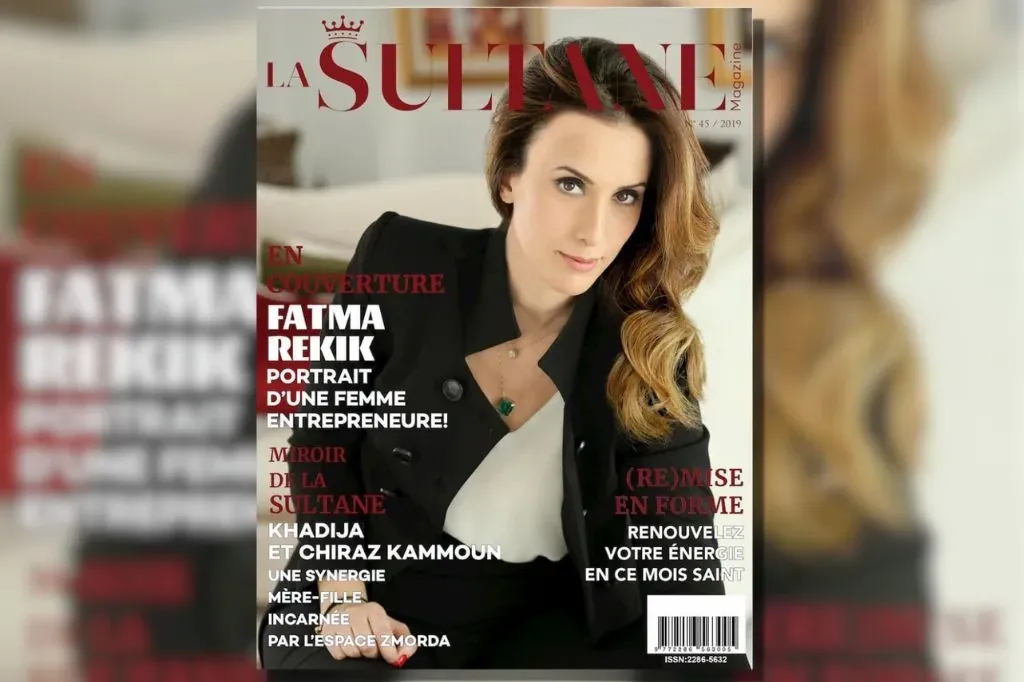
Much like the path of Fatma Rekik, portrait of a woman entrepreneur, Samia Chelbi teaches computer engineering at the ISET in Nabeul (Institut Supérieur des Études Technologiques). She also co-founded the first 3D school, Net Info, born in 1999 — “3D” here covering digital computer-generated imagery, the depth of stereoscopic and other relief images, and sometimes the simple stereophonic effect: a science few in Tunisia have yet mastered. In 2004 she launched Createk, the Tunisian association for creative technologies, which she chairs, carrying the Digi Art Living Lab Createk project, which she manages and which is certified by the European Network of Living Labs.
How did her passion for creative digital work begin?
A computer scientist by training, Samia Chelbi did a teaching placement in Canada in 1996, between Collège Limoilou and Université Laval. The multimedia department there opened the field to her — her supervising professor happened to be its head. She came home to Tunisia with her mind made up: she had to act for her country, in that blend of engineering and creativity she saw enormous promise in.
Why Nabeul for Tunisia’s first 3D school?
3D Net Info settled in Nabeul because Samia Chelbi and her team dreamed of a creative territory: Cap Bon struck them as an inspiring setting for a residency of artists making digital content. Setting it up brought no shortage of trouble, and the school is cited today as a benchmark in the field.
What were the main obstacles?
The hardest part was clearing entirely new ground, with no competitor and no local model to follow. From the start the school aimed at the whole of Africa, taking in Moroccan, Algerian, Cameroonian, Senegalese, Chadian, Ivorian and Mauritanian students alongside Europeans who came to train in Nabeul — a course built first of all around people. Samia Chelbi also points to the absence of support from the Tunisian state. She has been repeating the same message since 1991 — “this field has a future, come and see! It is the future of our generation” — and the 2011 revolution shook the landmarks, forcing everyone to work with a new state of mind.
Where does 3D Net Info stand today?
The school, born in Nabeul in 1999, has since opened a second campus in Tunis. It now claims more than 40,000 students and professionals trained, from more than 16 African countries, with an employability rate above 95% among its graduates. 3D Net Info is ISO 9001 certified, recognised by the Tunisian ministry of Vocational Training and Employment, and an academic partner of international players such as Autodesk and Epic Games — a marked advance on the roughly 7,000 professionals and students from 15 countries the school was training at the time of this interview.
What part can digital play against youth unemployment?
For Samia Chelbi, creating digital and creative content serves every field: industry, construction, architecture, entertainment, education, health, and mechanical and electrical engineering through virtual reality. She already sees fine work from Tunisian start-ups on networked and multiplayer games, on mobile and web games, and on virtual and augmented reality. But for Tunisian games to reach the PS4 or the Xbox one day, the state will have to build a real strategy, one capable of attracting the big international players such as Microsoft or Sony. She also calls for an urgent update of job profiles, faced with a revolution that dissolves the borders between design, big data, cloud and artificial intelligence, so that young Tunisian graduates do not end up without work.
Her message has not changed since the adventure began: back young people, connect them to the right networks, make them competitive on the international stage. Net Info has already trained Tunisian, Algerian, Moroccan, Senegalese, Togolese, Chadian, Burkinabè, Cameroonian, Congolese and Beninese students, alongside French and Belgian ones — a conviction that meets the wider stakes of an entrepreneurial culture turned towards innovation.