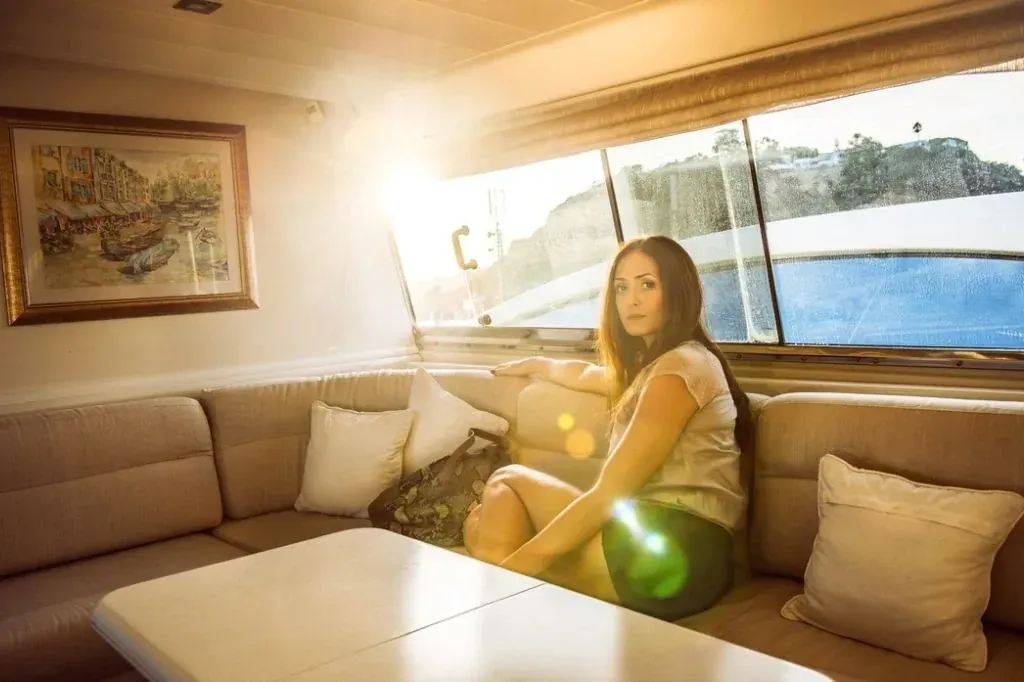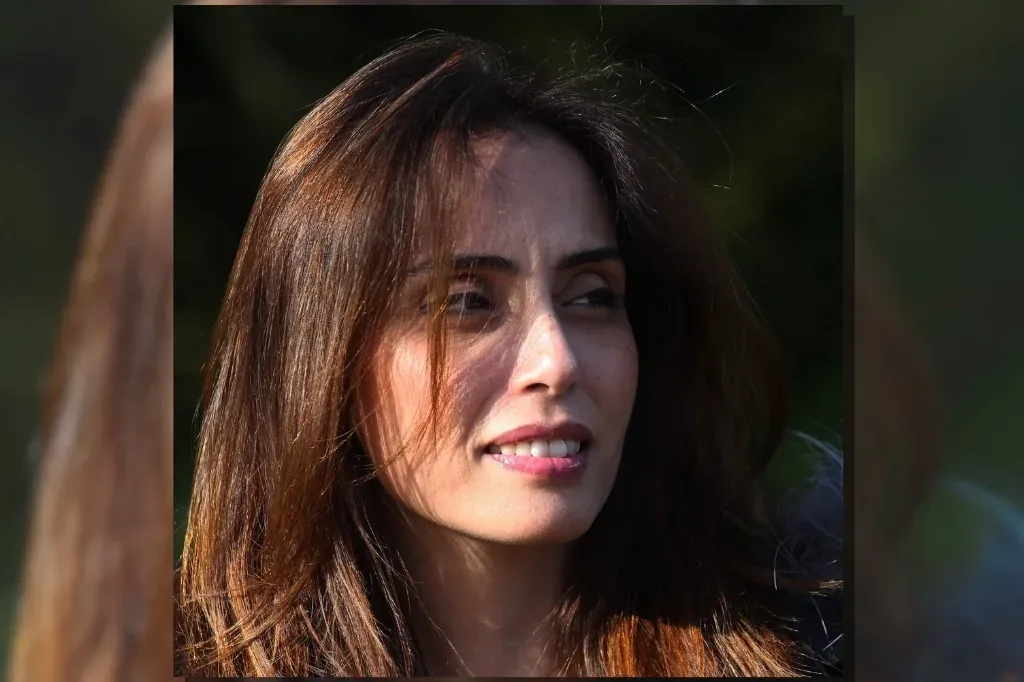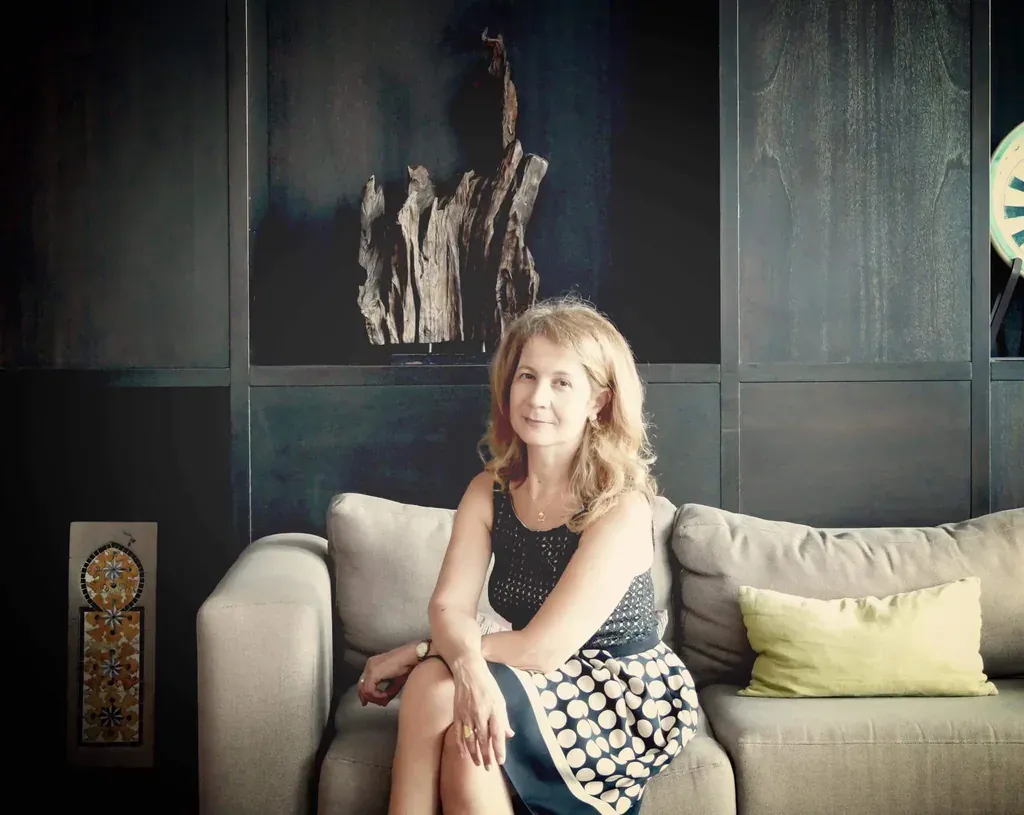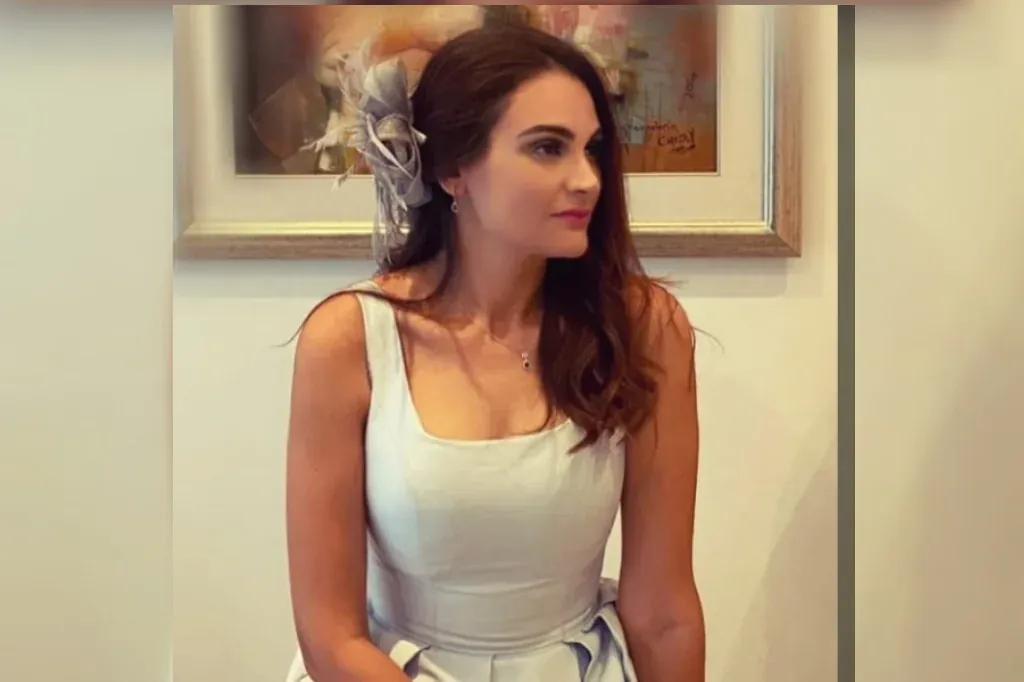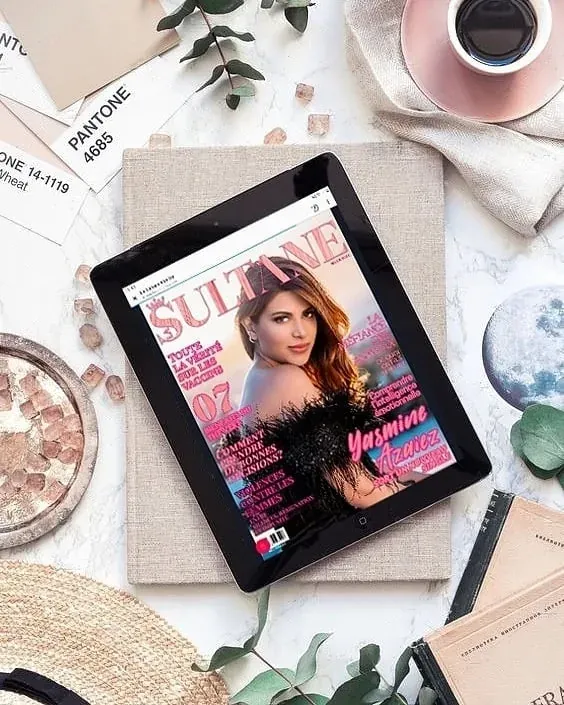
A cancer researcher turned sophrology coach, Monia Ezzalfani created LynSha, a concept of wellness retreats and workshops inspired by holistic medicine and the "slow life". In this interview for La Sultane, she looks back on her path between medical research, sophrology and motherhood, on the birth of LynSha — whose name is drawn from her children's first names, Shady and Lyne — and on the challenges, the books and the encounters that have shaped her journey.
Monia Ezzalfani, you agreed to answer La Sultane's questions and we thank you for it.
Before we get to the interview itself, here are a few markers on her career and on the LynSha concept:
| Marker | Detail |
|---|---|
| Professional field | Medical research in oncology (clinical trials, fundamental research, university teaching) |
| Initial training | Engineering school, specialising in biostatistics, then a doctorate in public health (France and the United States) |
| Further training | Sophrology coach, then certified professional coach |
| Concept created | LynSha — a name made up from her children's first names, Shady and Lyne |
| Activities offered | Qi Gong, Shiatsu, yoga, sophrology, art therapy, music therapy, reflection workshops |
| Children's strand | Wellness workshops, yoga, sophrology, reading and creative activities, running alongside the adult activities |
| Published in | La Sultane #52 |
Tell us about yourself, your career, what you do, your world — and tell us what the most important thing in your professional life is?
Monia Ezzalfani: The world I have built for myself is a many-sided mosaic, which in the end looks rather like me. To begin with, I am the mother of two children, Shady and Lyne. I grew up and studied partly in Tunisia and I work in medical research. To tell the truth, I did not land in this field by chance. Having lost my mother at a young age, to cancer, I witnessed a certain suffering that devastated me, and I wanted to be in the medical field without being part of the medical profession.
In my day, when I passed my baccalaureate, this kind of career was not widespread enough. I had to choose between my two interests, mathematics and medicine. So I opted for a preparatory school in order to get into an engineering school. I discovered the biostatistics specialism at my engineering school, which offers the possibility of combining mathematics and medicine. There was very little demand for that specialism — there were only five of us in my year! The other students preferred the specialisms leading to "safe" jobs in banks or big companies. I then did a doctorate in public health in France and in the United States in order to specialise in the medical field.
Since then, I have worked in medical research in oncology. I help to develop new therapies by setting up clinical trials that make it possible to study a drug and bring it to market. I am fortunate to have a job that wears several hats, because there are other strands to my work. There is the fundamental research strand, where I am called upon to establish, study and publish new methodologies in particular contexts of cancer, and the university teaching strand, where I give courses at various master's levels.
In my work, I see people and families shattered by illness. Fortunately, we are making progress and the fight goes on. But being confronted with illness every day, even only through a screen and patient files, is not simple. I still wanted to support people, and to support them differently. Inspired by the culture of holistic medicine, and by the famous saying prevention is better than cure, alongside my studies and my job I trained as a sophrology coach, which involves supporting people using sophrology techniques. Sophrology does not replace medical treatment. But it draws on breathing, relaxation and body-and-mind activation techniques to bring about physical and mental well-being.
It positions itself as a useful support in coping with many difficulties such as: fatigue, stress, sleep disorders, pain, anxiety, tinnitus, difficulty concentrating, sexual dysfunction… It can therefore be found in several areas, such as preparing pregnant women for childbirth, the mental preparation of an athlete, or of an employee within a company. This sophrology coach training enriched me on a personal level and, above all, as a mother.
I was also able to set up, on a voluntary basis, a whole well-being programme based on sophrology in various classes at my daughter's primary school, and to support the pupils in starting their days well. I trained as a certified professional coach, which allowed me to support people in rediscovering relaxation, serenity, the ability to let go, improvement in their breathing capacity…
Sophrology, like coaching, works on the present-future axis and on a forward-looking process. We hold all the keys to our own happiness and success. We simply need to take the time, fully, to look for them inside ourselves. This field teaches me anew every day that changing the world begins with the deeply personal process of changing oneself. Every change begins with an action, whatever its scale. Let us remember that in order to travel many kilometres, you begin with a very first step.
To finish on my professional path, what matters most to me, what inspires me and drives me, is helping and supporting people with new and innovative methods. My approach is to take the individual as a whole: body and mind, aligning them and caring for them from a young age.
Tell us about the various projects you are working on at the moment and explain to us how these concepts came about. Why did you feel the need to move in that direction?
Monia Ezzalfani: We live in a society where "fast, always faster" is the rule of a life spent permanently racing! We get used to this notion of speed, which we find everywhere. Take the example of fast-food outlets, which encourage us to eat quickly and sometimes even standing up. Recent studies have shown that more than 80% of people breathe almost exclusively, and shallowly, in the upper part of the chest.
This is a form of breathing that reflects a high level of stress or tension. But "the scandalous thing about a scandal is that we get used to it". The LynSha concept was born of that observation: what if we tried the "slow life" in a society where everything is speeding up on all sides? It was also born because there is no better gift to give yourself than taking your time, since the human body quite simply hates being rushed. It answers back with stress, digestive and cardiac troubles, muscular tension, and even extra kilos. So let us learn to take our time!
Inspired by holistic medicine and complementary medicine — a fascinating way of life whose foundation is the prevention of illness, the attention paid to the cause of illness and, above all, the upkeep of body and mind — I developed LynSha as a genuine philosophy that consists of living mindfully and savouring the here and now in order to enjoy slow breathing, slow food, slow thinking, and quite simply the slow life!
LynSha is addressed to anyone who would like to connect with their inner self in order to express it outwardly, and to find meaning in their life. It answers, in particular, a personal need of a mother of two children with a fast-paced daily life. It also takes up the three letters of my children's first names, Shady and Lyne.
What I wanted to offer through this concept is a unique experience through journeys into the heart of oneself. Among other things, we organise wellness retreats in a green setting, conducive to meditation and to sharing precious moments. It is a one-of-a-kind concept that allows you to recharge, to come together around the slow life, to take time for yourself and to put mental overload and over-stimulation on standby — particularly for women.
The first distinctive feature of the concept is that it is built around multidisciplinary activities such as Qi Gong, Shiatsu, yoga, sophrology, art therapy, music therapy and reflection workshops. Beyond that, being convinced that this philosophy of life should be taught from the earliest age, because the child is the first pillar of a better world through their own flourishing, the second distinctive feature of LynSha is that it is adapted and open to children. We offer them well-being activities, yoga, sophrology, reading workshops and creative workshops. All of this is organised and takes place alongside the adults' activities, so that people coming on their own, as a couple, with or without children, can fully enjoy a moment of calm…
What is the one thing you would do now if you had different resources? How do you see yourself in 5 years?
Monia Ezzalfani: In these particular circumstances of the health crisis linked to the Covid-19 epidemic, and in this period which is not easy, our only power and possible action is knowing how to draw the best from this situation on an individual and collective scale...
If the resources are there, my projects will focus on ecology, the environment and the social and solidarity economy. To address the difficulty faced by many families in Tunisia who find themselves in a critical financial situation, or in a precarious one that can only be worsened by the crisis, the search for collective usefulness must come first.
I believe that the social and solidarity economy is the key. It can bring a lasting solution and an answer to many challenges of contemporary society, while going through social innovation and respecting the environment, health or equality of opportunity.
Many projects driven by associations and/or by citizens are under way in Tunisia. I recently launched a completely voluntary initiative along those lines by creating a fund to help families with no resources at all. We are starting with a test phase on a small budget. The idea lies in sustainable development, that is to say launching a small project for each family in need so that it can meet its needs in a lasting way, independently of one-off aid that merely postpones the family's precariousness by a few weeks or even a few months. The idea is also to create jobs, and to let the whole of society benefit and move forward.
Projecting five years ahead is difficult, once again, in these unprecedented circumstances that have taught us to live differently, that have taught us in the end to live the slow life, and that have taught us that nothing can be planned in absolute terms.
Nowhere in the world did we expect to be living, in early 2020, shut in and confined at home like this.
Nevertheless, human beings cannot exist without looking ahead, without dreaming and without sharing their dreams and their existence. In five years, I do not want to project myself personally through a personal or individual project; rather, I want quite simply to project myself into a better world where nature is respected and where human worth is its law, because we are capable of reinventing ourselves every day and we can achieve dreams of grandeur while keeping our feet on the ground!
Tell us about the challenges you come up against?
Monia Ezzalfani: I think the list of my current challenges is much the same as that of many women, entrepreneurs and mothers who are trying to keep their children's daily lives running on the least possible time, and to keep their energy up over the long haul. In the end it is about seeking the happy medium and the balance between a fully active life and a life in which the slow life is unavoidable.
As an aside, and going back in time to talk about the challenges I met earlier on: having been a mother at a young age, while my engineering school studies were still under way, society allowed itself to judge me and to condemn me to fit into a box, even before listening to my version. I heard, constantly and sometimes purely through the way people looked at me: "pregnant", but she is going to drop out of her studies, she is not going to manage it, she is going to have to look after her baby, and heaps of other remarks and predictions tied to existing, clearly defined stereotypes about my own future and my own wishes :)
In the end, every day brings new challenges; motivating yourself and reinventing yourself in order to adapt your method and strategy is a real challenge too. That is why believing in our own strength and in our capacity to adapt is just as important in facing every challenge.
We could also say that challenges are there to teach us to listen to ourselves from within, to be unique in our thinking and to see our wishes and dreams all the way through.
Tell us about the person you admire most, or about the event that influenced you?
Monia Ezzalfani: My life changed when we learned that my mother had cancer.
My life took a completely different direction, and so did the way I see things.
She taught me a great many things before she died, but also afterwards.
I admire her for everything she was and I hope she is proud of me, wherever she is. She left us young, allah yarhamha (may God have mercy on her). But Mum has not disappeared from my life. She is an integral part of it. She lives everywhere within me, and also through all my projects and the way I see things.
What I keep of her is the strong woman who loved life and wanted to bite into it with all her teeth. She was cheerful, full of humour, of strength and of joy in living. She adored spending time with those close to her and making the most of them; she was smiling and full of life. It is that light in her that guides me in my daily life.
She goes on teaching me even after her death. What she teaches me is that I was far stronger than I imagined. Even if sometimes I am no longer so sure of it.
She teaches me that all emotions are legitimate. But that you have to know how to manage them.
She teaches me to discern what matters. She teaches me that we can regain confidence in life. That we can meet extraordinary people. That you should choose a job you enjoy and that is aligned with your passion; even if it pays less well or does not match other people's expectations. And this is only the beginning of the learning — her teaching continues every day.
I have nothing particularly philosophical to say. And I cannot claim that it is possible to get over a bereavement. I think the pain does not fade. But you learn to live with it.
What is your favourite book? The one you loved this year? The one you recommend to everyone around you, without the slightest hesitation?
Monia Ezzalfani : I am old-school.
I very much like Sun Tzu's book, The Art of War.
What I take from this book is that you should never have a plan B for making your dream come true! It is not intuitive, but the book told, among other things, the story of a warrior. When he went to war, he would surround the entire village leaving no way out, so that the villagers could not escape. And every time, he won the war.
He explained that if no way out was provided, men and women know they are going to die. So they will fight with what is known as the energy of despair. They will fight with whatever they have in their hands. And a single woman or a single man can defeat dozens of warriors. But if there is a possible way out, some will escape. Others will hesitate. And few will give everything, and all of that creates confusion.
The art of making war is therefore the art of winning a war before it begins.
We can draw an analogy between the brain and war. If we create a way out in our brain where our dream is concerned, we are implicitly creating a bankruptcy for our dream!
Do not have a plan B if you want to make your dreams come true :)
As for films, I love Sergio Leone's western "For a Few Dollars More", which testifies to the director's perseverance on the one hand and which symbolises, on the other, the cycle of life and death through a duel that dramatises the last chance to live, all of it paced by the music of Indio's pocket watch.
Through this film, the director puts forward the one thing that, in his view, is worth living for. Namely friendship. And he presents his second article of faith, which is family.
These two axes are ultimately based on love!
I am not going to spoil the film, and I will let you discover it if you like the world of the Western.
As for songs, I very much like Bob Marley's "Three Little Birds". I adore that song, which gives you a lift. It reminds us not to worry, because every little thing is all right and everything is going to be all right!
It also reminds me of my getaway in the western United States, between California and Nevada.
Incidentally, that song was also heard in the film I Am Legend, with Will Smith.
Finally, what advice would you give to a younger version of yourself?
Monia Ezzalfani: No particular advice to give. To tell the truth, I rarely give any, and I often urge people not to follow it (laughs).
Nevertheless, I think we can offer an attentive, kind and inspiring ear; to give an opinion or to ask the questions that allow the person themselves to find their own way.
But if I were to run into the Monia I was at 20, I would want to tell her, with no presumption whatsoever (laughs), to carry on just as she is. Above all, change nothing. Life will teach you and the light will guide you.
Life's trials are there to teach us and to help us grow. Our experiences are our strength and our learning for a better future.
What makes us move forward in life is, in a sense, our mistakes, before conviction and ambition.