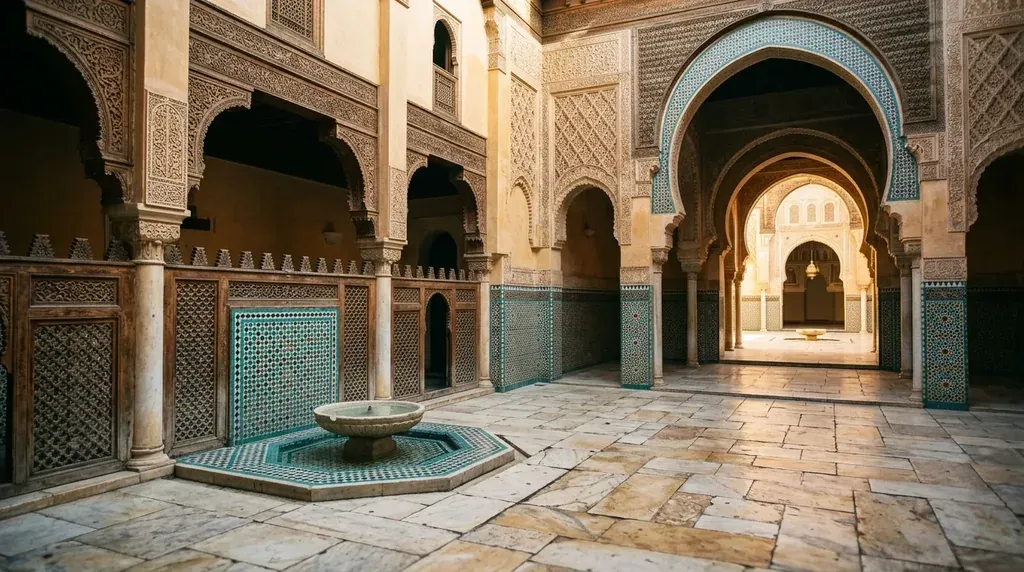
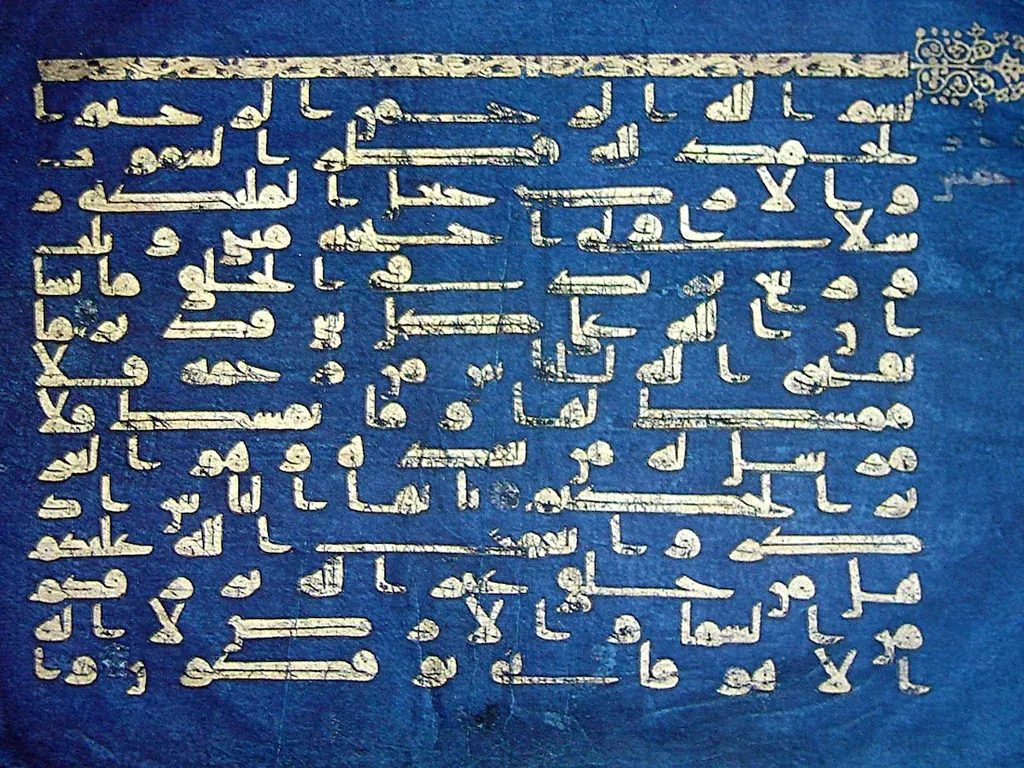
Lubna of Córdoba served, in the tenth century, as secretary to Caliph al-Hakam II in Umayyad Córdoba. Born into servitude and later freed, she copied, corrected and annotated manuscripts in the palace's great library, was skilled in calligraphy, grammar, poetry and arithmetic, and drafted the caliph's correspondence.
Who was Lubna of Córdoba?
History has preserved only a few lines about Lubna of Córdoba, but they are enough to sketch a woman who carved out her place with her pen, in a palace where the written word mattered as much as power itself.
To understand Lubna of Córdoba, you first have to picture her city. In the tenth century, Córdoba ranked among the greatest cities of the Western world, in al-Andalus, the part of the Iberian Peninsula then under Muslim rule, and took pride in its Great Mosque. It was in this powerful city that Lubna of Córdoba (in Arabic, Lubna al-Qurtubiyya) lived during the tenth century, before dying around 984.
Her story begins far from any honours: born into servitude, she was freed and remained attached to the palace. Yet her name has travelled through the centuries, carried by a brief account that took care to preserve it.
What role did she hold at the court of Caliph al-Hakam II?
Under the reign of al-Hakam II, a scholarly caliph, Córdoba was home to a library said by chroniclers to have held hundreds of thousands of volumes. It was in this world shaped by the written word that Lubna served as the caliph’s secretary, or katiba. She brought to the role a pen admired for its calligraphy, a command of grammar and a love of poetry, alongside a solid grasp of arithmetic.
Her work involved copying, correcting and annotating manuscripts from the caliph's library, a task demanding as much rigour as learning. She also drafted his correspondence and assisted him with his reading.
Was she the only woman with a pen at the court of Córdoba?
You might picture her as the only woman wielding a pen. The Andalusian chroniclers tell a different story: at the court of Córdoba, in the tenth century, Lubna shared this role with other women, who were copyists and secretaries in their own right.
Two names recur alongside hers in these accounts: Fatima, the caliph's copyist, and Aïcha bint Ahmad. Together, they point to a small circle of learned women, not an isolated exception.
What remains of this learning today?
This intellectual brilliance owed itself to a specific context: that of the Umayyad caliphate of Córdoba, proclaimed in 929 by Abd al-Rahman III, and later embodied in the palace city of Madinat al-Zahra, built from 936 onward west of Córdoba. It was this centralised power that made careers like Lubna’s possible.
This balance did not long outlive its founder. When al-Hakam II died in 976, power shifted to the chamberlain al-Mansur, known as Almanzor, who ruled in the name of the young caliph Hisham II. The scholar gave way to the strongman.
History has preserved only a few lines about Lubna of Córdoba, but they are enough to sketch a woman who carved out her place with her pen, in a palace where the written word mattered as much as power itself. Her calligraphy, her command of grammar, her love of poetry and her skill with numbers placed her at the caliph’s side, and her name has travelled through the centuries where so many others faded away.
More from La Sultane
Sonya Ben Behi, bookstagrammer and serial reader
Dr. Leila Lakhoua Houimli: consistency, elegance & competence