Al-Khwarizmi is the Baghdad mathematician, born around 780 in the Central Asian region of Khwarezm, who gave the algorithm its name and algebra its title. At the court of Caliph al-Ma’mun, in the Abbasid capital founded in 762, he laid the foundations of a mathematics we still use today, carrying us from the medieval East to the screen in your hand.
Baghdad in the ninth century: why is this city the true backdrop to our story?
Few scholars can claim that an entire science bears their stamp, when no one today knows what their face looked like.
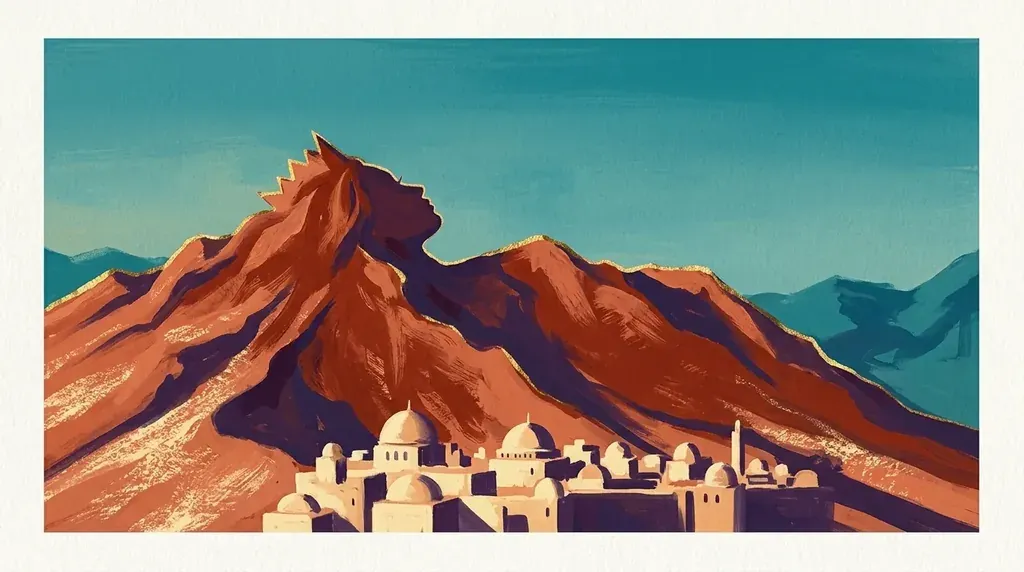
It all begins with a shift in power. In 750, the Abbasids overthrow the Umayyads of Damascus, and the caliphate changes hands. Twelve years later, in 762, Caliph al-Mansur founds Baghdad on the banks of the Tigris: a brand-new city, designed as a circle, the Round City. Within a matter of years, it becomes a great capital.
This new capital does more than govern: it translates. From the eighth to the tenth century, a vast movement renders Greek works (Euclid, Ptolemy, Aristotle, Galen) into Arabic, along with Persian texts, as though the entire city had set itself the task of gathering all the known world’s knowledge. It is in this setting, between fresh power and boundless curiosity, that our story takes root.
Where did al-Khwarizmi come from, and what do we really know about his life?
About the man himself, almost nothing is known for certain, and it’s best to say so plainly. Al-Khwarizmi is thought to have been born around 780 and to have died around 850. His name alone tells a story: it points to Khwarezm, a region of Central Asia south of the Aral Sea, far from the Baghdad where he lived and worked. One place of origin, two approximate dates: that is, essentially, all that history has kept of him.
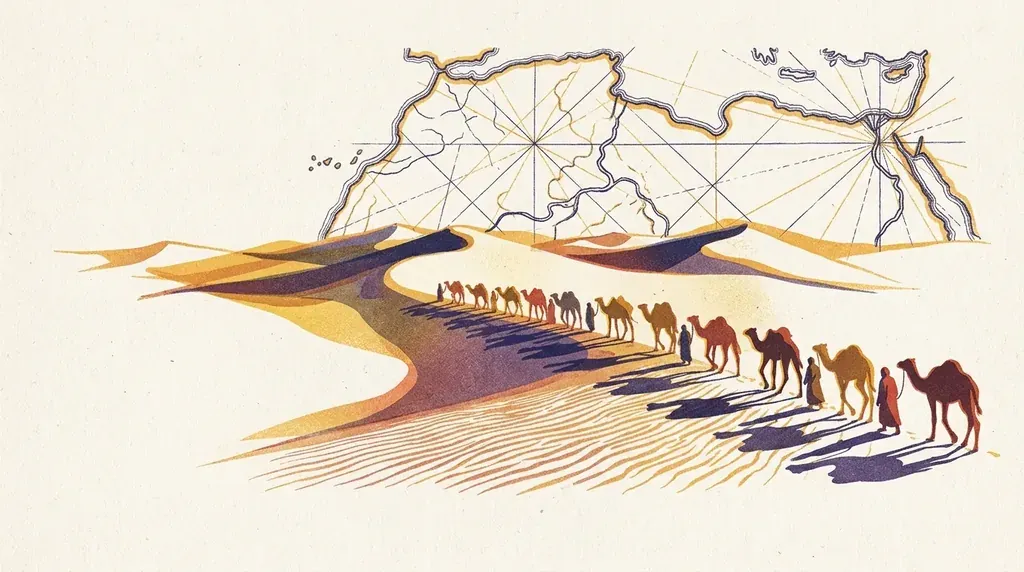
While this scholar from Central Asia was pondering numbers in Baghdad, Ifriqiya was living out its own history. Kairouan was then the capital of the Aghlabids (800-909), emirs who answered to the caliph of Baghdad: a single authority, read from two opposite ends of the Muslim world.
The book that invented algebra: how do you solve an equation with no symbols at all?
Around 820-830, al-Khwarizmi dedicates to his caliph, al-Ma’mun, a book whose title will give algebra its name: The Compendious Book on Calculation by Completion and Balancing. The treatise sets out a general method for solving equations, designed for practical use rather than mere speculation.
What strikes you, opening this book today, is the complete absence of symbols: not a single letter, not a single sign. The unknown is called “the thing” (shay), and its square “the property” (mal). The whole of algebra unfolds in sentences, patiently laid out, word by word.
From the Indian zero to the algorithm in your pocket: what do we still owe him today?
Al-Khwarizmi also wrote a treatise on calculation with Indian numerals. The original Arabic text is lost: we know it only through twelfth-century Latin adaptations, and it is through them that his name has travelled down the centuries. His algebra was translated into Latin by Robert of Chester in 1145, then by Gerard of Cremona in Toledo. In 1202, Leonardo of Pisa, known as Fibonacci, took it up in turn and helped spread this arithmetic across Europe.
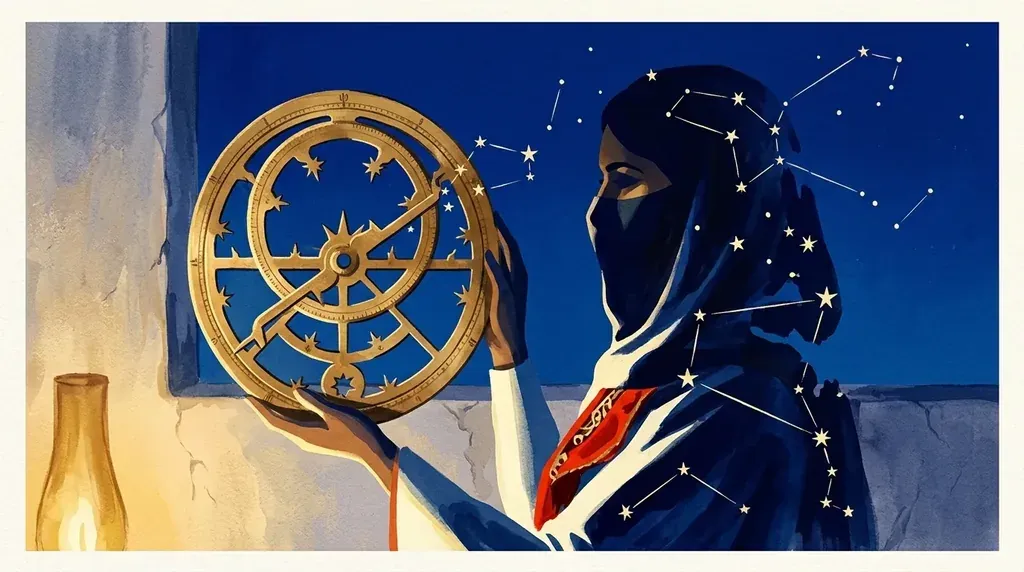
The same man also studied the sky: he compiled astronomical tables, the Zij al-Sindhind, drawn from Indian sources, and took an interest in geography too. His name, Latinised, eventually came to denote what we now call an algorithm: a precise sequence of instructions that leads, step by step, from a given input to a result. That is exactly what every program still does today, down to the one running in your pocket.
Next time you type a password, or your phone recalculates a route in a fraction of a second, spare a thought for this man about whom almost nothing is known, except that he worked in Baghdad and came from the distant land of Khwarezm. His name, reshaped by translators, came to stand for the very logic of the machines around us; the title of his book gave its name to an entire branch of mathematics. Few scholars can claim that an entire science bears their stamp, when no one today knows what their face looked like.
Also on La Sultane
The University of Tunis Holds a Symposium: THE FINE ARTS IN TUNISIA
Ennajma Ezzahra: Baron d’Erlanger’s Architectural Legacy