Thanks to its strategic position in the Mediterranean and the enterprising spirit of its aristocracy, Carthage rose rapidly, profiting from the decline of its founding city, Tyre — a vassal of the Assyrians and then the Persians before its destruction by Alexander the Great in 332 BC. Ancient Carthage then brought under its rule all the Phoenician cities of the West and became a maritime empire that secured itself a monopoly on trade toward the East — until it met its first great rival: Greece.
The meteoric rise of ancient Carthage
Thanks to its strategic position at the heart of the Mediterranean, Carthage quickly enjoyed a remarkable rise. Indeed, the Carthaginian aristocracy showed an exceptional enterprising spirit. Moreover, the city profited from the decline of Tyre, its founder, which became a vassal of the Assyrians and then the Persians. Finally, Alexander the Great destroyed Tyre in 332 BC.
Ancient Carthage thus brought under its rule all the Phoenician cities of the West. It also built a solid maritime empire and secured itself a monopoly on trade toward the East.
Carthage's revolutionary territorial strategy
Unlike the traditional Phoenicians, the Carthaginians settled inland across North Africa. This groundbreaking approach gave them a solid territorial base in the north and centre of present-day Tunisia.
Ancient Carthage then developed vast agricultural estates. Wheat, vines and olive trees were cultivated there. What is more, farming techniques improved thanks to the treatises of Mago, an essential reference of the ancient world. The Romans themselves would later adopt these methods.
The indigenous Berber populations, however, were subjugated. They had to pay taxes, work on the great estates and supply mercenaries, rowers and labour.
Carthage, a fortified North African metropolis
Over time, ancient Carthage broke away from Tyre. Furthermore, marriages between Berbers and Phoenicians turned Carthage into a truly North African city.
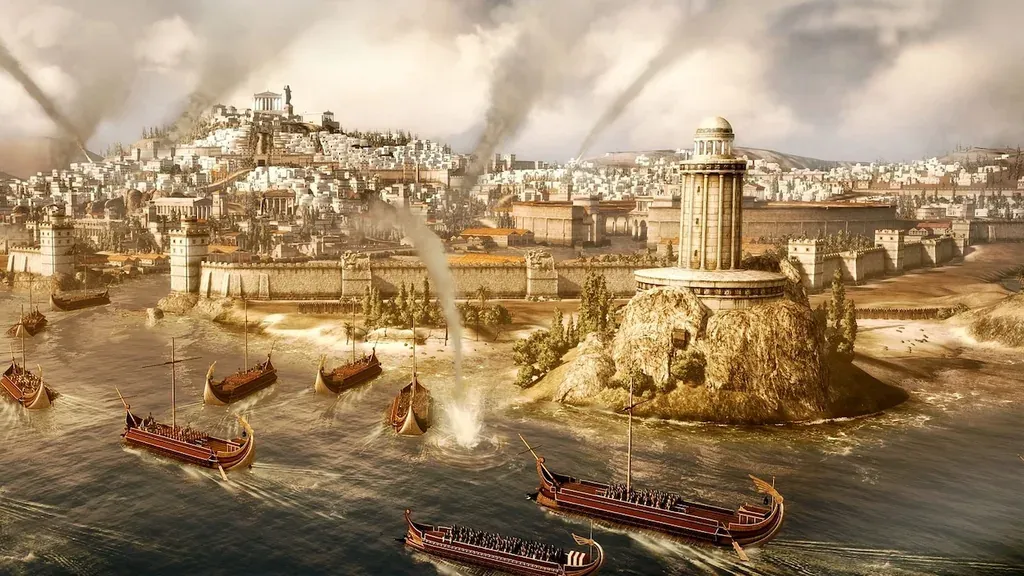
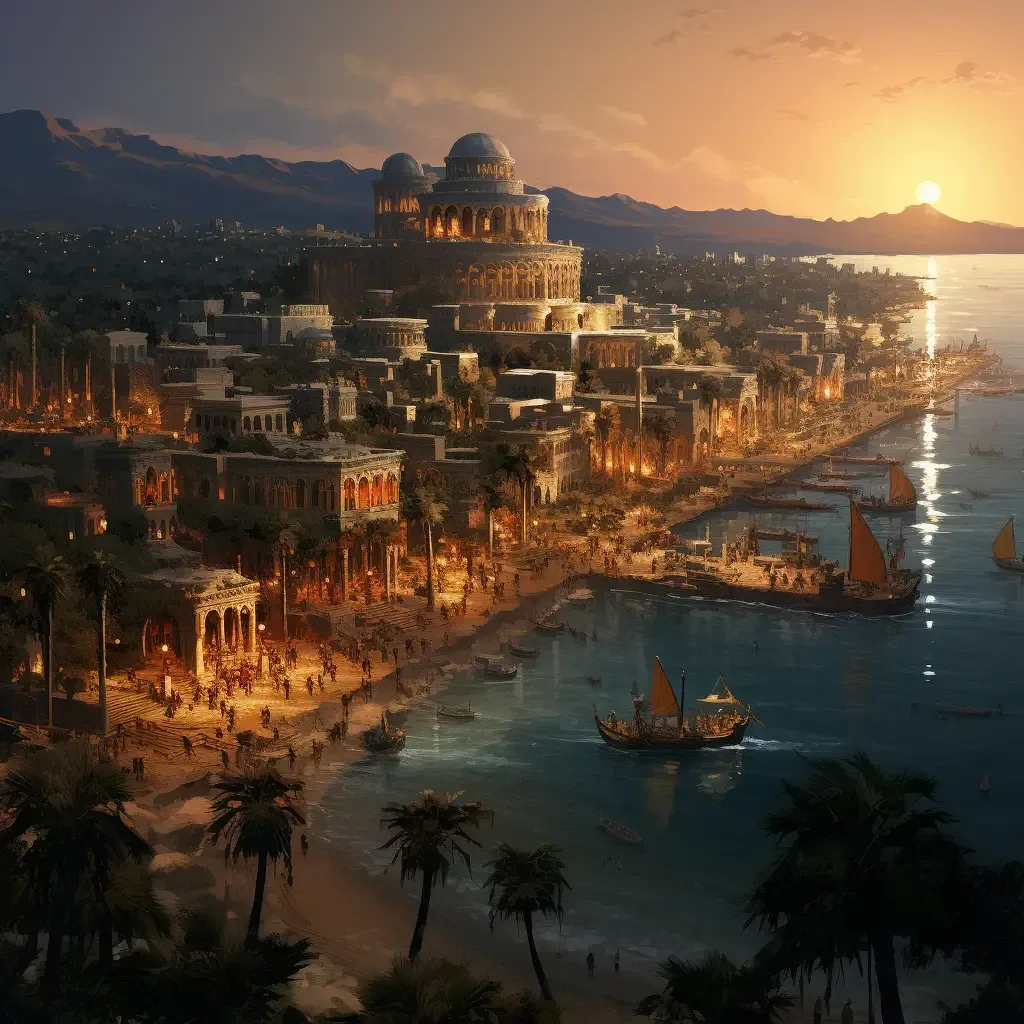
The city was built between marshland and the lake of Tunis, at the tip of a peninsula. A triple wall protected it on the landward side. Its defence rested on thousands of mercenaries, troops of elephants and an impressive fleet. That fleet included warships with three and five banks of oars. A double military and commercial harbour occupied the lagoons at the foot of the hill of Byrsa.
The political system of ancient Carthage
Great landowners, wealthy merchants and shipowners governed the city. Among them were the priests of the major deities: Tanit, goddess of fertility; Baal, the supreme god; and Melqart, whom the Greeks identified with Hercules.
These leaders led a life of luxury in the suburb of Megara. Yet they lived in constant fear of rural poverty, the unruliness of the mercenaries and the defiance of the common people. The latter gathered workers and sailors in the harbour districts.
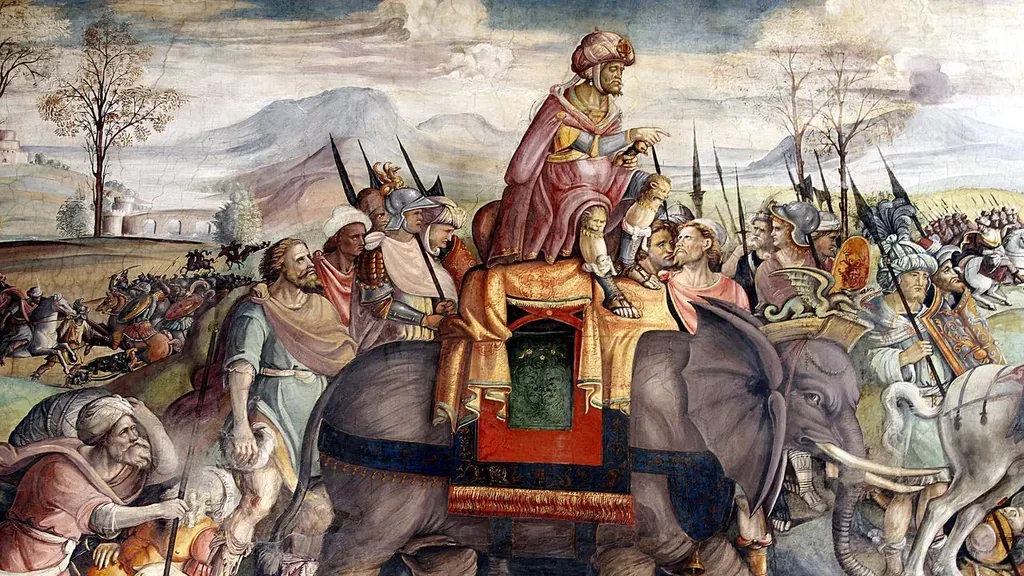
They were also wary of the great ambitious families. The Magonids had, after all, built Carthaginian power in the 5th century. Later, they would fear the Barcids, with Hamilcar and Hannibal, who would lead the struggle against Rome in the 2nd century.
The commercial expansion of ancient Carthage
Trade in precious metals was Carthage's absolute priority. Ancient Carthage therefore organised two major expeditions to discover the routes of gold and tin.
First, Himilco led an expedition toward the British Isles and Ireland around 450 BC. Second, Hanno sailed along the Atlantic coast of Morocco around 500 BC. Unfortunately, the destruction of Carthaginian literature has deprived ancient geography of precious details about these voyages.
Ancient Carthage fostered its trade through strategic military and diplomatic actions. In this way, it held key positions throughout the western Mediterranean basin.
The first conflicts of ancient Carthage
Carthaginian expansion came up against the Phocaeans, founders of Massalia (Marseille). They too were trying to spread across the Mediterranean. Their expansion, however, was halted around 540–535 BC at the Battle of Alalia, off the coast of Corsica.
By the end of the 6th century BC, ancient Carthage dominated all the Phoenician colonies of Africa. It also held strategic footholds in Sicily, Sardinia, Corsica, the Balearics and Spain. Its alliance with the Etruscans gave it a comfortable position until the confrontation with its first great rival: Greece.
The Battle of Himera, a turning point for ancient Carthage
A long conflict pitted the two Mediterranean powers against each other in Sicily. Ancient Carthage suffered a bitter defeat there, at Himera. At the same time, Greece triumphed at Salamis against the Persians. These Greek victories came to symbolise the triumph of enlightenment over the forces of barbarism.
The defeat at Himera marked a historic turning point for ancient Carthage. Indeed, Greek domination of both Mediterranean basins brought profound changes. The poverty of Carthaginian tombs from the 5th century bears witness to an era of austerity. The city renounced its taste for luxury, and even the wealthiest observed the laws limiting lavish weddings and funeral expenditure.
This austerity also touched the religious sphere. Offerings and monuments lost their richness. Carthage gradually withdrew into itself. Restrictions on maritime trade created supply problems.
As a result, ancient Carthage had to survive and reorganise in the face of the Greek threat. The conquest of the hinterland of present-day Tunisia then began. Carthage found new outlets and intensified its trade with the indigenous populations, exchanging precious metals and ivory for manufactured goods.
Ancient Carthage at a glance
| Date | Event |
|---|---|
| c. 540–535 BC | Battle of Alalia, off Corsica: the expansion of the Phocaeans, founders of Massalia (Marseille), is halted by Carthage. |
| End of the 6th century BC | Carthage dominates all the Phoenician colonies of Africa, holds footholds in Sicily, Sardinia, Corsica, the Balearics and Spain, and allies itself with the Etruscans. |
| c. 500 BC | Hanno leads an expedition along the Atlantic coast of Morocco. |
| 5th century BC (not precisely dated by the text) | Carthage's defeat at Himera against the Greek cities, coinciding with the Greek victory at Salamis against the Persians; an era of austerity follows. |
| c. 450 BC | Himilco leads an expedition toward the British Isles and Ireland. |
| 332 BC | Alexander the Great destroys Tyre, the Phoenician city that founded Carthage. |
| 2nd century BC | The Barcids, with Hamilcar and Hannibal, lead Carthage's struggle against Rome. |