The Punic Wars were a series of three conflicts that set Carthage against Rome, from 264 BC to 146 BC. The word Punic comes from the word Phoenician (Phoinix in Greek, Poenus from Punicus in Latin) and refers to the Carthaginians.
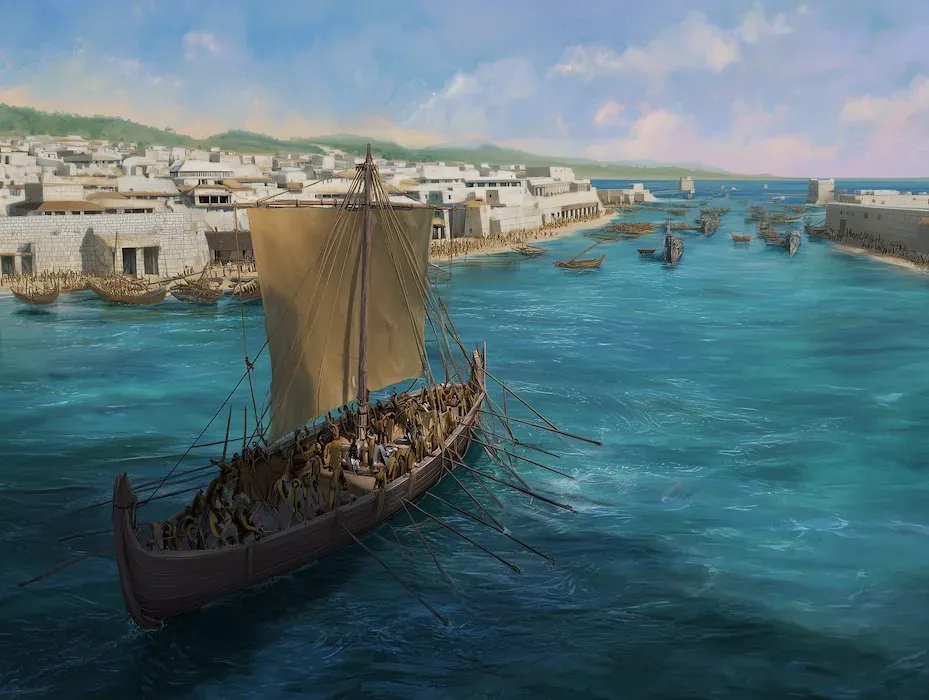
We know that Carthage rose from the status of a small trading post halfway between Tyre and the Iberian Peninsula to that of a great merchant city, prosperous and reigning supreme over the Mediterranean. Its military strength was made up of a powerful fleet and an army of mercenaries. It had signed a treaty with the young state of Rome, forbidding it any trade in the western basin of the Mediterranean. Having few ships, Rome easily abided by this agreement.
First Punic War (264 BC to 241 BC)
Initially peaceful relations
Carthage and Rome maintained peaceful, friendly relations. The two states had chosen two parallel paths that did not encroach on one another. Carthage's maritime and commercial power was not hampered by the land-based, agricultural power of Rome, which had just established its dominance over the whole of Italy.
Sicily, the bone of contention
But the island of Sicily was soon to become the object of the covetousness of Rome and Carthage, which shared its territory between them. In 264 BC, war broke out.
Roman naval improvisation
In those days, Rome had no navy and knew nothing of naval battles. It had to adapt quickly, and the state had 330 ships built. The Romans were about to take on one of the most renowned fleets of the ancient world. Thanks to a stratagem consisting of fitting the ships with grappling hooks and boarding bridges, they set about boarding the Carthaginian vessels and defeated them in 260 near Mylae (Milazzo).
Hamilcar Barca: the lightning of war
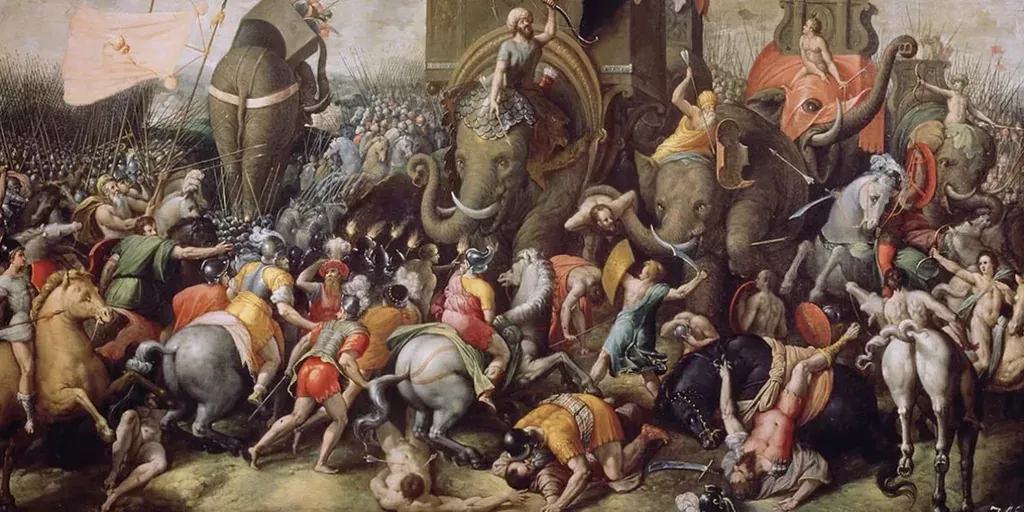
Despite this feat, the Romans could not achieve decisive results. They lacked expertise at sea and did not count in their ranks war leaders as brilliant as the Carthaginian general Hamilcar Barca. His lightning attacks would later inspire the German Blitzkrieg. Hamilcar was nicknamed Barca (which would give the Arabic word Barac, meaning lightning) because of the speed of his action against the Italian coast. His surprise strikes destroyed the Roman outposts and cut their supply lines.
The failure of Carthaginian support
The Carthaginian government did not give its full support to its general of genius, who, despite his crushing victory in the naval battle of Drepanum in 249 (off present-day Trapani), had to withdraw for lack of means and provisions. And while the Carthaginians were essentially concerned with the accumulation of wealth, the Romans gave all the support they could to their state's war effort. Increasingly experienced at sea, Rome won a series of decisive victories that forced Carthage to capitulate in 241.
Corruption and governmental incompetence
Although very costly for both parties, Carthage suffered more because of the corruption that was eating away at an incompetent government. Its members diverted the funds intended for the army to their own profit. They refused to send the reinforcements that the generals in the field so badly needed and relied excessively on the military genius of Hamilcar Barca.
Roman adaptation
At the same time, Rome, which did not have the skill of the Carthaginians, gradually developed a fleet that eventually rivalled that of the masters of the Mediterranean.
The Treaty of the Ebro of 226 BC
In 226 BC, Carthage and Rome signed the Treaty of the Ebro, defining each state's zones of influence over Spanish territory. The Romans obtained the region north of the Ebro river and Carthage settled to the south. The river formed a border that neither party was to cross.
This precarious peace was already setting the stage for the future confrontations in which Hannibal, the son of Hamilcar Barca, would distinguish himself, in the most famous of the Punic Wars.
Second Punic War (218 BC – 202 BC)
The second war is doubtless the most striking episode. Given the tragic fate of one of the greatest military geniuses that History has ever known. We will devote a full article to it.
Third Punic War
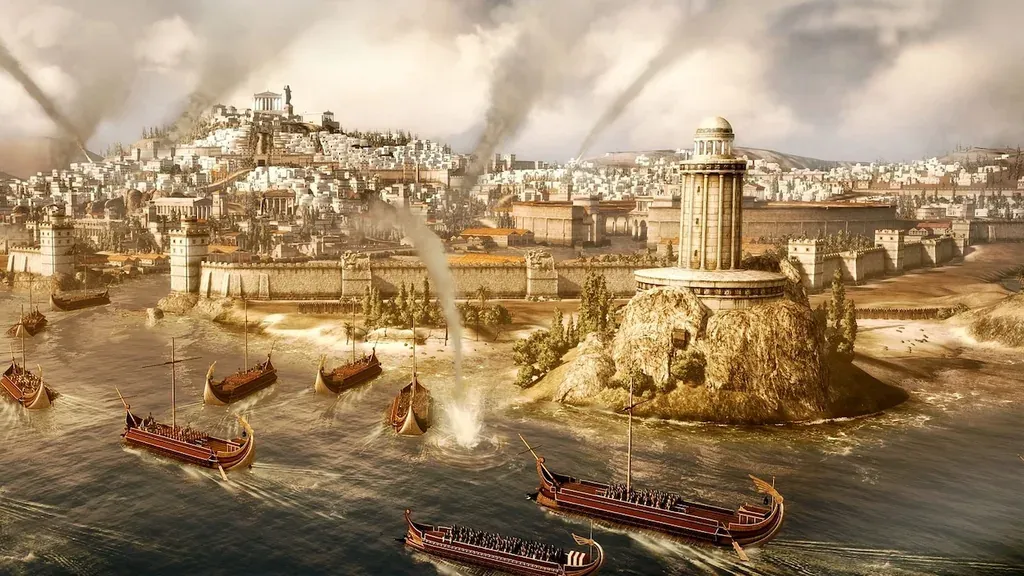
This is the last war of the conflict, which lasted nearly 100 years. While Carthage was undergoing a fresh economic expansion during the final years of its existence, the Romans feared its rearmament. Thus the Roman senator Cato the Elder, obsessed with a possible Carthaginian threat, ended all his speeches in the senate with the infamous Delenda est Carthago, meaning "Carthage must be destroyed". The growth of Massinissa's Numidian state, at Carthage's expense, forced the latter to defend itself, providing Rome with its casus belli. From 149 to 146 BC the Roman army besieged Carthage and eventually annihilated the Punic city, whose capital was razed to the ground.
Chronology of the three Punic Wars
| War | Dates | What the article recounts |
|---|---|---|
| First Punic War | 264 – 241 BC | Triggered by Sicily; despite the genius of Hamilcar Barca, Carthage capitulates in 241 after a series of Roman naval victories. |
| Second Punic War | 218 – 202 BC | Led by Hannibal, son of Hamilcar Barca; the most striking episode of the conflict, detailed in a dedicated article. |
| Third Punic War | 149 – 146 BC | Rome besieges Carthage and destroys the city, whose capital is razed to the ground. |