Massinissa was the Numidian king who unified the Massylian and Masaesylian kingdoms, establishing his capital at Cirta, now Constantine. Raised in Carthage’s shadow, he exploited the rivalry between Carthage and Rome to build, through his feared cavalry, the first political unification of Numidian territory. He died in 148 BC.
Who was Massinissa, the Numidian prince raised in Carthage’s shadow?
the Roman historian Livy judged the Numidian cavalry to be the enemy the Romans feared most, and the foremost cavalrymen of Africa
Massinissa was born around 238 BC, the son of Gaïa, king of the Massylians and an ally of Carthage. His father, himself the son of Zelalsen, was already heir to an established dynasty, if not its direct descendant. This lineage, and the shadow of Carthage where he grew up, shaped the future Numidian prince.
He first saw combat alongside the Carthaginians, drawn into the conflict then raging in Spain. The rivalry between Rome and Carthage would soon give Massinissa the chance to turn this tribal contest into a project of monarchical unification. He died in 148 BC, having united the Massylians and Masaesylians into a single kingdom, with Cirta, today's Constantine, as its capital.
How did two Numidian kingdoms become one?
Before unification, Numidia was split between two kingdoms of unequal strength. To the east, the Massylian kingdom bordered Carthaginian territory and maintained close ties with it on every level. To the west, the larger Masaesylian kingdom of Syphax sought an alliance with Carthage. Gaïa, at the head of the Massylians, was its last king before his son Massinissa united the two crowns.
When Capussa died, Massinissa asserted his claim to the throne. He succeeded in uniting the Massylians and Masaesylians into a single kingdom, fixing its capital at Cirta (today’s Constantine). Under his rule, agriculture and settled life advanced across this now-unified territory.
Why was the Numidian cavalry so feared?
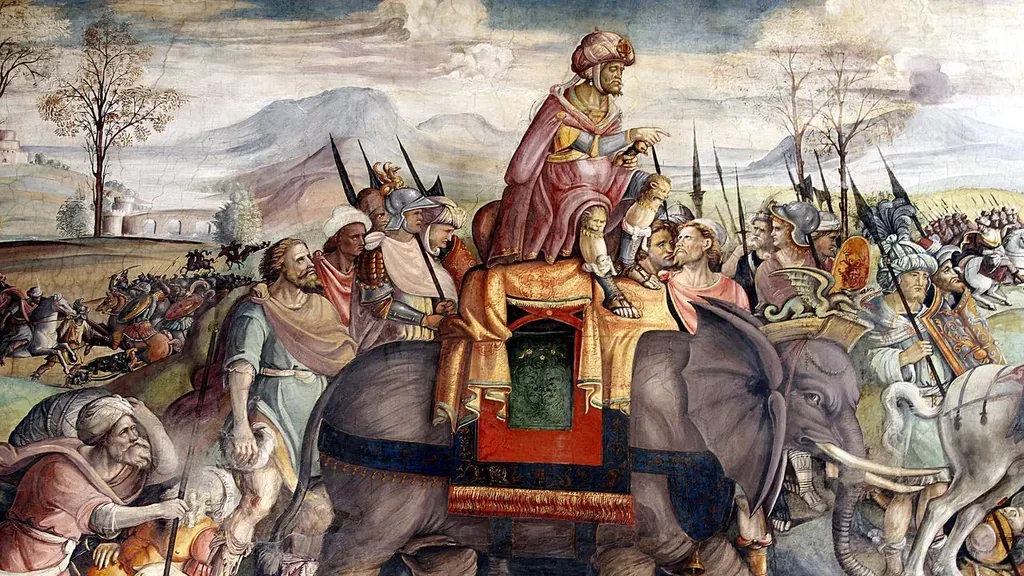
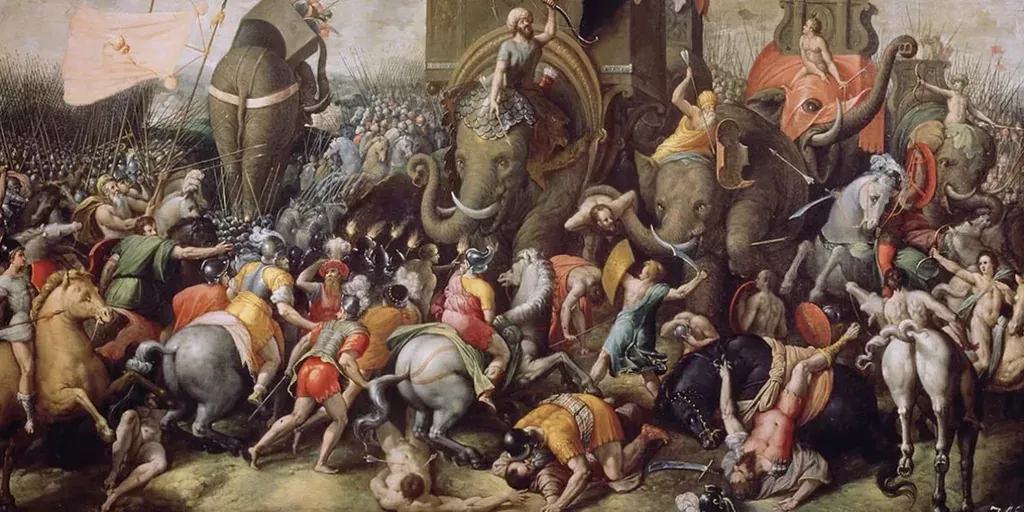
Facing Hannibal’s war elephants, Massinissa’s horsemen left a lasting impression: their horses, accustomed to the sight and smell of the beasts, held their ground and harried the enemy lines with great effect. This mastery forged a lasting reputation: the Roman historian Livy judged the Numidian cavalry to be the enemy the Romans feared most, and the foremost cavalrymen of Africa.
Once the Second Punic War ended, Massinissa put this force at Rome's service and answered the Senate's calls faithfully, regularly sending contingents of Numidian horsemen and grain to the Roman troops. As early as 200 BC, for the conflict against Philip V of Macedon, he supplied a thousand horsemen along with two hundred thousand measures of wheat and barley, support that counted as much in arms as in provisions.
What did Massinissa leave to the territory after a reign of more than fifty years?
Born around 238 BC and dying in 148 BC, Massinissa reigned over Numidia for more than half a century. This long span allowed him to achieve what no Berber ruler had accomplished before him: uniting the Massylians and Masaesylians into a single kingdom. He also encouraged agriculture and settled life, laying the foundations of a state no longer built solely on warlike movement.
Of this unified kingdom, Cirta, today’s Constantine, a former Phoenician city, became the lasting capital, under Massinissa’s alliance with Rome. Beyond the borders drawn by arms, this first political unification of the Berber world is the legacy of a reign that began in the shadow of Carthage and ended as an ally of Rome.
From Cirta to Rome, Massinissa’s long reign transformed the face of Numidian territory: two rival crowns united into a single kingdom, a capital established, a land gradually won over by agriculture and settled life. Born within Carthage’s orbit, dying loyal to Rome, he spent more than half a century in power without ever ceasing to build. This horseman king, feared by the Roman legions and endlessly called upon for his support, left Numidia its first political unity.
Also on La Sultane
The University of Tunis Hosts a Symposium: THE VISUAL ARTS IN TUNISIA
Ennajma Ezzahra: The Architectural Legacy of Baron d’Erlanger