"I swear that as long as I live, I shall remain an enemy of Rome." Jugurtha, king of the Numidians, born around 154 BC, defied the Roman Republic for seven years before starving to death in the Tullianum prison around 104 BC. The illegitimate grandson of Masinissa, he seized the throne by force and took on the Roman legions. According to the historian Sallust, his revolt marked, for the first time, a stand against the tyranny of the Roman nobility.
An oath of eternal hatred
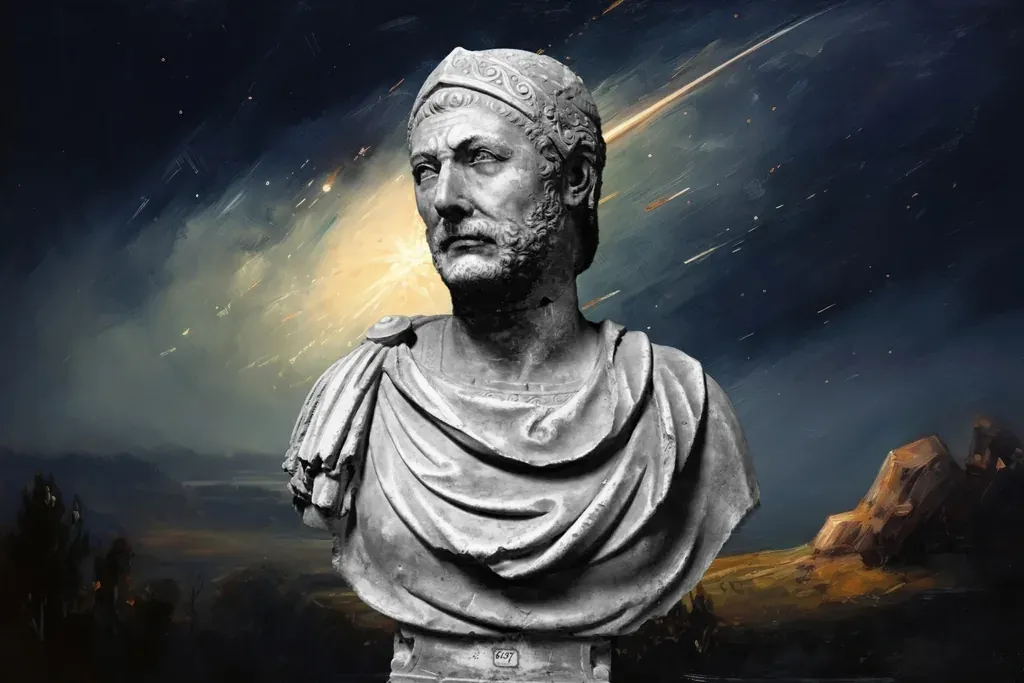
"I swear that as long as I live, I shall remain an enemy of Rome." These words ring out like an echo of Hannibal's oath. Jugurtha, king of the Numidians, throws down this challenge in an explosive context that the Roman historian Sallust describes in precise detail.
Sallust, a politician who became governor of Numidia under Caesar in 45 BC, bears witness in The Jugurthine War: "I am about to write of the war which the Roman people waged against Jugurtha, king of the Numidians. First, because it was long, savage and hard-fought, and victory long remained uncertain. And then because, for the first time, a stand was taken against the arrogance of the nobility."
This war overturned everything. It turned civil discord into open warfare and ravaged the whole of Italy.
Before we enter the story, here are the chronological milestones of Jugurtha's life:
| Milestone | Event |
|---|---|
| Around 154 BC | Birth of Jugurtha at Cirta (present-day Constantine, Algeria) |
| 134 BC | Micipsa sends Jugurtha to Hispania, to the siege of Numantia |
| 120 BC | Adoption of Jugurtha by Micipsa, probably under the influence of Scipio Aemilianus |
| 118 BC | Death of Micipsa; the throne is shared between Jugurtha, Hiempsal and Adherbal |
| 112 BC | Jugurtha attacks Adherbal once more, seizes Cirta and kills him |
| 111 BC | The Senate declares war; a treaty is negotiated by the consul Lucius Calpurnius Bestia |
| 110 BC | Jugurtha's victory at the Battle of Suthul |
| 105 BC | Betrayal by Bocchus, who hands Jugurtha over to Sulla; triumph of Marius, re-elected consul, in Rome |
| Around 104 BC | Death of Jugurtha, from starvation, in the Tullianum prison in Rome |
The legacy of Masinissa
A valued ally of Rome
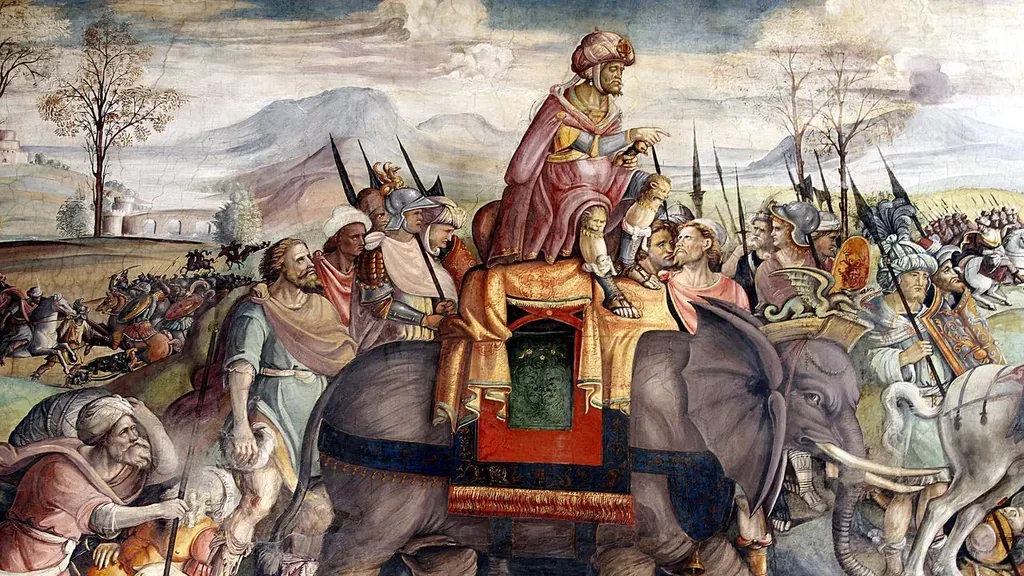
The story begins with Masinissa, king of the Numidians during the Second Punic War. While Hannibal was terrorising Italy, Masinissa sided with Rome and allied himself with Scipio Africanus. His courage earned him an exceptional reward: after the fall of Carthage and the capture of Syphax, Rome granted him all the cities and territories conquered in Africa.
A delicate succession
This alliance flourished until the death of Masinissa. His son Micipsa then inherited the throne, his two brothers Mastanabal and Gulussa having succumbed to illness. Micipsa raised his two sons, Adherbal and Hiempsal, alongside Jugurtha, son of Mastanabal. Jugurtha, however, remained barred from royal rank because his mother was a concubine.
The portrait of an exceptional warrior
The talents of the young prince
Sallust paints a striking portrait of the young prince: "From his earliest youth Jugurtha, strong, handsome and above all endowed with a vigorous mind, did not let himself be corrupted by luxury and idleness." He excelled in all the Numidian arts: horsemanship, javelin-throwing, running. A tireless hunter, he brought down lions and wild beasts better than anyone. Yet, despite his superiority, everyone loved him because he did more than he said.
"From his earliest youth Jugurtha, strong, handsome and above all endowed with a vigorous mind, did not let himself be corrupted by luxury and idleness."
Micipsa's unease
At first these qualities delighted Micipsa, who counted on Jugurtha's courage to bring glory to his reign. But his unease grew quickly. The king was ageing, his sons remained young, and Jugurtha gained every day in strength and in influence.
"Deeply troubled by all this, he turned a thousand thoughts over in his mind", Sallust recounts. Micipsa dreaded the thirst for power that is natural in men. The age of his sons offered a perfect opportunity to Jugurtha. The Numidians' love for this illegitimate prince alarmed the king, who feared that an assassination might unleash revolt or war.
The strategic exile
To curb this growing influence, Micipsa sent Jugurtha to Hispania in 134 BC. His official mission: to assist the Roman general Scipio Aemilianus at the siege of Numantia. This strategy, however, backfired on Micipsa. Jugurtha forged close ties with Scipio Aemilianus, hereditary protector of the Numidians in Rome. The latter probably persuaded Micipsa to adopt Jugurtha in 120 BC.
The rise to power
The origins of the future king
Born around 154 BC at Cirta (present-day Constantine in Algeria), Yugerten – his Berber name means "he has surpassed them" – became king of the Numidians after an eventful journey. First a great ally of Rome during the Punic Wars, he even received the prestigious title of "friend of Rome".
The division of the kingdom
After the death of Micipsa in 118, Jugurtha shared the throne with Hiempsal and Adherbal, the late king's legitimate sons. But ambition soon won out. He had Hiempsal assassinated, then attacked Adherbal, who fled to Rome to seek protection. The Senate stepped in and divided Numidia: Adherbal was given the prosperous eastern part, while Jugurtha inherited the less developed west.
The break with Rome
The final attack on Adherbal
This settlement did not satisfy Jugurtha. Confident in his influence in Rome, he attacked Adherbal once again in 112 BC. He seized Cirta, Adherbal's capital, and killed his rival. During this siege, many Italian merchants perished, which provoked the anger of Rome.
The political manoeuvres
The Senate declared war, but the consul Lucius Calpurnius Bestia swiftly concluded a treaty generous to Jugurtha in 111. Summoned to Rome to explain himself, the Numidian prince remained silent before the tribunes. He then had Massiva, his cousin and a potential rival for the throne, assassinated, before fleeing the capital.
The war of resistance
Seven years of conflict
Rome could not stomach the massacre of its citizens and feared that a strong, united Numidian kingdom would threaten its interests. In 110 BC, the Battle of Suthul saw Jugurtha's troops crush the Roman army. This victory marked the beginning of a fierce resistance that would last seven years, from 111 to 105 BC.
Rome's divisions
The conflict divided Rome. The optimates wished to preserve Numidian independence, while the populares regarded Numidia as the property of the Roman people. This war also revealed the first cracks in the Roman Republic, foreshadowing the civil wars to come.
The final betrayal
Capture through treachery
Faced with the impossibility of defeating Jugurtha militarily, Rome resorted to treachery. In 105 BC, Bocchus, Jugurtha's father-in-law and ally, handed him over to Sulla in return for a bribe. This betrayal put an end to the Numidian resistance.
The new division
Rome then reorganised the region: Bocchus received the western part of Numidia and the title of "friend of Rome". The rest remained under the authority of Gauda, legitimate son of Mastanabal, henceforth a vassal of Rome. Marius, re-elected consul in 105, celebrated his triumph in Rome.
A death in oblivion
Jugurtha died of starvation around 104 BC in the grim Tullianum prison in Rome. Some historians still debate the circumstances of his capture. According to one version, the Romans abandoned the siege out of weariness before Bocchus betrayed his son-in-law. According to another, a Ligurian soldier searching for snails happened upon a secret passage that made it possible to take the Numidians from the rear.
Whatever the truth, this Berber king who defied Rome for seven years ended his days in humiliation and torture, far from his native land.
The legacy of a kingdom
The geography of Numidia
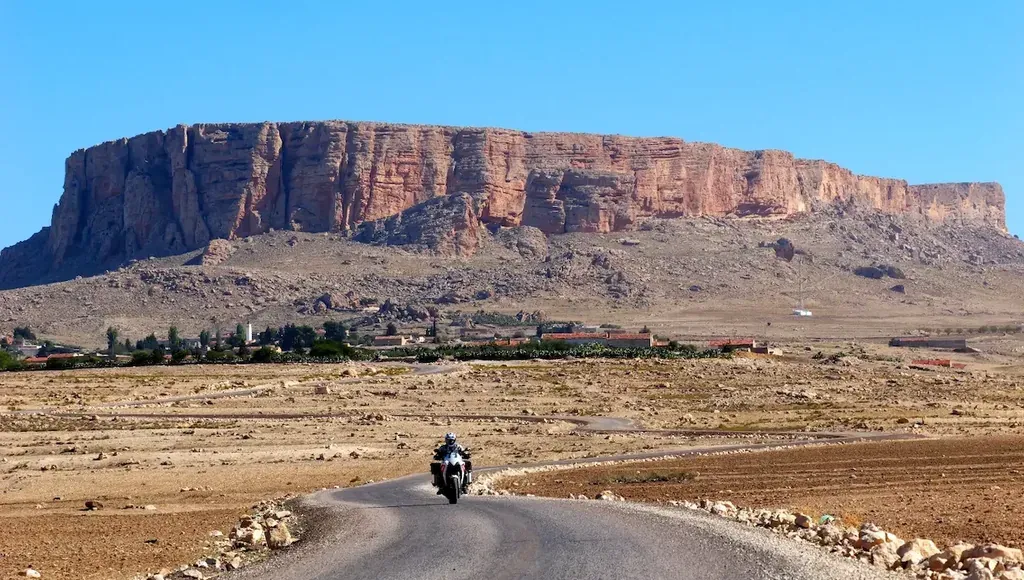
Numidia corresponds roughly to present-day Algeria. This kingdom stretched from the Moulouya (which separated it from Mauretania) to the stream of Tabarka (the border with Carthaginian territory). To the south, the Gaetulian tribes occupied the Saharan region.
A people of horsemen
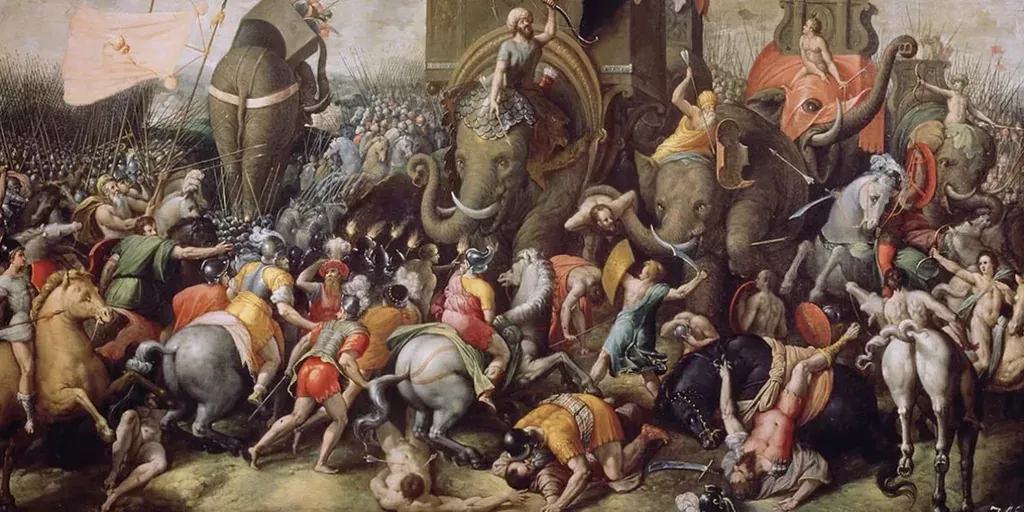
The Numidians take their name from the word "nomad" given to them by the Greeks. Their excellent cavalry was their chief military strength. They did not yet know the camel, introduced only in the time of the Ptolemies, but they tamed the elephant. They hunted gazelles, wild asses, ostriches and lions, which were very numerous at the time.
Wealth and resources
Their wealth came from the olive tree, the orange tree, the tree-like castor plant and the date palm. Later, the veined marbles of Numidia would become the most prized in the Roman Empire.
From Carthage to Rome
Initially tributaries of Carthage, the Numidians failed in their attempts at liberation and served in the Punic armies. Rome's intervention in the struggle between Syphax (king of the Masaesyli) and Masinissa (king of the Massylii) changed everything in 203 BC. Masinissa triumphed, unified Numidia and passed it on to his son Micipsa in 148.
Thus ends the epic of Jugurtha, the last great independent Berber king to face the rising power of Rome. His story illustrates the fierce resistance of a proud people against imperial expansion, foreshadowing the future struggles for independence in North Africa.