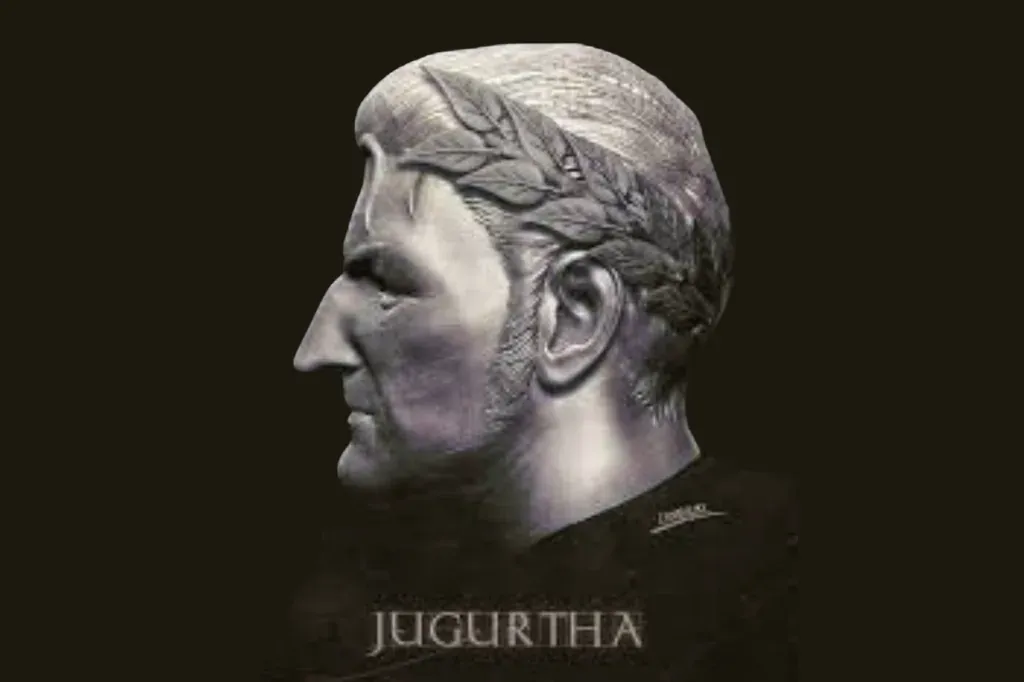
The Table of Jugurtha is a mountain in north-western Tunisia that bears the name of the famous Numidian warrior. Located within the municipality of Kalaat Senan (Kef Governorate), 230 km from the capital, Tunis, and 6 km from the Algerian border, this fortified rock is an 80-hectare plateau at an altitude of 1,200 metres. Its sheer, plunging cliffs made this place an ideal refuge for escaping the enemy.
Access via the North Face and the Remains of an Early Settlement
It can only be reached via the north face, along a narrow path cut into a fault. Hoof marks are still visible on these stones. Everything indicates that this place was an early settlement. Here you can find galleries used as granaries, the remains of dwellings, a fortification, basins carved into the rock to hold rainwater and enough vegetation to feed livestock.
A Self-Sufficient, Habitable Plateau, Between Mosque and Tomb
Everything suggests that people could live there self-sufficiently for a long period. Its limestone cliffs form an almost oval-shaped massif, four kilometres in circumference. There stands a mosque placed under the protection of Sidi Abdel Daoued, which shelters in its courtyard the tomb of Brahim Bou Aziz, former caïd of the Hanencha.
A Refuge Through the Centuries, From 533 to 1352
In 533, the plain served as a refuge for the last Vandal king, Gelimer, pursued by the Byzantines. Three years later, it served as a gathering place for the rebel army of Stotzas, who opposed the patrician Solomon. In 647, it was on the Table that the inhabitants, defeated by the Arabs, entrenched themselves. In 686, once again, the Berber tribes found refuge there after the death of King Koceila. During the 10th and 11th centuries, the plain was a refuge for the early Fatimids. Then for the Zirids. In 1283, the Hafsid emir of Béjaïa, Abû Faris, was killed there by the usurper Ibn Abi-Umara. The survivors of the battle took refuge on the mountain. In 1352, the Hafsid emir Abû Ishâq Ibrâhîm al-Mustansir was defeated there by the rebels.
From the Hanencha to the French, Four Centuries of Refuge
In 1644, Hammouda Pacha Bey defeated the sheikh of the Hanecha, rebels for whom the Table was one of their strongholds. Then in 1694, Hussein ben Ali, suspected of treason by the Muradids, took refuge there before becoming master of the Regency of Tunis. In the 18th century, the Table is said to have served as a refuge for the brigand Senane, hence the name of the present-day town of Kalaat Senan ("fort of Senan"). In the 20th century, the French established a mine there, now abandoned.
These successive refuges can be summed up as follows:
| Date | Event |
|---|---|
| 533 | Refuge of the last Vandal king, Gelimer, pursued by the Byzantines. |
| 536 (three years after 533) | Gathering place for the rebel army of Stotzas, opposed to the patrician Solomon. |
| 647 | Entrenchment of the inhabitants, defeated by the Arabs. |
| 686 | Refuge of the Berber tribes after the death of King Koceila. |
| 10th – 11th century | Refuge of the early Fatimids, then the Zirids. |
| 1283 | Death of the Hafsid emir of Béjaïa, Abû Faris, killed by the usurper Ibn Abi-Umara; the survivors of the battle take refuge there. |
| 1352 | Defeat of the Hafsid emir Abû Ishâq Ibrâhîm al-Mustansir against the rebels. |
| 1644 | Victory of Hammouda Pacha Bey over the sheikh of the Hanecha. |
| 1694 | Refuge of Hussein ben Ali, before he became master of the Regency of Tunis. |
| 18th century | Refuge (according to tradition) of the brigand Senane, the origin of the name Kalaat Senan. |
| 20th century | Operation of a French mine on the site, now abandoned. |
| August – September 2017 | Steps taken by the Ministry of Cultural Affairs for inscription on the UNESCO World Heritage List. |
Toward Inscription on the UNESCO World Heritage List
In August 2017, the Ministry of Cultural Affairs began the first steps to inscribe the Table of Jugurtha on the UNESCO World Heritage List. It officially submitted the nomination file on 28 September 2017 at the organisation's Paris headquarters. The opening of a museum dedicated to the site, within the grounds of Bourguiba's former presidential palace, was announced at the time; a second file, focused on developing and enhancing the site, was also planned for the following year.
A Still Little-Known Region to Explore
Jugurtha, along with the whole north-western Tunisian region, unfortunately remains little known. But books on the subject are beginning to appear, and countless excursions now reveal these history-rich places.