Tunisia, which joined UNESCO in 1956, submits new sites and monuments to the United Nations Educational, Scientific and Cultural Organization every year. To date, the country counts eight sites listed as World Heritage, and several others recognized as biosphere reserves. Here is an overview of this heritage.
Tunisian sites on the UNESCO World Heritage list
El Jem Amphitheatre
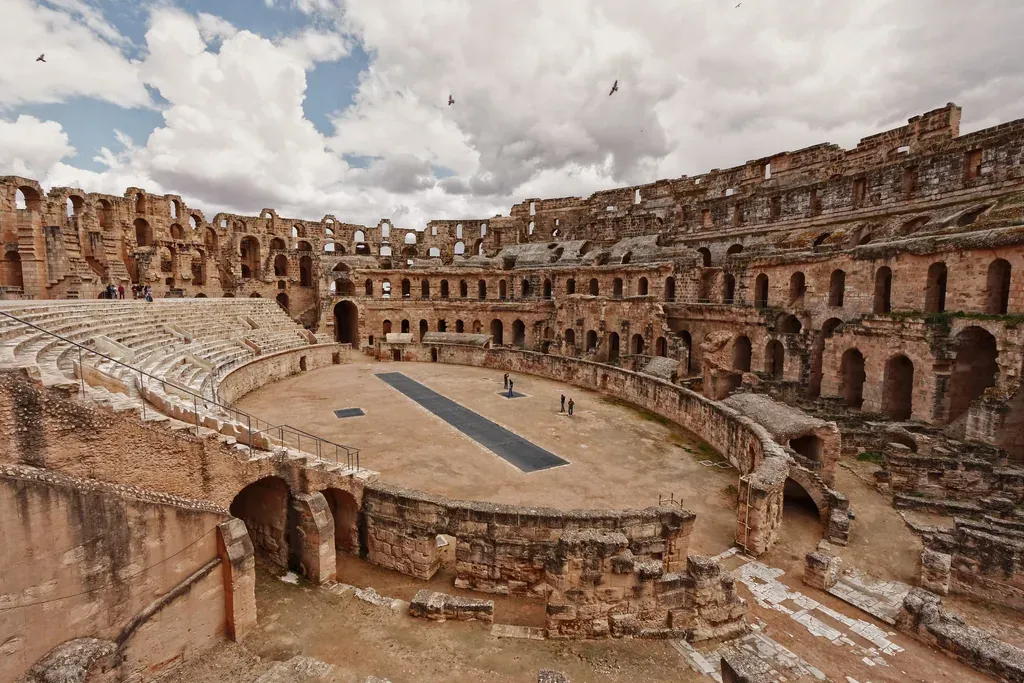
This Roman-style amphitheatre, listed in 1979, is the best-preserved in North Africa. Nicknamed the Colosseum of Thysdrus, it was most likely built in the first third of the 3rd century, in El Jem, in the governorate of Mahdia.
Kairouan
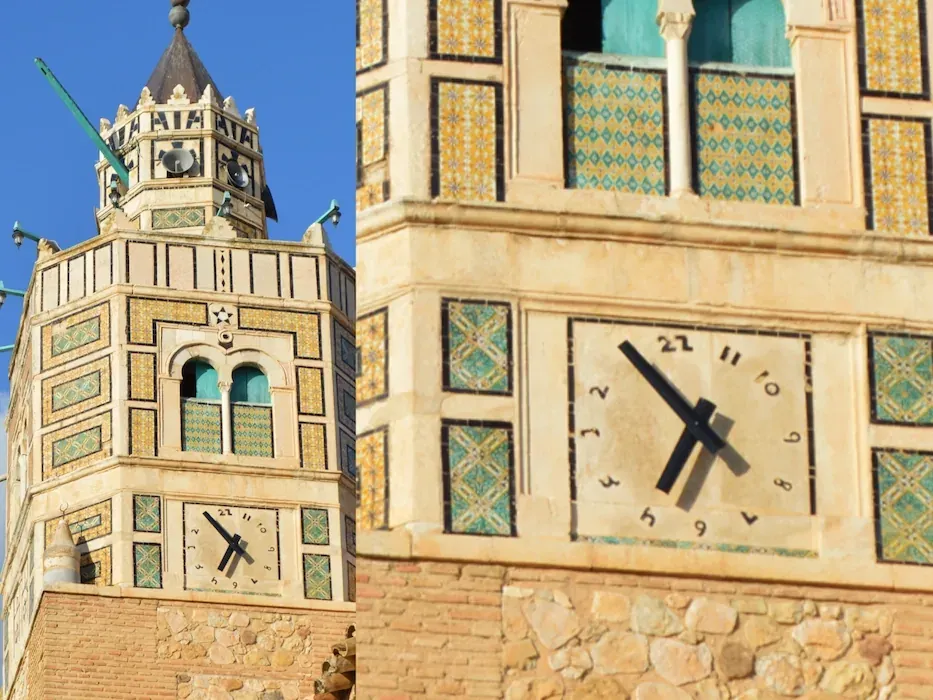
Founded in 670, Kairouan flourished in the 9th century and remained the foremost holy city of the Maghreb despite the transfer of the political capital to Tunis in the 12th century. Added to the UNESCO list in 1988, its rich architectural heritage includes the Great Mosque, with its marble and porphyry columns, as well as the Mosque of the Three Doors.
Dougga
This archaeological site, considered the best-preserved small Roman town in North Africa, was listed in 1997. Its impressive ruins give a sense of the resources of a small Roman town at the frontiers of the empire.
Ichkeul National Park
This natural site in northern Tunisia, listed as natural World Heritage since 1979, is an essential stopover for migratory birds. This lake is the last remnant of a chain of lakes that once stretched across North Africa.
Archaeological Site of Carthage
Founded in the 9th century BC, Carthage became, as early as the 6th century, a trading empire that stretched across much of the Mediterranean world. The site has belonged to the UNESCO World Heritage list since 1979.
The Medina of Tunis
From the 12th to the 16th century, Tunis was one of the most important and wealthiest cities of the Islamic world. Some 700 monuments — palaces, mosques, mausoleums, madrasas and fountains — bear witness today to this remarkable past.
The Medina of Sousse
Added to World Heritage in 1988, Sousse is a typical example of an early Islamic-era town, having preserved its kasbah, its ramparts, its medina and its Great Mosque. The Bu Ftata Mosque and its ribat served as both a fort and a place of worship, part of a coastal defence system.
Kerkouane
Located on the Cap Bon peninsula, this ancient site houses a Punic city and necropolis listed since 1986 — likely the only ones the Romans never altered.
Tunisia's biosphere reserves
Beyond World Heritage sites, several natural sites in Tunisia are recognized as biosphere reserves by UNESCO. Djebel Chaambi, the country's highest point (1,544 m), is one of them. Zembra and Zembretta Islands National Park, in the northeast of the Gulf of Tunis, rich in waterbirds and marine life, is also listed, as is Bouhedma National Park, 85 km east of Gafsa in the Saharan Atlas range, famed for sheltering rare species such as the dorcas gazelle and the Barbary sheep (aoudad).