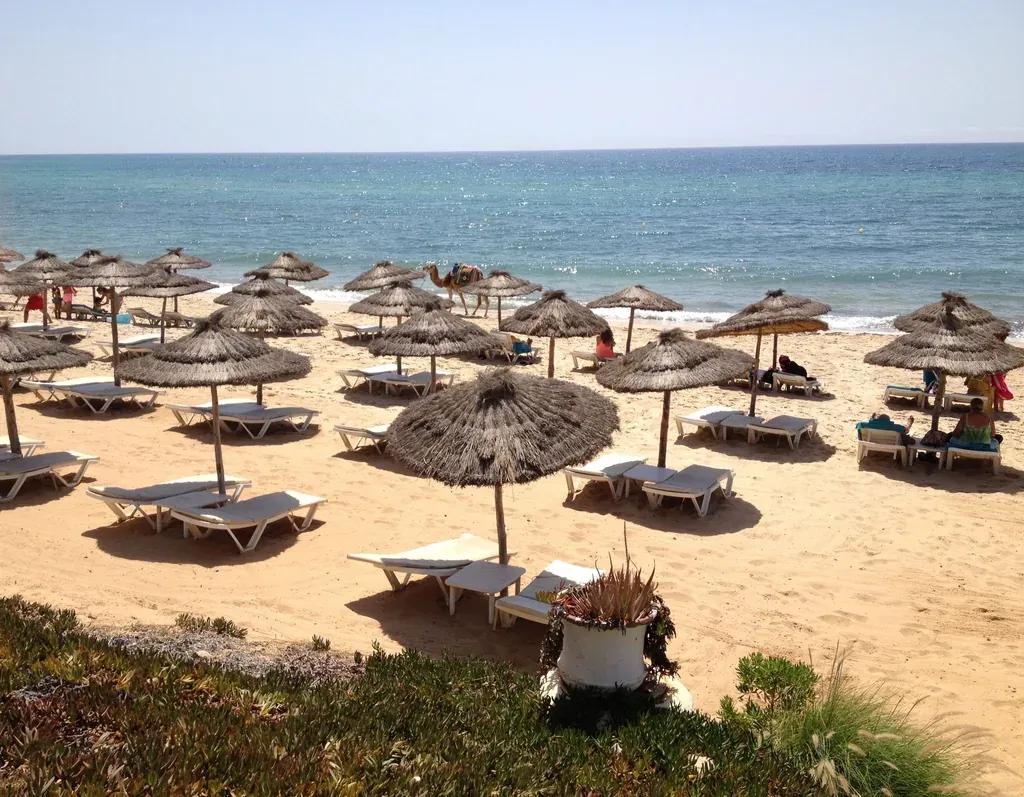
In 2025, Tunisia passed the 11 million visitor mark, according to the Tunisian National Tourism Office (ONTT) — a record. Almost all of them concentrated on a thin coastal strip: Djerba, Hammamet, Sousse, the seaside triangle that draws in the charter flights and the all-inclusive hotels.
What that figure doesn't say is how many Tunisians travel inland within their own country in summer, and where. The data barely exists. Tunisians' own domestic tourism remains one of the sector's statistical blind spots, measured in international arrivals and hotel nights, not in families driving up into the mountains or down toward the South.
That blind spot is a useful starting point. While the industry watches the coast, entire regions live through a summer of a different nature — less visited, less photographed, and far less profitable for anyone hoping to turn it into a product. Naming them isn't about chasing some “unspoiled” elsewhere, a phrase that mostly flatters the gaze of the passer-through. It's about looking at what these places actually are: inhabited territories, often economically fragile, with a dense history and a relationship to the visitor that is anything but straightforward.
The Northwest: a coolness that unsettles the clichés
Aïn Draham, in the Kroumirie hills, sits 800 metres up, under cork-oak forests, just a few degrees away from the heatwave gripping the rest of the country. The village, with its red-tiled roofs, was born under the French protectorate, designed as a hill station for colonials fleeing the heat. That origin isn't a picturesque detail: it tells us that Tunisian inland tourism has carried, since its very birth, a geography of class and power.
The weekly market, where honey, cheeses and basketry change hands, and the neighbouring El Feija national park today make up a modest, seasonal economy, far from the margins of the seaside trade. Mohamed Dabboussi, in his book Aïn Draham (2021), documents this local memory. The Feija forest, often presented as an ecological sanctuary, has no confirmed international listing, contrary to what the brochures sometimes claim. The nuance matters, because in a region searching for revenue, the temptation to oversell its heritage to attract visitors is strong.
The South: architecture as survival
Further southeast, around Tataouine, the Dahar lines up its ksour, those Berber fortress-granaries where ghorfas — vaulted storage cells — stack up over several levels. The perched villages of Chenini (466 metres) and Douiret (498 metres) extend the same logic: cave dwellings designed for defence, for preserving harvests, and for coping with a harsh climate. The site “Troglodyte habitat and the world of the ksour of southern Tunisia” appears on UNESCO's World Heritage tentative list. That's a candidacy, not an inscription: a status of partial recognition that still carries neither international protection nor funding.
That technical point has a social flip side. As long as a site remains merely a candidate, its preservation rests on local means alone, and its inhabitants stay torn between developing tourism and leaving. Many young people are moving away from these villages. The summer visitor encounters an ageing population and an architecture that, behind its beauty, tells first and foremost a story of an economy of scarcity.
In Douz, the scale shifts altogether. The oasis, said to hold some 500,000 palm trees, is the gateway to the Grand Erg Oriental and the historic capital of the M'razig, growers of deglet nour dates. The International Sahara Festival has been held here since 1967, billed as North Africa's largest desert festival. La Presse de Tunisie, which covered the late-2025 edition, described it as an event where tourism blends with long-standing regional pride. Summer here is punishing: the desert's high tourist season is winter. Travelling to Douz in July means accepting that the Sahara isn't a postcard backdrop but an environment — a harsh one, with a calendar all its own.
Cap Bon without the beach, Zaghouan without the crowds
Cap Bon is known for its seaside resorts. Yet away from the sand, it offers something else entirely. Kerkouane is, among all the destinations mentioned here, the only site truly inscribed on the UNESCO World Heritage list, since 1986. This Punic city, abandoned in the 3rd century BCE and never rebuilt, is one of the rare surviving examples of Carthaginian urban planning. Around it, Kélibia with its fort and its muscat wine, El Haouaria with its Roman caves and its falconers, Korbous with its ancient thermal baths, sketch out a historic, thermal Cap Bon that mass tourism largely ignores.
The mountains of Zaghouan offer one last variation. The Temple of the Waters, a Roman nymphaeum, marks the starting point of the 132-kilometre aqueduct that supplied Carthage, built under Hadrian around 120–131 CE — one of the landmarks of Tunisia's Roman antiquity. Tunisia's National Heritage Institute (INP) documents this complex, added in 2012 to UNESCO's tentative list. Here again, a candidate, not an inscription: the distinction isn't administrative nitpicking, it's the difference between heritage that is recognised and protected and heritage that waits, sometimes for decades, for a recognition that's slow in coming.
What heritage status do these sites hold?
| Site | Status cited in this article |
|---|---|
| Kerkouane (Cap Bon) | Inscribed on the UNESCO World Heritage list since 1986 |
| Troglodyte habitat and the world of the ksour of southern Tunisia | UNESCO tentative list: candidacy, not inscription |
| Temple of the Waters, Zaghouan | UNESCO tentative list since 2012 |
| Feija forest (Kroumirie) | No confirmed international listing |
Who travels this way, and at what cost
That leaves the question the guidebooks avoid: who really heads inland in summer, and with what means. Tunisian domestic tourism isn't a leisure equally shared. Going away requires a car, time off, a budget, sometimes a family house in the village. For a significant share of households, summer plays out neither in the mountains nor in the desert, but close to home, for lack of any way to get further. Even when the benefits of genuinely getting away are very real, access isn't given to everyone.
The very absence of reliable statistics on this inland tourism speaks volumes: what isn't measured is poorly managed, and rarely funded.
For women, the picture gets more complicated still. Travelling inland, especially toward regions perceived as conservative, raises questions of mobility and autonomy that a seaside stay, more codified, poses less head-on. A woman hiking alone through the Kroumirie or crossing the Dahar doesn't have the same relationship to space as a family group. This freedom to move around is, as we know, not distributed equally. The French-Algerian sociologist Rachid Amirou, in his work on the tourist imagination and the sociability of travel, pointed out that leisure travel is always shaped by social relations: who is allowed to move, how, and under whose gaze.
There's also a point of vigilance here. Championing these inland regions can quickly slide into staging “tradition” for visitors seeking a change of scenery, at the risk of freezing local populations into a decorative role. Recognising the value of these territories also means recognising that their inhabitants don't live to be looked at, and that poorly designed tourism development can deepen the very inequalities it claims to correct.
What looking at inland Tunisia changes
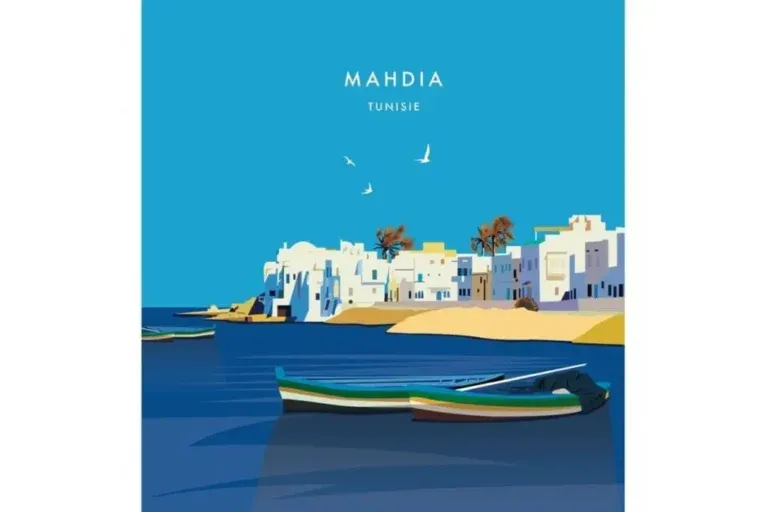
Shifting the gaze from the coast to the interior doesn't reveal a Tunisia any truer than another: Djerba and Sousse are just as real, as is the historic coast of Mahdia. But the exercise corrects a lens. It reminds us that a country can't be reduced to its tourist showcase, that the least-visited regions are often the most fragile, and that access to leisure remains, here as elsewhere, a matter of means. Looking inland means no longer confusing the postcard with the territory.