In Najoua Slama's superb Tunisian film “Le pardon,” starring Abed Fahd and Mohamed Ali Ben Jemaa, the Syrian actor takes refuge in a house near Mahdia's famous seaside cemetery: in just a few shots, the director captures the singular atmosphere and rare beauty of this Tunisian coastal town. The former capital of the Fatimids, founded in 916, Mahdia stands on a peninsula in the country's centre-east, some 200 km south of Tunis; here you will find a thousand-year-old heritage — the Skifa Kahla, the Bordj El Kébir, a Great Mosque without a minaret — alongside traditions that are still very much alive.
A Tunisian city with a thousand-year heritage
Located in central-eastern Tunisia, about 200 kilometres south of Tunis, Mahdia had 51,833 inhabitants according to the 2014 census. This historic municipality, built on a peninsula 1,400 metres long, is home today to one of the country's leading fishing ports.
Tourism is gradually reshaping the local economy, while a higher-education hub is taking shape around the Institute of Economics and Management, established in 1999. The historic centre occupies the peninsula, while the modern city stretches inland with the districts of Hiboun and Zouila.
Mahdia's Fatimid legacy
Known successively as Jemma, Aphrodisium and Cap Africa, Mahdia played a major role in the Mediterranean basin until the 16th century. In 916, the first Fatimid caliph Ubayd Allah al-Mahdi ordered the founding of the city, which became the Fatimid capital in 921 and remained so until 973, when Cairo took its place.
Its history is also a military one: the city successfully withstood the eight-month siege waged by the Kharijites between 944 and 945. In 1057, the Zirids took refuge here in the face of the Hilalian threat, before the great Mediterranean merchant cities seized Mahdia in 1086–1087 to put an end to the raids of the corsairs.
The architectural treasures to discover
The Skifa Kahla, a gateway to history
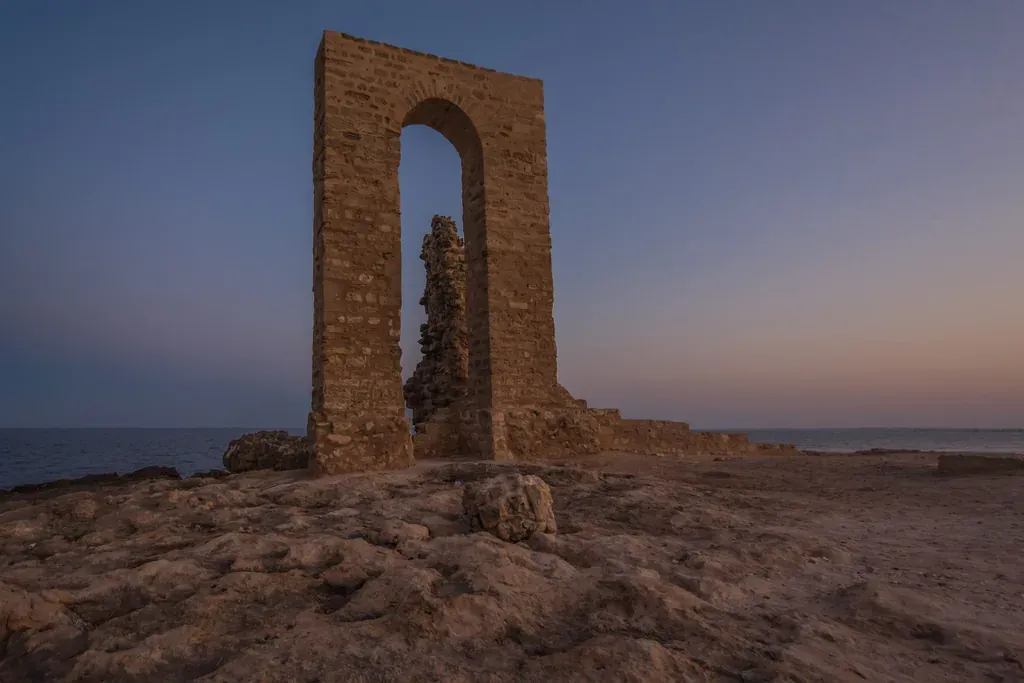
Mahdia unveils remarkable monuments that bear witness to its rich past. The Skifa Kahla, or Bab Zouila, is an imposing fortified gate raised between 916 and 921. Restored in the 16th century, this historic entrance is one of the few remaining vestiges of the ancient ramparts.
Bordj El Kébir and the Great Mosque
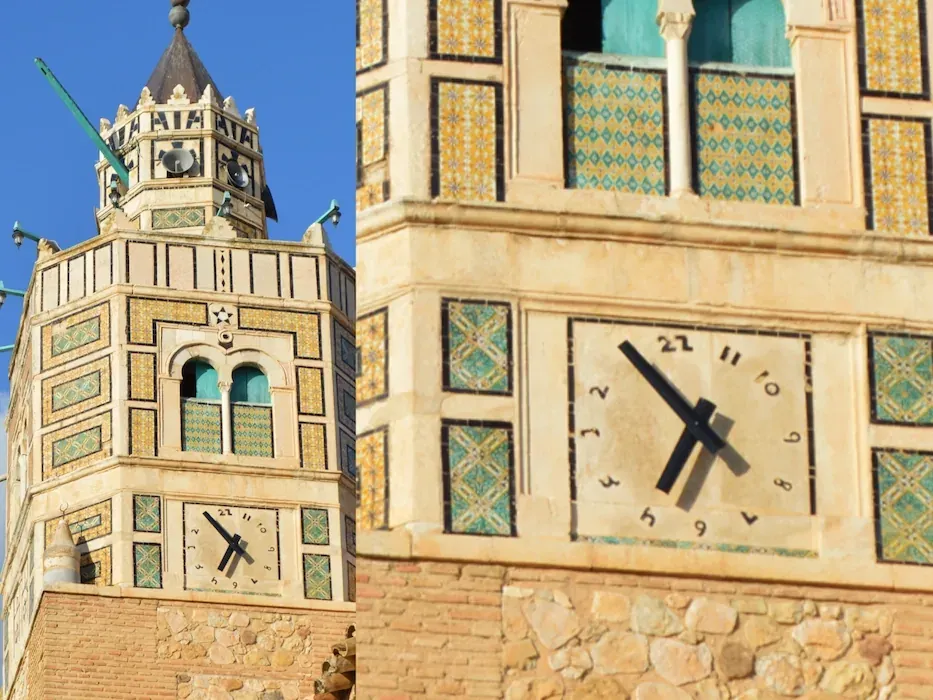
Bordj El Kébir impresses with its fortress and its vaulted passage leading to a commanding courtyard, with views over the tip of Cap Afrique. The Great Mosque, founded in 916 by Ubayd Allah al-Mahdi, is notable for having no minaret.
Later still, the Hadj Mustapha Hamza Mosque, built in 1772 and restored in the 20th century, is a perfect illustration of Ottoman religious architecture.
The El Jem amphitheatre, a gem near Mahdia
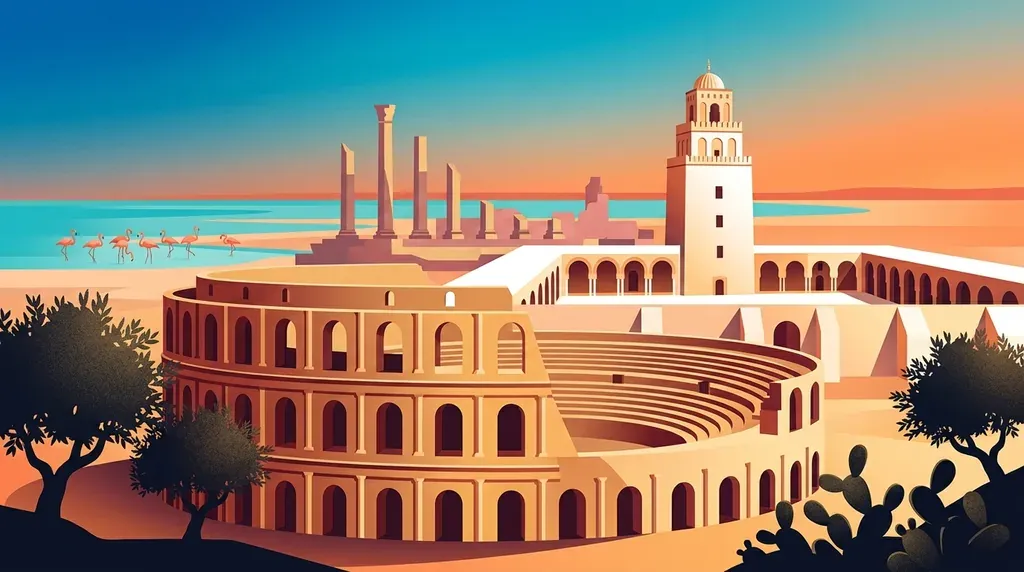
Forty-two kilometres from the town centre stands the El Jem amphitheatre, the best preserved after the one in Rome. Built by the Romans around the 3rd century, this colosseum held as many as 30,000 spectators. Today, every summer since 1985, it hosts the El Jem International Festival of Symphonic Music. This monument is part of the wider ensemble of Roman archaeological sites of Tunisia waiting to be discovered.
The best preserved after the one in Rome, the El Jem amphitheatre held as many as 30,000 spectators.
The modern economy of Mahdia, Tunisia
Traditional fishing and olive oil
Mahdia's economy rests mainly on tourism, fishing and olive oil. The fishing port comes to life at certain hours and has its own canneries for oily fish; here you can admire trawlers rigged for lamparo fishing (using bright lamps to attract the catch at night).
Set to the east of a vast olive grove, the town is home to oil mills producing olive oil and soap made from 72% olive oil. Mahdia also stands out for its silk and wool weaving, as well as its craftsmanship in jewellery, leather and wood.
A booming seaside tourism
White-sand beaches, numerous hotels and a rich history make Mahdia a sought-after seaside resort, in keeping with the art of living of Tunisia's coastal towns. The tourist zone extends north of the town, facing the Hiboun district. Most of the hotels line the sea and offer a varied range of options.
Mahdia's singular traditions
Traditional dress, a symbol of social status
Mahdia is defined by a unique culinary wealth and, above all, by a very distinctive traditional dress. Each outfit signals a person's social status: at weddings, it reveals who is a new bride, a young mother, a single woman or a widow. This devotion to dress echoes the Tunisian sartorial heritage passed down from generation to generation.
The bride's complete ensemble comprises around ten pieces, richly embroidered with gold thread and adorned with jewellery of gold, diamonds and pearls. Costing more than 5,000 dinars, this attire embodies the standing of women in Mahdian society.
The Friday souk, a living tradition
Another striking feature: the names of certain Mahdia families have been tied to a specific trade for generations. Dressmaking, hosiery, perfumery and local craftsmanship remain the preserve of a handful of families.
Every Friday, all the artisans gather between the Skifa Kahla and the port to display their creations. This Friday souk turns the square into a veritable Ali Baba's cave, where the sound of bargaining rings out amid a world of colours and scents.
Mahdia, an essential destination in Tunisia
This one-of-a-kind town draws ever more Tunisian and foreign visitors. Its exceptional historic heritage, its living traditions and its coastal landscapes make it a destination of choice. The Mahdia shipwreck, dating from the 1st century BC and laden with Athenian works of art, testifies to the historic importance of this underwater archaeological site.