How many times have you given up on a bench, a shortcut, a public square, because the place didn't feel safe, or made for you? That question, rarely asked of the women most affected, has become the starting point of a program now reshaping several Tunisian cities.
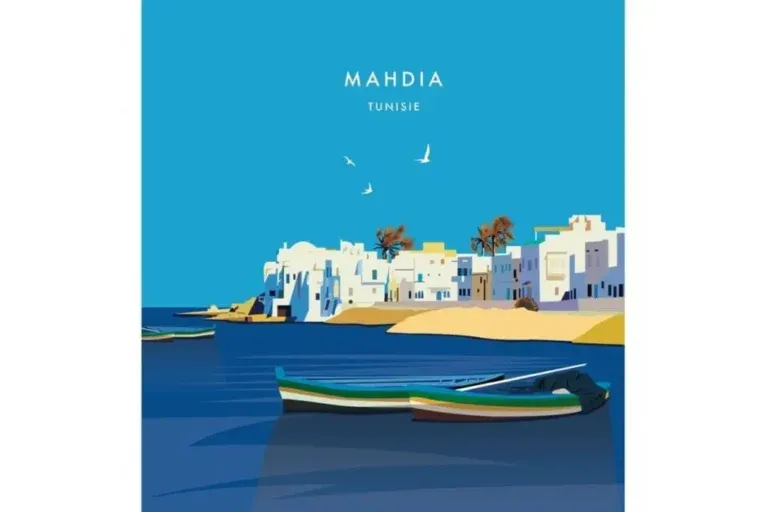
Femmedina is a gender-sensitive participatory urban planning program. It is run by Cities Alliance — a body housed within UNOPS — and funded by the Swiss and Canadian cooperation agencies. Its principle: involve local women in designing public spaces, rather than handing them a layout conceived without them. After Kairouan's Place du Maghreb Arabe, announced for early July, the program now turns to Mahdia's waterfront, where a new public garden was to be inaugurated on Saturday 18 July 2026.
A garden designed with the women who live there
The new public garden on Mahdia's waterfront was to be inaugurated later that day, in the form of a guided walkthrough, by the municipality and Cities Alliance. According to the statement released by the partners and picked up by Réalités, the project grew out of a process bringing together local women, young people, residents, community associations, neighborhood shopkeepers, and municipal services, all tasked together with identifying the site's priorities.
The announced lineup of spaces says a great deal about what this method changes. The partners describe a "Balcony of Memories," a space set aside for craftswomen to display and sell their work, a meeting and reading spot, a stage open to the arts, a children's corner, a space dedicated to physical activity, and accessible restrooms. Nothing on this list is incidental: clean, accessible toilets, a spot to sit while keeping an eye on children, a place to sell one's work — these are precisely the gaps that, quietly, keep women out of public space.
A city doesn't become welcoming to women by decree or by chance: it becomes so when, before building, someone asks them what they need.
Kairouan, the precedent that paved the way
Mahdia is not a first attempt. Two weeks earlier, Kairouan's Place du Maghreb Arabe was to be inaugurated following a transformation carried out using the same method: La Presse de Tunisie had announced the ceremony for Saturday 4 July 2026. The same paper names Kairouan alongside Sousse, Mahdia, and Msaken among the cities where the program operates.
The working method is worth pausing on, because it can be replicated. It rests on co-creation workshops, safety walkabouts — where local women walk through the neighborhood to concretely point out spots that feel unsafe, poorly lit, or hard to navigate —, gender-sensitive community mapping, and neighborhood-level consultations. Shopkeepers, craftswomen, mothers, young people: they are the ones who named the problems.
In Kairouan, the difficulties raised concerned a sense of insecurity, the lack of meeting places, poor accessibility, and the low visibility of women's economic activities. The proposed responses were just as concrete: stronger public lighting, street furniture, rest areas, universal accessibility, and greater recognition of the site's economic and heritage potential.
A participant in the co-creation workshops, quoted by La Presse, sums up in one line what this changes: "Today, we finally have a space where women, families, and young people can meet, take part in activities, and fully enjoy their city."
Why urban planning has a gender
The idea may come as a surprise: wouldn't a square, a sidewalk, a streetlight be neutral, if nothing else? Experience says otherwise. A space designed without consulting those who use it ends up mainly serving those who managed to be heard. Women, for their part, move through the city differently: with strollers and shopping bags, accompanying a child or an elderly parent, on constrained schedules, constantly calculating which streets they'll avoid once evening falls.
Taking these patterns of use seriously means recognizing that freedom of movement is one of women's rights just as much as any other. A city where people can sit, breathe, sell their craftwork, and let their children play without worry is a city where women go out more — and therefore work, meet others, and take part more.
It is also, in a Tunisia where summers are turning scorching, a matter of shade, trees, and sheltered benches. Femmedina's partners explicitly place climate adaptation and rootedness in the identity of the place among the guiding principles of the Mahdia project — two concerns it would be wrong to set against inclusion: they go hand in hand.
What happens after the inauguration
What remains is the question that decides everything: what becomes of such a space once the speeches are over? On this point, the partners announce that a management and programming plan will be drawn up with the municipality, so that the garden can sustainably host cultural, craft, economic, and civic activities.
That is the hardest promise to keep, and the one that will need checking in a year's time. Because a newly inaugurated space is still only an intention laid on the ground; it is the women of Mahdia who, by settling in or by staying away, will say whether it was designed for them. We will come back to this.