In Tunisia, women's rights were built over the course of a long struggle: from the first reformist demands of the 19th century to the 1956 Personal Status Code, and on to the movements that followed the revolution of 14 January 2011. Enacted under Habib Bourguiba, this code abolished polygamy and repudiation and gave Tunisian women the right to seek divorce, soon followed by the right to vote. A look back at a history made of hard-won gains, and never taken for granted.
The history of Tunisia is often bound up with the fate of its women. From Alyssa to the amazons of modern times, by way of Lella Manoubia, patron saint of the outskirts of Tunis, Fatma El Fehri, founder of the University of Kairouan, or Princess Aziza Othmana, every family has carried exceptional women within it. Their names fade into oblivion with the passing of time, yet their DNA imprints the social fabric and shapes it, against all odds.
The first demands for Tunisian women's rights
Tunisian women's fight for their rights reaches back a very long way. This struggle became organised and institutionalised, however, from the 19th century onward, when Arab reformists — drawing on certain principles of freedom found in the Quran — took an interest in the thinking of the Enlightenment. The defence of the women's cause took its first steps in Europe, Turkey and Egypt.
In Tunisia, the minister Kheir Eddine, a leading figure of the Tunisian reformist movement, called as early as 1856 for the education of women and advocated reconciling Western contributions with Islam. The international context favoured women's emancipation in Arab and Muslim countries, even though conservatives opposed reforms as radical as those of Mustafa Kemal Atatürk. On this genealogy of struggles, readers can revisit our earlier account of the Tunisian women's fight for their rights.
The evolution of women's rights in the 20th century
As early as 1930, the Tunisian trade unionist and author Tahar Haddad raised, in his book "Our Woman in the Eyes of Society and Religion", the question of women's personal status before public opinion. He argued for full equality between men and women, including in matters of inheritance, thereby drawing the wrath of the conservatives.
So too did Habib Bourguiba, first president of the Tunisian Republic, who would bring about the enactment of the PSC (Personal Status Code) in 1956. This revolutionary code replaced the religious courts with secular bodies, granting women the right to seek divorce and abolishing repudiation, polygamy and forced marriage. A year later, women gained the right to vote and to stand in municipal elections.
Between 1930 and 1955, local newspapers, conscious of their historic responsibility, published many articles on the dowry, polygamy, the wearing of the veil, the education of girls and women's right to vote.
The battle over the veil: shifting perceptions
In the early 20th century, the veil was synonymous with submission. It crystallised every battle of the moment. It was seen as an obstacle to the emancipation of women seeking to free themselves from the patriarchal grip. Habiba Menchari and Manoubia Ouertani were the first to publicly remove theirs, in 1924 and 1929, scandalising the conservatives who lamented the plain signs of women's education and of Western influence.
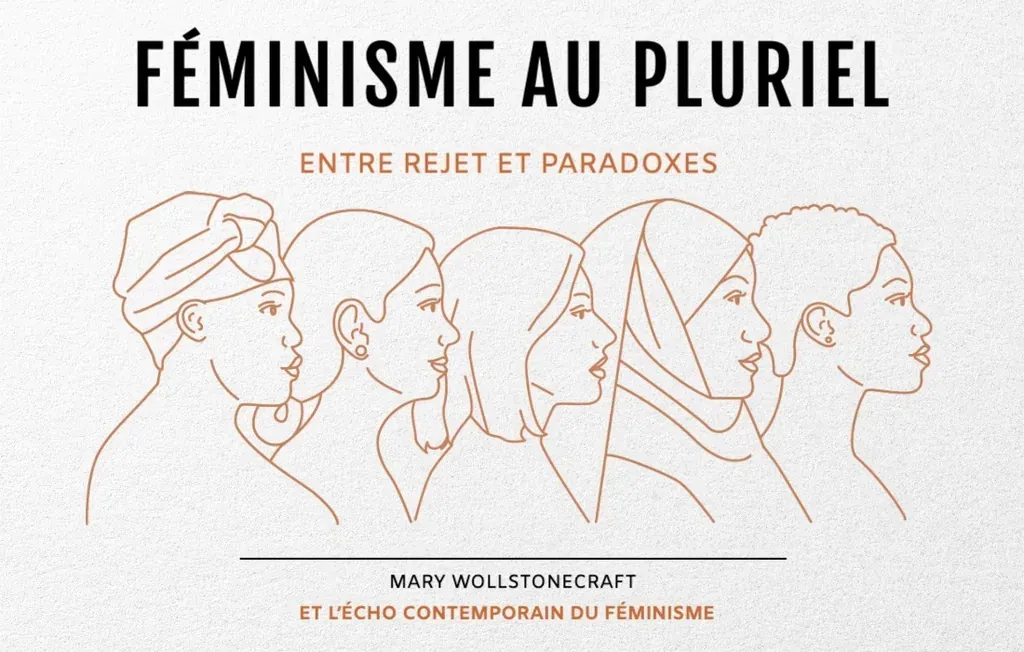
Paradoxically, these days the wearing of the veil has become a feminist demand, just as much as its removal. It is, above all, about a woman's right to control her own body (and in this case her own style of dress) without having to bear the weight of outside opinion. This question of convictions and their rightful place also runs through our reflection on how Islam and feminism can be reconciled.
The revolution of 14 January 2011 and the ongoing struggle
After the fall of the November regime and the mass return of political exiles, largely belonging to the Muslim Brotherhood movement, a conservative wave struck the country head-on. Numerous feminist and humanist NGOs, together with civil society, organised to resist any possible backsliding.
They fought to lift the State's reservations to the United Nations Convention on the Elimination of All Forms of Discrimination against Women. They campaigned for women's rights to be enshrined in the constitution and demanded a new democratic and egalitarian Constitution.
Does this mean there is reason to feel reassured? Nothing could be less certain. The struggle continues! Women's rights in Tunisia remain a daily fight, rooted in history yet turned toward the future. That is the whole meaning of what we call the duty to be a feminist.
A few milestones mark out this long struggle:
| Date | Milestone |
|---|---|
| 1856 | The reformist minister Kheir Eddine calls for the education of women. |
| 1924 and 1929 | Habiba Menchari and Manoubia Ouertani publicly remove their veils. |
| 1930 | Tahar Haddad publishes "Our Woman in the Eyes of Society and Religion". |
| 1930-1955 | The local press debates the dowry, polygamy, the veil, the education of girls and the right to vote. |
| 1956 | Enactment of the Personal Status Code (PSC) under Habib Bourguiba. |
| A year later | Women gain the right to vote and to stand in municipal elections. |
| 14 January 2011 | Revolution; feminist NGOs mobilise against the backsliding. |