In 1967, a book appeared in Tunis that wasn't meant for seasoned cooks. La cuisine tunisienne d'Ommok Sannafa, by Mohamed Kouki, was addressed first and foremost to young brides, to women stepping into a household who had to know, overnight, how to feed a family.
The book is now considered the bible of Tunisian cooking. Its original readership says it all: culinary transmission has long been women's business, and a matter of urgency. You learned because you had to, from those who already knew.
Sixty years on, the gesture is the same but the channel has changed. The granddaughters of those young brides now look for the méchouia or ojja recipe on a screen, between two videos, on TikTok or Instagram. That shift isn't trivial. It raises the question of what gets kept and what gets lost when knowledge leaves a grandmother's kitchen for the vertical frame of a phone.
A cuisine born of the heat
Tunisian summer imposes its constraints before it inspires its pleasures. You cook early, you cook briefly over the flame, you favour what can be eaten warm or cold. Méchouia salad sums up that logic. Tomatoes, peppers, chillies and onions are grilled, then chopped and seasoned with garlic, coriander, caraway and olive oil. Nothing complicated, but real work all the same: grilling, peeling, pounding. The dish is typical of Cap Bon, that northeastern peninsula, and its origin is often traced back to Andalusi-Arab heritage, to the refugees from Granada who arrived after 1492 and left a lasting mark on the region's cuisine. Eating a méchouia on a terrace means, whether you realise it or not, carrying forward a five-century-old story of migration.
Alongside it, egg brick holds a place all its own. A sheet of thin, fragile malsouka pastry, folded into a triangle around an egg, sometimes tuna, capers, parsley, the whole thing quickly fried. The challenge is one every cook knows: getting the brick out without breaking the yolk. It's a dish of hand and gesture as much as taste, one that's won or lost by feel, and that hardly transmits through reading alone. Ojja plays on the same Mediterranean base — tomatoes, peppers, chillies, garlic — with eggs poached directly in the sauce. An evening dish, a weekend dish, cheap and quick.
These recipes share a point rarely spelled out: they all assume someone standing at the stove. While the terrace fills up, while guests settle in, while children come and go, someone is grilling the vegetables and watching the frying pan. Most often a woman. The same holds for the shared tables of the coast, the ones told in the Tunisian art of living between sea and tradition in La Marsa, where the display of generosity rests on hours of preparation.
The work behind the table
The image of the generous, shared summer table masks a less light-hearted reality. Summer doesn't lighten the domestic load, it adds to it. Houses fill up, meals multiply, visits follow one after another. Hosting means buying, preparing, serving, tidying, several times a day, for weeks on end. This work is largely invisible because it's expected. People notice the dish; they notice the hours spent making it far less.
This dimension isn't a militant reading tacked onto the cuisine. It's written into the very history of Kouki's book, composed to prepare women for that responsibility. What's changed is less the division of labour than our awareness of it. Many Tunisian women still shoulder the bulk of the summer's culinary work, even when they also hold down a job. The table of transmission is also a table of labour, and one doesn't go without the other.
From grandmother to screen: what digital changes
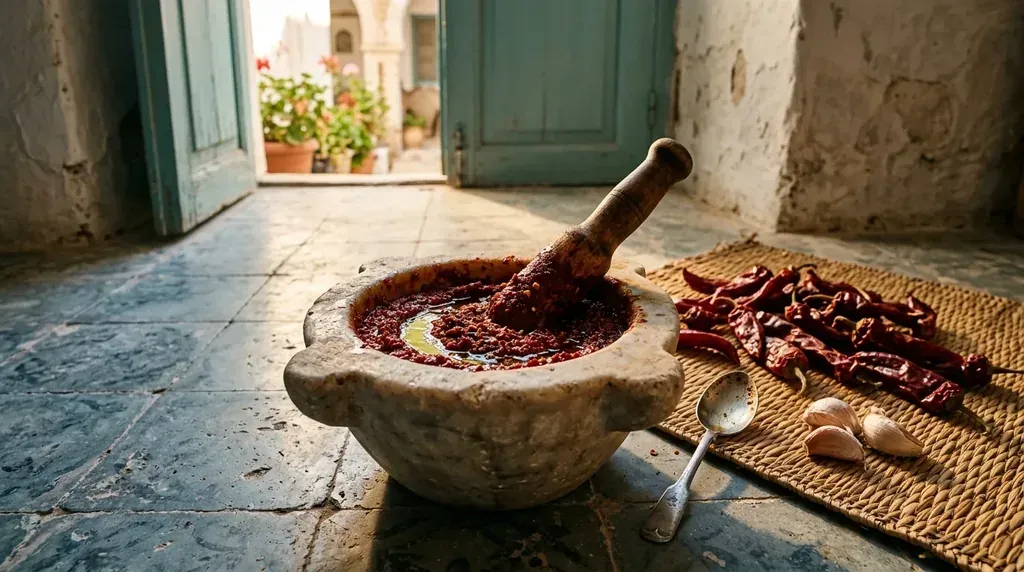
This is where the digital world enters, with its promises and its limits. A good number of young women no longer have — or no longer have enough — access to their elders' oral knowledge: distance, urban lives, grandmothers who have passed away, transmission cut short. Video fills that gap. There you find the knack for the brick, the right amount of harissa, the exact moment to add the eggs to the ojja. The gain is real. A gesture you can watch is learned better than one that's only described. Filmed demonstration delivers what written text, however precise, struggled to convey. In that sense, the screen extends rather than betrays cooking's oral, visual tradition.
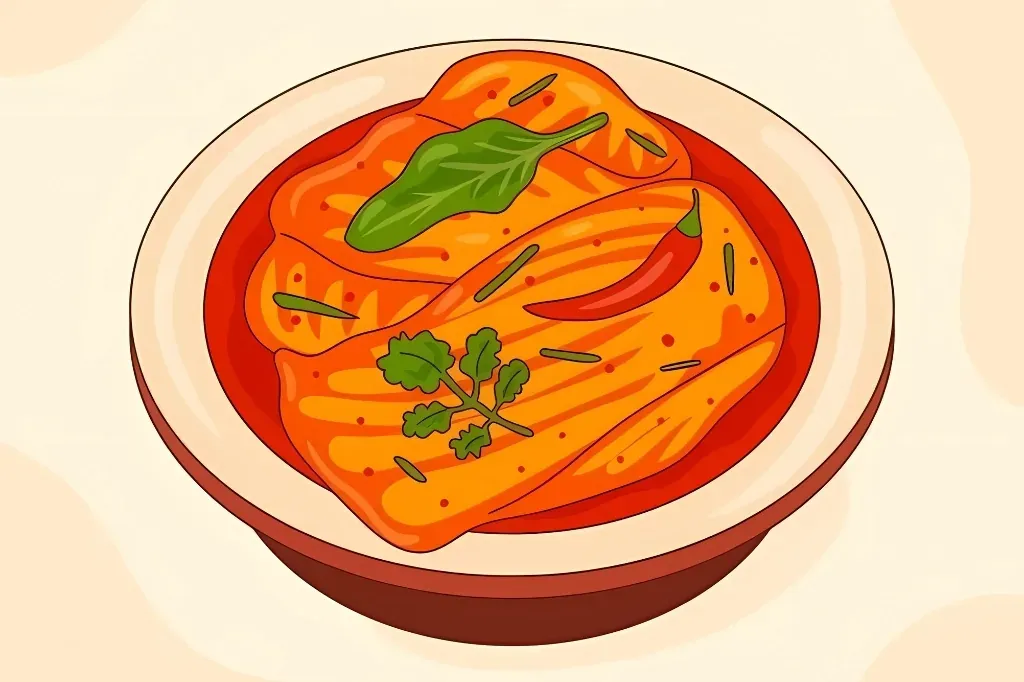
But something does shift. A grandmother's recipe was situated: a family, a region, a hand, acknowledged variations. The online recipe leans toward an averaged version, calibrated to please as many people as possible, sometimes detached from its home ground. The caraway disappears from a méchouia, a step gets standardised, a Cap Bon particularity dissolves into a generic “Tunisian recipe.” You learn the dish, and sometimes lose its provenance. It's the same movement that carries cuisines the other way, as when Korean kimchi settles into Tunisian plates: the dish travels fast, its origin much more slowly.
Digital transmission preserves the know-how; it weakens the knowledge of where it came from.
There's also a question of authority. With an elder at your side, you got corrected, you tasted, you started over under her watchful eye. In front of a screen, that oversight disappears: nothing distinguishes the cook who has mastered the dish from the one merely repeating it. Knowledge circulates more widely, but without the checking that used to be part of learning.
A heritage that has become a stake
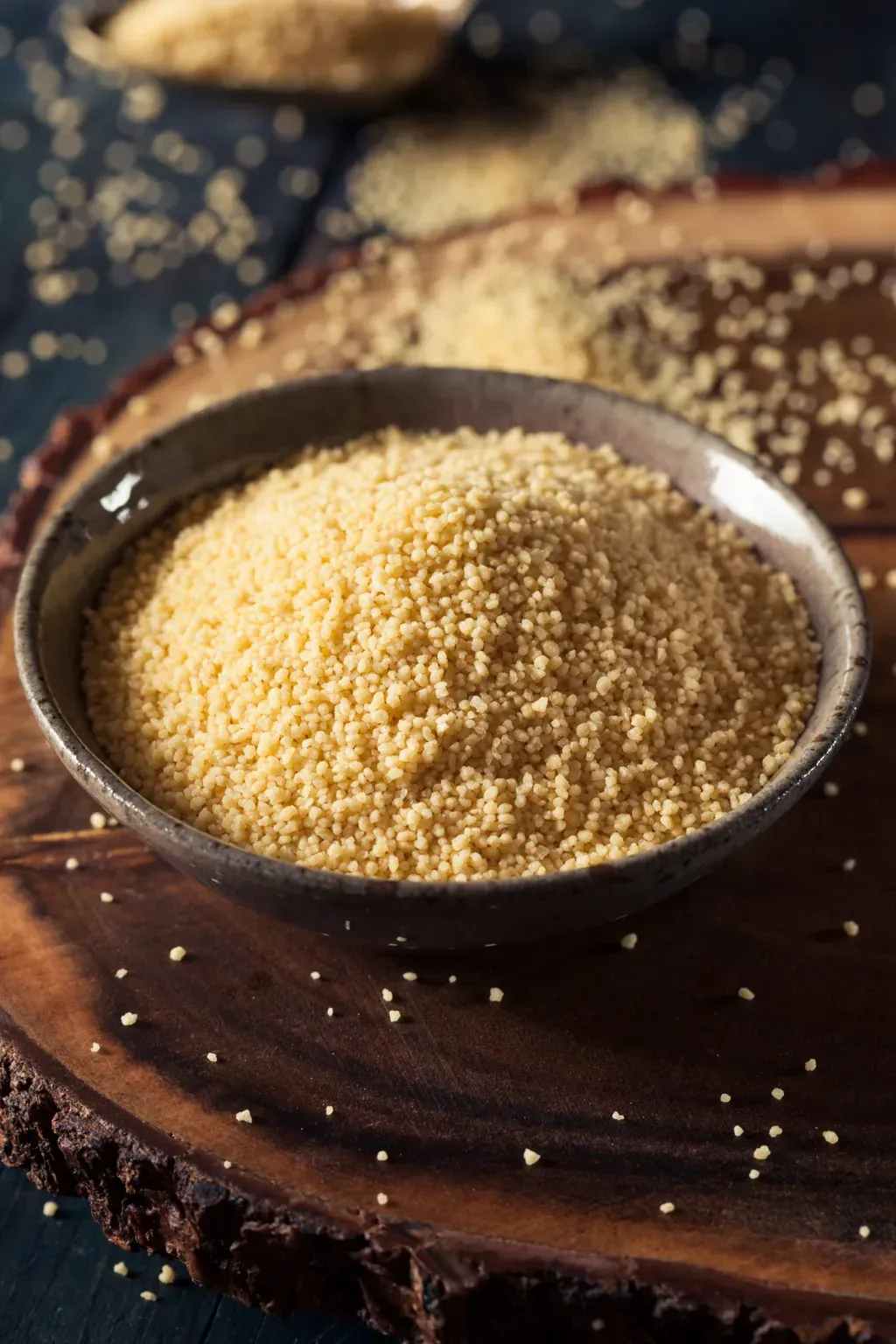
Tunisian summer cooking isn't only played out at the scale of families. It has also become a matter of international recognition. Couscous was inscribed on UNESCO's Intangible Cultural Heritage list in 2020, following a joint bid by Tunisia, Algeria, Morocco and Mauritania. Tunisian harissa followed in 2022. These inscriptions say something simple: a dish can be a shared asset, held in common by nations that otherwise often clash. Couscous unites on paper what Maghreb geopolitics divides day to day.
That memory is plural, and it isn't limited to the majority. Boukha, a fig brandy distilled by the Bokobsa house since 1880, belongs to the heritage of Tunisia's Jewish community. It's worth mentioning not as a drink, which has little place in the daily life of a mostly Muslim readership, but as a trace of a plural Tunisia, where several communities cooked side by side. The Tunisian table was built from these layered strata — Andalusi, Jewish, Arab, Berber — and forgetting that would impoverish the story; a place of memory like the table of Jugurtha owes its meaning to exactly those accumulated layers.
Heritage milestones
| Date | Milestone |
|---|---|
| 1967 | First edition of La cuisine tunisienne d'Ommok Sannafa by Mohamed Kouki, written for young brides. |
| 2020 | Couscous inscribed on UNESCO's list (joint bid by Tunisia, Algeria, Morocco and Mauritania). |
| 2022 | Tunisian harissa inscribed on UNESCO's list. |
What the table keeps
What remains is the question of what this table, at bottom, says about memory and how it's passed on. First, it says nothing is set in stone. Kouki's cooking travelled by book when the oral tradition was no longer enough; today it travels by video when the book, in turn, is no longer enough. The medium changes with every generation, and each time you worry about a loss. The loss is real, but it's never total: the dish survives, sometimes impoverished, sometimes enriched by a wider audience.
It also says that transmission comes at a cost, and that it weighs mostly on women. Celebrating the family table without naming the labour that sets it would simply repeat the old silence. A grandmother filming her méchouia for her granddaughters is doing two things at once: passing on a knowledge, and performing, once again, work that no one counts.
What granddaughters are looking for on their screens is therefore not just a recipe. It's a bond that has stretched thin, and one they're trying to knot back together another way. Tunisian summer cooking was never only a matter of freshness or taste. From the 1967 book to today's videos, it's a way of saying who you are and where you come from. The channel has changed; the question remains the same.