The sauce is the dish. A vinaigrette whisked with a touch of mustard holds together without separating. Simmered long and slow, a tomato sauce concentrates the tomato's umami, and a gently softened onion changes the taste of a plate.
How do you make a vinaigrette that won’t separate?
Shaking the jar gives you an illusion of emulsion — one that never lasts
A vinaigrette that splits back into two layers happens to everyone, and it has nothing to do with luck. All it takes is one ingredient to bind the oil and the vinegar (most often a small touch of mustard), and the whole sauce changes character: it turns smoother, thicker, and holds together over time instead of falling apart before your eyes. That, at least, is how Martha Holmberg describes it, and it's an idea worth bearing in mind the next time you make a salad.
The technique matters just as much as the ingredient. Shaking the jar gives you an illusion of emulsion that never lasts: Holmberg prefers to whisk, and will even dip a battery-powered milk frother into the bowl for a few seconds to properly bind the two liquids together. You don’t need that exact tool to grasp the principle: whisk rather than shake, and your vinaigrette will stay silky right down to the last spoonful.
Why does a slow-simmered tomato sauce taste different?
When tomato sauce simmers gently on the heat for a long time, two things are happening quietly, Holmberg explains: the flesh breaks down and softens, while the water evaporates little by little. That slow loss of water concentrates the flavours, until the sauce no longer tastes like the tomato juice it started as, but something deeper and rounder.
That something is umami. As Holmberg points out, the tomato naturally carries this fifth taste, alongside sweet, salty, sour and bitter, thanks to its glutamic acid. Simmering doesn't invent it: it reveals it. Which is why a sauce given time to come into its own always has more to say than one that's been rushed.
And what does a slowly softened onion bring to the plate?
The third gesture is the most patient one: the onion. Martha Holmberg turns it into a sauce in its own right, a caramelised onion coulis, because its flavour is sweet and its texture silky and melting. On one condition she states plainly: give it time to caramelise slowly, and never let it brown too fast. A rushed onion stays sharp; an onion forgotten over low heat turns almost into jam.
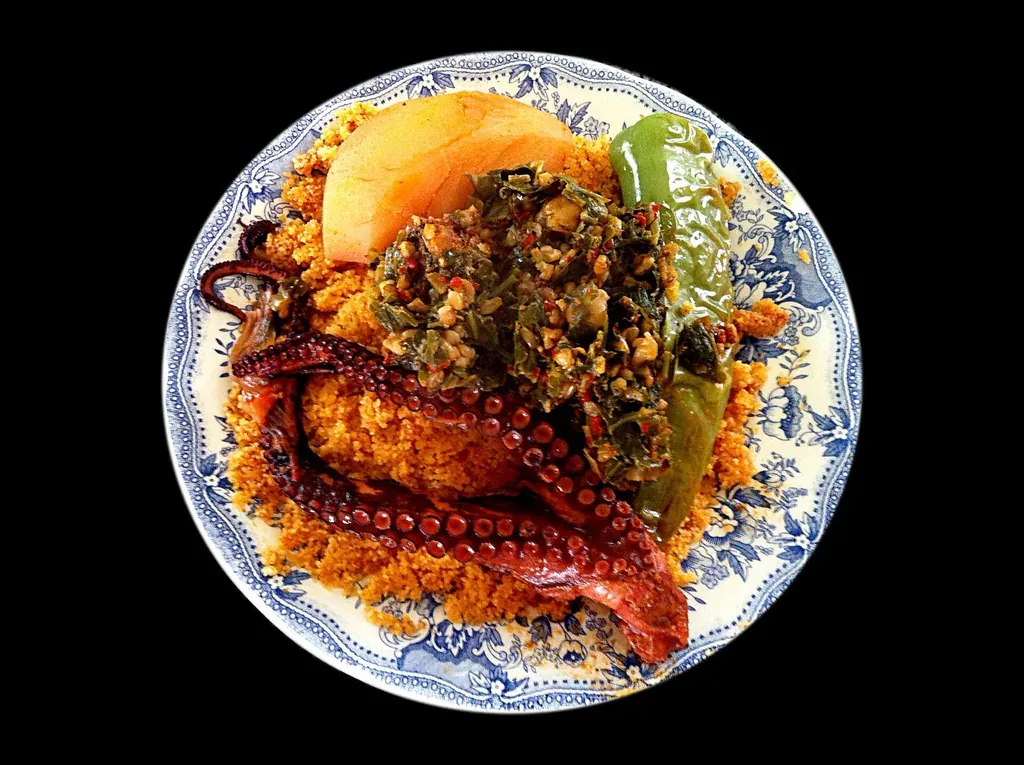
Our tables have always known this: the softened onion that opens a marqa, coats a Sunday chicken or slips under a warm mechouia salad needs no recipe and no timer, only patience and a spoon to taste.
That, in the end, is what happens when you linger a little longer at the stove or over the salad bowl: you've taken the time to whisk, to simmer, to let the onion soften without ever rushing it. You don't measure that patience in minutes: you taste it on the spoon.
Also on La Sultane
7 Little Gourmet Cravings Every Tunisian Has!