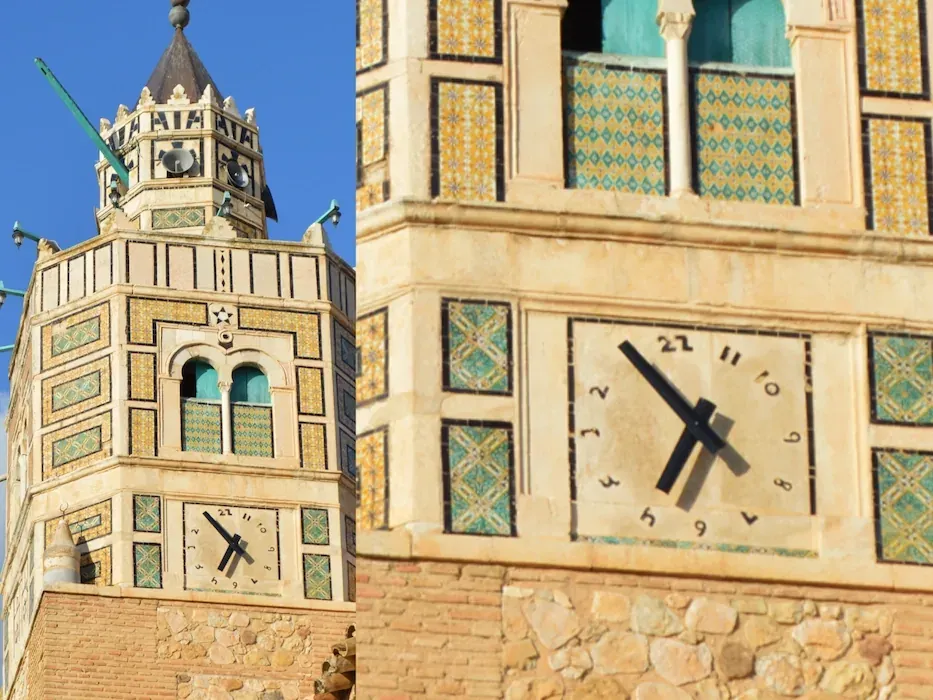
In Sidi Bou Saïd, Tunisia, the Ennajma Ezzahra palace is far more than a residence: it is a bridge between cultures and a celebration of Oriental art. Built from 1911 to 1922 by Baron Rodolphe d'Erlanger, a Franco-British Orientalist and author of "La musique arabe" (Arab Music), this architectural gem tells a story of passion, art and devotion to the cultural richness of the region.
Who was Rodolphe d'Erlanger?
Scholar, patron and artist: Rodolphe d'Erlanger, owner of Ennajma Ezzahra, took on many roles at once. As the author of "La musique arabe" (Arab Music), he produced a cultural reference work. On the Carthage headland, he found the ideal place to nurture his passion for Arab culture.
How did Ennajma Ezzahra come to be?
Built from 1911 to 1922, Ennajma Ezzahra is d'Erlanger's Oriental dream made real. Set in Sidi Bou Saïd, this hidden palace served as a crossroads for artists. It reflects not only d'Erlanger's creative daring, but also his deep love of architecture and art.
d'Erlanger's Journey: Between Legacy and Influence
Rodolphe François d'Erlanger, a Franco-British Orientalist of German-American roots, was born in 1872. He took British nationality after settling in England. His family, influential in finance and culture, left him a significant legacy: his grandfather and father were pillars of the banking world, and his brothers made their mark in science, banking and music.
Ennajma Ezzahra: A Bridge Between Two Cultures
Baron d'Erlanger is often seen as a symbol of cultural integration. Despite his fragile health, he chose Tunisia for his recovery. His love of painting and art also drew him to this country: he honed his artistic skills in Paris, then let himself be captivated by Tunisia's cultural richness. His palace, Ennajma Ezzahra, is a vibrant tribute to Andalusian architecture, illustrating his commitment to local culture.
"Star of Zahra": A Masterpiece of Architecture and Discretion
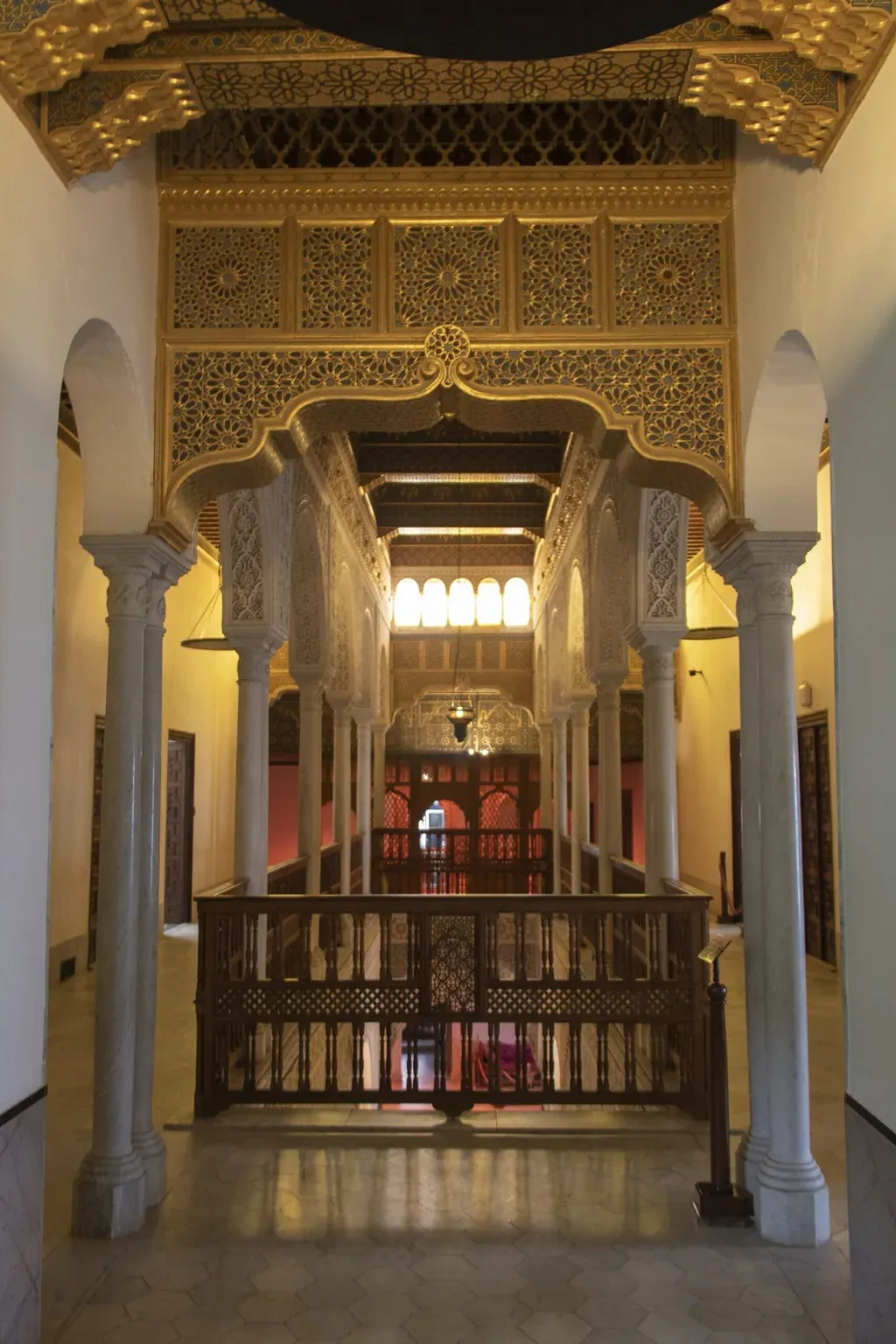
Ennajma Ezzahra stands out not only for its architecture, but also for its discretion. Tucked into the hillside, this place reflects the sensibility of its creator and blends harmoniously with the rules of Muslim urban planning. To reach the palace, visitors pass through an Andalusian doorway, following a flower-lined path.
Inside the Palace: A Blend of Beauty and Tradition
The central gallery of the grand reception hall is a feast for the eyes: arched vaults and paired columns are majestically arranged there. The finely carved plasterwork and refined marble reveal a taste for splendour, inspired by the beylical palaces. At the end of the gallery, a sliding door leads to an elegant peristyle patio, used for cultural and musical events.
The Unique Spaces of Ennajma Ezzahra
The "Music Salon", divided into three spaces, is a masterpiece of Tunisian tradition. The palace library, reached through a carved fruitwood door, holds a rich collection of books and manuscripts. The great gilded chamber, split into two parts, opens onto a balcony and the Persian garden — a feat in itself, creating a delicate atmosphere.
Ennajma Ezzahra: A Living Museum
During the Second World War, Ennajma Ezzahra suffered occupation and looting. After the death of Rodolphe d'Erlanger's son, his widow sold the palace to the Tunisian state. Today it is preserved as a museum and houses d'Erlanger's paintings as well as historical treasures.
Ennajma Ezzahra Today: A Vibrant Cultural Centre
Since 1992, the palace has been home to the Centre for Arab and Mediterranean Music. It serves as a concert venue and displays a collection of musical instruments. It also houses the Tunisian National Sound Archive, dedicated to preserving Tunisia's musical heritage, along with a lutherie workshop for restoration and research.
Key Dates
| Period | Event |
|---|---|
| 1872 | Birth of Rodolphe François d'Erlanger, Franco-British Orientalist |
| 1911 – 1922 | Construction of the Ennajma Ezzahra palace in Sidi Bou Saïd |
| Second World War | Occupation and looting of the palace |
| After the death of Rodolphe d'Erlanger's son | His widow sells the palace to the Tunisian state, which preserves it as a museum |
| 1992 | The palace becomes the seat of the Centre for Arab and Mediterranean Music |
Ennajma Ezzahra, a Priceless Cultural Treasure
Ennajma Ezzahra is far more than a mere palace: it is a living symbol of Tunisian history, culture and art. Its walls, steeped in history, tell stories of architectural innovation, artistic inspiration and cultural exchange. This place, which once sheltered Rodolphe d'Erlanger's vision, continues to fascinate and inspire today. Ennajma Ezzahra is not only a witness to the past: it is also a dynamic force in preserving and spreading Tunisian culture. In visiting the palace, one discovers more than a historical monument — one touches the very soul of Tunisia, a country rich in heritage and resolutely turned toward the future.