The best way to raise your child begins with setting the example yourself. This universal truth guides every parent keen to pass on good habits to their little ones. Discover how to put this effective parenting method into practice every day.
Teaching your child to tidy up
Guide rather than command
Start by helping your child until they have internalised the tasks to be done. Learning happens more easily when you take a playful approach. Show your child that tidying up isn't a chore to be rid of.
Avoid needless reproaches over their little clumsy moments. That way, they'll naturally want to do better.
Turning accidents into learning
If your child spills their milk, calmly tell them it's not a big deal, then hand them a sponge to wipe up the spill. This method builds their independence without creating stress.
When your child takes off their shoes and leaves their things lying around, gently remind them: "We always clean up our own things." Repeat this phrase as often as needed while reassuring them that you're there to help.
Encouraging your child's positive contribution
Value their natural qualities
Children have an innate kindness that needs encouraging so it becomes a character trait. So when the older one is caring towards the youngest, praise them warmly.
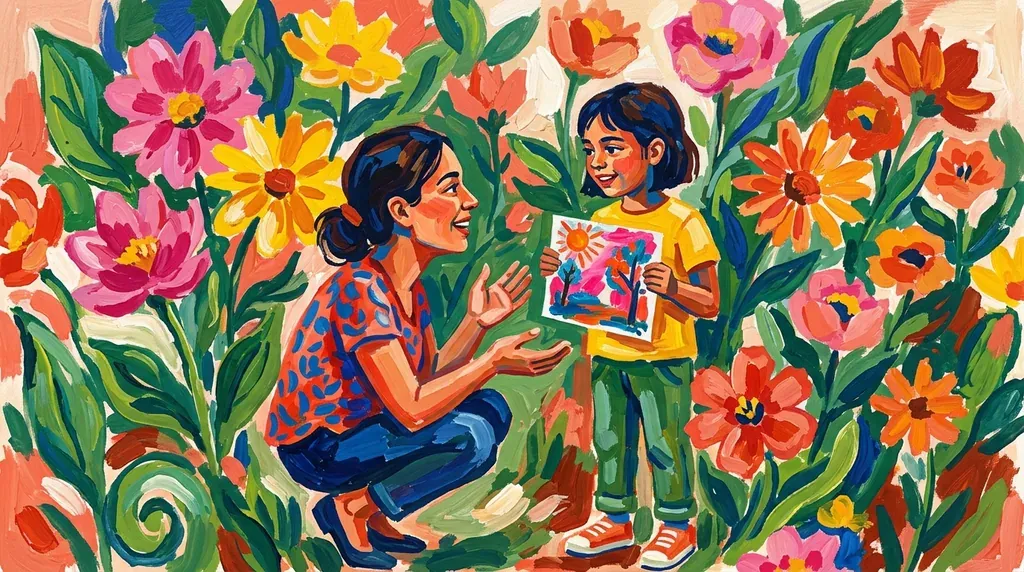
Marvel at their drawing, cheer them on when they sing or dance. This encouragement reassures them and makes them want to do better.
Letting responsibilities grow with age
As your children grow, their contributions must evolve and change. Gradually, help them become independent by taking care of their own needs. For instance, they can't leave the table without helping you clear it.
Taking a playful approach to raising your child
Avoiding the sense of a chore
Your child shouldn't experience their contribution to the family as a chore. To begin with, don't have them do things on their own until they've mastered the task and carrying it out becomes automatic.
Always take a playful approach. True, it takes more time and energy, but you'll instil in your child the desire to do things properly.
Letting the youngest join in
Letting children take part will always make more work for you. Yet the youngest feel that irresistible need to master their physical world.
Remember that you're helping your child discover the satisfaction of contributing and achieving the intended result. What's more, this time spent together creates precious moments.
Building independence rather than giving orders
Encouraging their own thinking
Instead of saying, "Go brush your teeth, get your bag, don't forget your snack," ask them: "Now that you've finished eating, what do you need to do? What do you need to get ready for school?"
This method lets them draw up their own mental to-do list. Repeat the same routine every day until they manage their morning tasks on their own.
Structuring and repeating to teach effectively
Setting up daily routines
Repetition remains necessary for them to learn properly. Structure the order in which the actions should be carried out.
| Time of day | Actions |
|---|---|
| Evening routine | Put away things left lying around, get tomorrow's things ready, go to sleep at a set time (even at weekends). |
| Morning routine | Grooming habits, folding the pyjamas, making the bed, breakfast without dawdling. |
Support without giving up
These many tasks have to be done in a short space of time. So stay close to help them hurry along and keep them from getting distracted.
After school: snack, homework, play. With age, gradually add new habits such as doing the laundry or preparing simple meals.
Raising a child by example takes patience and consistency. Even so, this method creates solid foundations for your child's future independence.