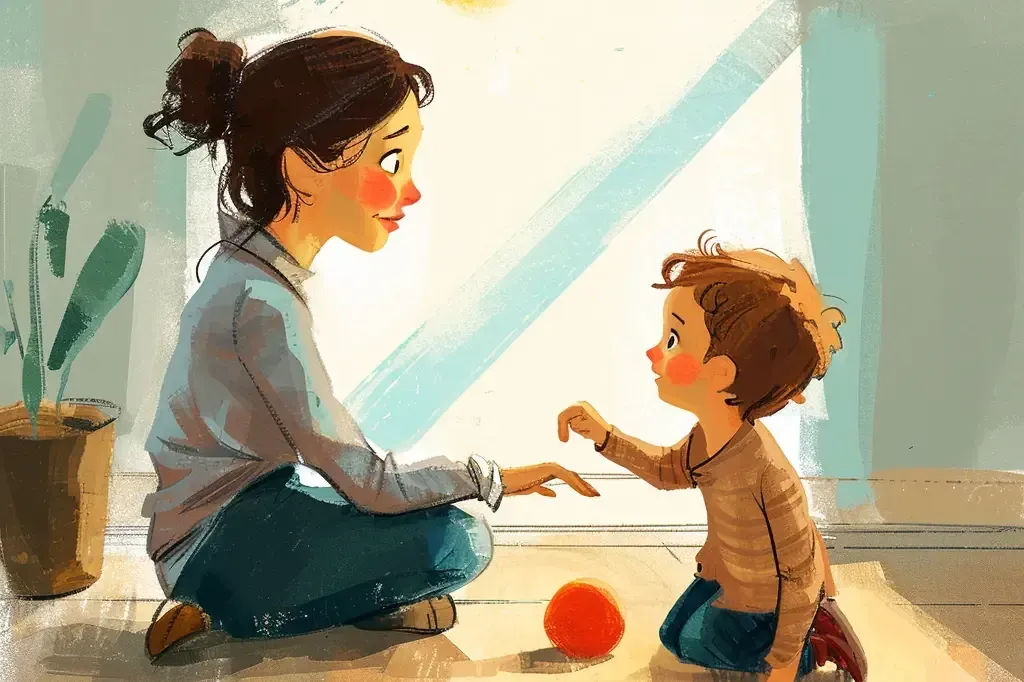
Before age two, a child doesn't yet grasp right and wrong through reason — they learn it by watching their parents' faces and listening to their tone of voice. A smile, a hug, and a gentle voice encourage a behavior; a frown and a firm (never shouted) voice signal disapproval. This guide details how to respond to curiosity, mischief, and tantrums, so you can set limits without ever giving in to anger.
A child begins to tell right from wrong by watching their parents' facial expressions. To encourage them to repeat a behavior, cuddle them, kiss them, smile at them, stroke their hair, hold them close, and cheer them on. Conversely, when they misbehave, it's enough to frown, calmly show your disapproval, and tell them firmly, but without shouting, that what they did was wrong. Repeat as many times as needed for the child to learn the difference between good and bad actions.
Children Under Two: Curiosity to Guide, Never to Punish
The Child and Curiosity
Don't punish a child under two because they won't understand what you're scolding them for: they don't yet know the difference between right and wrong. At this age, they're exploring the world around them. They're curious to discover things, to understand them. They're learning about shapes, colors, taste, and touch, and often put objects in their ear or mouth to feel what they're like.
This curiosity can lead them to do dangerous things, like putting electrical plugs, knives, or scissors in their mouth. A child isn't able to grasp how much these objects could hurt them: it's up to you to keep them out of reach. Don't scold or shout at them. Calmly take the dangerous object away, so as not to stir up their curiosity any further, then redirect their attention to something else: they'll very quickly forget the dangerous object, absorbed instead in whatever you've just handed them.
Don't Let Them Take Control
At best, your child wants to explore and have fun. At worst, they're seeking your attention. Don't let them take control: once a child realizes they can monopolize your attention, they'll take advantage of it and repeat the same mischief to get a reaction out of you. Don't let them call the shots. If you fall for it, they'll punish you by endlessly repeating the same kind of mischief the moment you stop giving them attention.
If this happens, stay calm — it's not easy, but pull yourself together and don't lose your temper. Scold them without shouting, frown, and keep a stern expression. The child will eventually learn to tell things apart and understand where the limits lie. Remember, you're responsible for their learning and upbringing: they copy things through imitation and gradually shape their personality by watching your behavior, a principle that still holds well past age two — see how to raise your child by example. Let them become a better person than you.
The ABCs of Good Parenting
- At this age, a child learns to tell right from wrong by watching your facial expressions and listening to your tone of voice.
- A child mimics those around them: the swear words and rude language they repeat come from their environment. Watch what's said in front of them — being young doesn't stop them from understanding or absorbing what's happening around them. When they burp in public, don't laugh even if it's funny: two or three years later, they'll struggle to understand why you're scolding them for the same thing.
- If the child hits you in the face, hold their hands firmly and stop them from doing it again. If they hit another child their age, hold their hands firmly, tell them gently that it's wrong, then redirect their attention elsewhere.
- Avoid aggressive or violent reactions, so as not to prompt your child to rebel and assert themselves through the same kind of misbehavior.
- Faced with a tantrum (a refused candy, crying, a forbidden object), hold them close, comfort them, distract their attention, but above all, don't give in — otherwise they'll learn to make crying and screaming their strategy for getting what they want.
- Let your child feel and touch decorative trinkets, but stay with them: talk to them, explain the object's function and color, and keep an eye out to prevent accidents (tripping, breaking things).
- Set up a spot dedicated to time-outs (a "naughty chair"): the child will know that being sent there means they've misbehaved.
Teach Your Child to Believe in Themselves
- Ask them to teach you something they know how to do: it will help build their confidence.
- Value everything they do, all their accomplishments, all their efforts.
- Hug your child several times a day: hugs release oxytocin, the attachment hormone, which reduces their anxiety and builds their self-confidence.
- Play with them and laugh often: give them half an hour a day of undivided attention, with phone and TV set aside.
- When you make a mistake in front of them, admit it — it will teach them that no one is infallible and introduce them to humility.
- Teach them responsibility: clearing their plate, washing their dish, tidying their toys and their room.
- Once they've mastered a skill, encourage them to do it independently (washing themselves, for example) rather than doing it for them.
- Notice what interests them and encourage it, without burdening them with your own dreams: help them develop their own personality, not yours.
- Teach them to express themselves: encourage them to say what they feel and what they think.
These habits, set early on, also prepare for the stages ahead: check out our guide to managing the teenage years for when these same questions about limits resurface at the age of the first conflicts.
Hugs release oxytocin, the attachment hormone: they reduce a child's anxiety and build their self-confidence.