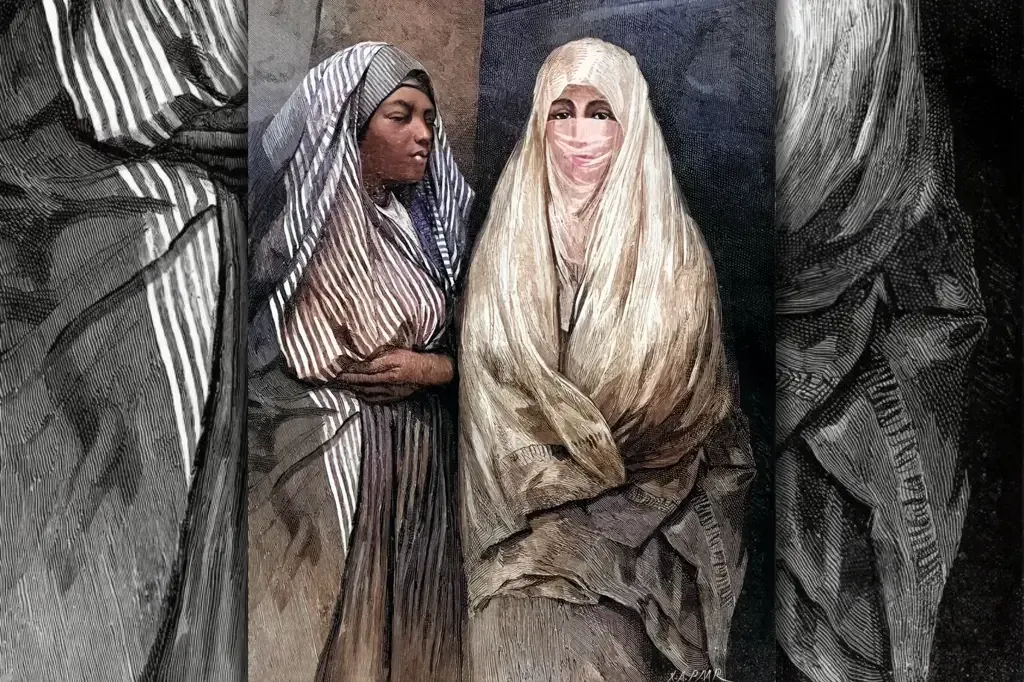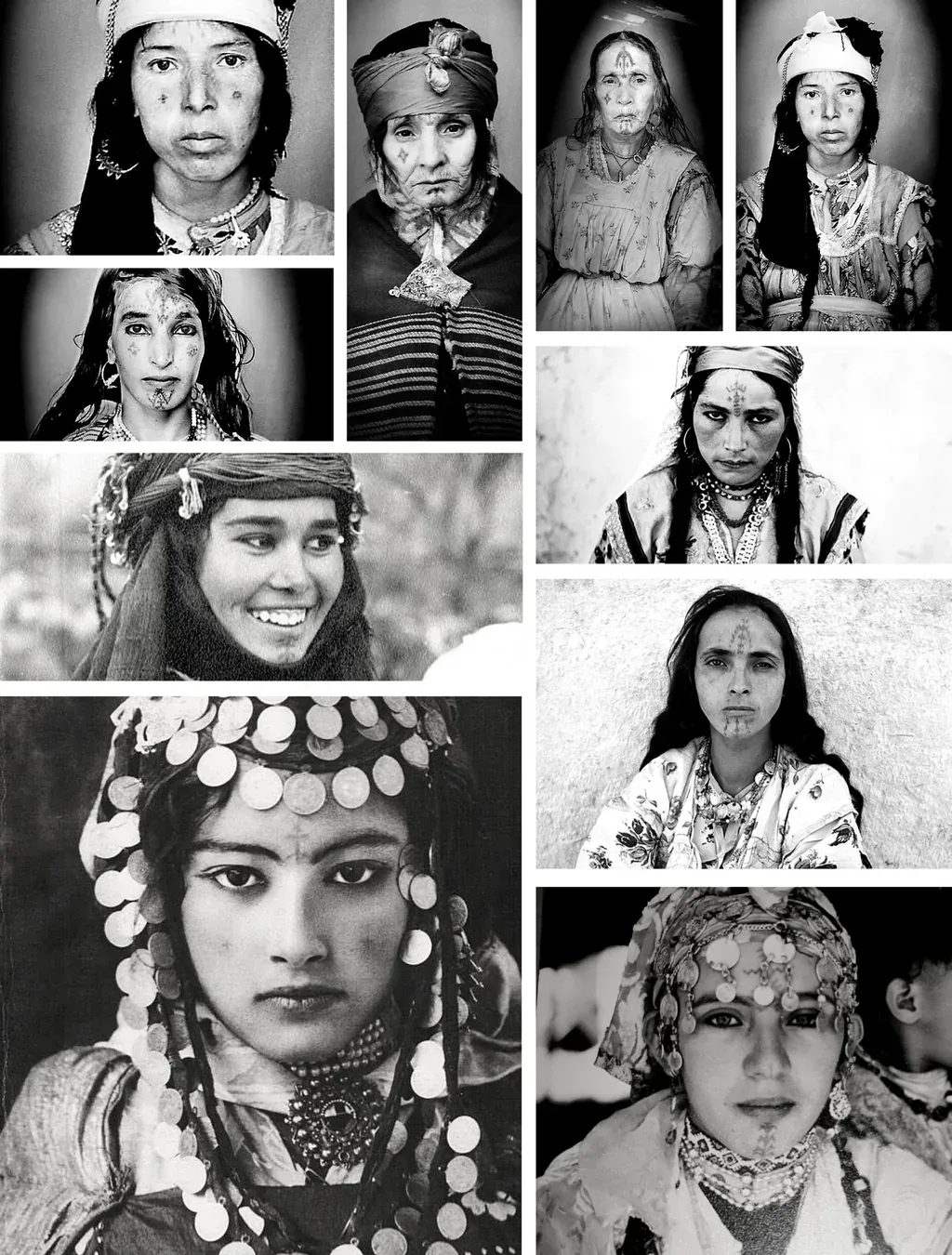
Tunisians take deep pride in their cultural heritage, and two garments embody it more than any other: the chéchia (a red felt skullcap) and the sefseri (a white veil). The first is a vermilion-red cap in the shape of a skullcap, brought over from Andalusia after 1492 and turned into a national emblem; the second is a white women's veil worn since the sixteenth century that drapes the body from head to ankles. More than seventy years after independence, these traditional garments still embody Tunisian identity and bear witness to an ancestral craftsmanship that endures through time.
The Tunisian chéchia: symbol of a thousand-year-old tradition
From Andalusian origins to national emblem
The chéchia has been an integral part of Tunisian dress traditions for centuries. This vermilion-red skullcap traces its origins to Andalusia: the Moors expelled after the fall of Granada in 1492 brought it to Tunisia, where it quickly became a refined art.
The history of this headwear reaches back to the ninth century in Kairouan, but its present-day form arrived from Spain with the Andalusian refugees. They found in Tunisia a second homeland and there developed the craft of the chéchia.
A craft of excellence with precise techniques
Making the traditional chéchia follows a meticulous process, a know-how passed down from generation to generation, much like other ancestral rituals inherited from our grandmothers. Women first knit combed wool to create the kabbous caps. These caps are then fulled with hot water and soap: the men trample them underfoot until the knitted stitches disappear.
Treatment with teasel then transforms the felt into a downy velvet, before dyeing gives it its distinctive vermilion-red colour. About a dozen people take part in this artisanal production, spread across the country according to their specialities:
- Spinning the wool in Djerba and Gafsa
- Knitting in Ariana
- Fulling in El Batan
- Dyeing in Zaghouan
- Shaping in Tunis
The challenge of globalisation
Like the sefseri, the chéchia has gradually vanished from everyday Tunisian life. In 1981, the Souk des Chaouchias counted 120 makers; today, only around thirty artisans keep this tradition alive.
In 1981, the Souk des Chaouchias counted 120 makers. Today, only around thirty artisans keep this tradition alive.
After independence in 1956, the arrival of Western manufactured goods confined the wearing of the chéchia to special occasions. Younger generations came to prefer cheaper industrial alternatives, and so many artisans abandoned this traditional trade.
The sefseri: the traditional Tunisian women's veil
A textile heritage with many facets
The sefseri is an essential element of Tunisian women's dress heritage. Worn since the sixteenth century, this white veil covers the body from head to ankles. This carefully woven cloth is made of cotton, satin or silk depending on the region.
The weaving is done by hand or with the “felaya,” a technique that demands precision and a deft touch. In southern Tunisia, the sefseri takes on vivid colours that reflect the region's cultural diversity.
The changing customs of dress
During the 1960s, Habib Bourguiba opened the way to women's emancipation, and the way Tunisian women dressed gradually changed. The sefseri then gave up its place in daily life to be reserved for traditional ceremonies, notably the “wedding hammam.”
The contemporary revival of traditional Tunisian garments
A post-revolution renewal
After the revolution of 14 January 2011, a new generation rediscovered these traditional garments. Artists, stylists and designers began weaving the chéchia and the sefseri into contemporary fashion, a modern approach that has met with remarkable success.
The Tunisian Office of Traditional Industries confirms this trend: 80% of chéchias are exported to Algeria, Morocco, Sudan and as far as Asia. These accessories are becoming symbols of a modern Tunisian identity.
Innovation and tradition: a creative balance
Faced with foreign influences on dress, Tunisian designers are reinventing the sefseri: they adorn it with pompoms and embroidery and adapt it to current trends. This approach asserts a sense of belonging to the national heritage in the face of imported fashions.
Artisans are likewise diversifying the chéchia: new colours, shapes and decorations draw in a younger clientele. This creativity is breathing new life into a declining craft.
Preserving Tunisia's sartorial heritage
These traditional garments would deserve a dedicated space within Tunisia's cultural institutions. They embody a thousand-year-old know-how that testifies to the richness of the national heritage — the very memory that La Sultane explores from Carthage, at the origins of Tunisia, to the alleyways of Mahdia, a historic pearl of the Mediterranean coast. Yet the current climate is pushing many artisans to give up their trade.
Safeguarding these traditions calls for urgent measures. The State, designers and civil society must work together to preserve these authentic expressions of Tunisian identity. Only then will the chéchia and the sefseri continue to be handed down to future generations.