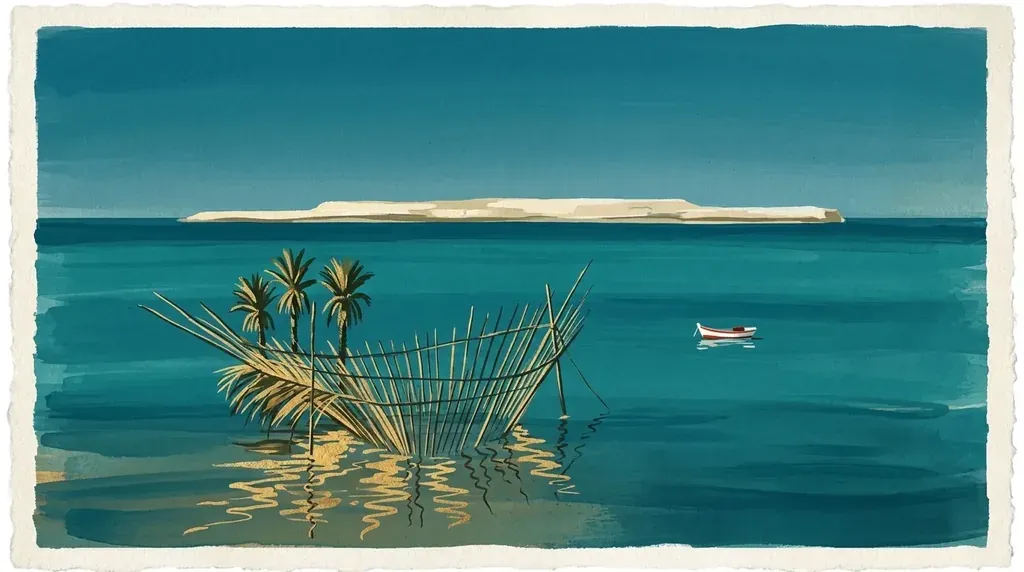
Malta: a week at the crossroads of two continents
An archipelago of eight islands bathed by the Mediterranean, Malta is the meeting point between Europe and Africa. Its history is intimately intertwined with that of Tunisia. As a result, striking similarities emerge between the two civilisations. A week is hardly enough to discover all the wonders of this country, but this is how our journey unfolded.
An overview of the itinerary, day by day:
| Day | Stops | Highlights |
|---|---|---|
| Day 1 | Sliema, Valletta | Sliema seafront, the bastions and forts of Valletta, the National War Museum, Casa Rocca Piccola |
| Day 2 | Mdina, Rabat, Golden Bay | The silent city of Mdina, the Roman remains of Rabat, Golden Bay beach |
| Day 3 | Tarxien Temples, Marsaxlokk | UNESCO-listed Neolithic temples, a colourful fishing harbour |
| Day 4 | Blue Grotto | Caves with phosphorescent reflections |
| Day 5 | Gozo: Savina, Calypso's Cave, Victoria, Dwejra | Artisanal specialities (tomatoes, cheese), the legend of Ulysses and Calypso, the Citadel of Victoria, the Azure Window |
| Day 6 | Comino, Blue Lagoon | The cyan-to-emerald waters of the Blue Lagoon |
| Day 7 | Return to Tunisia | Looking back on the trip |
Exploring the north of the island of Malta
Day 1: Sliema and Valletta, between modernity and heritage
Our adventure begins in Sliema, Malta's main seaside resort. This lively town has reinvented itself: modern villas sit alongside contemporary flats and luxury hotels. Visitors enjoy shopping in the malls and savour typical Maltese cuisine in a variety of restaurants.
There's plenty for beach lovers and anyone looking to unwind. Water sports, snorkelling in particular, appeal to the more adventurous. The coastal promenade stretches for several kilometres, from Saint Julian's Bay to Gzira. It draws joggers and walking enthusiasts alike.
Next, on to Valletta, the country's capital and a UNESCO World Heritage Site. This city bears the name of its founder, the respected Grand Master of the Order of Saint John, Jean Parisot de la Valette. The magnificent fortress city rises on the arid rocks of the Mount Sceberras peninsula. It looks down abruptly over two important harbours: Marsamxett and the Grand Harbour.
The fascinating history of Valletta
The construction of Valletta began in 1566 and was completed after an astonishingly short span of 15 years. Its builders raised impressive bastions, forts and a majestic cathedral. The city comes alive during the day, while keeping a timeless atmosphere. Its grid of narrow streets is home to some of the finest works of art in Europe, along with remarkable churches and palaces.
Valletta offers a vast cultural programme. As you walk, you discover intriguing historical sites at every street corner: votive statues, niches, fountains and coats of arms adorn the parapets. The narrow alleyways are full of picturesque shops and welcoming cafés. Meanwhile, the main thoroughfares are lined with big international retailers: fashion, music, jewellery and much more.
The National War Museum: witness to history
We visit the famous National War Museum. It traces the events leading up to the two World Wars, how they unfolded and their key battles, as well as their consequences, both locally and abroad. The museum pays particular attention to Malta's role in the theatre of war and to the contribution of the Maltese people to the war effort, especially during the incredibly harsh conditions of 1942.
The exhibition reveals Malta's role as a fortress from 1798 onwards, focusing mainly on the Second World War. Numerous photographic panels are displayed alongside artillery pieces, aircraft wrecks, uniforms and other military memorabilia.
Casa Rocca Piccola: four centuries of family history
As we wander the streets of Valletta, we notice an incredible villa more than 400 years old: Casa Rocca Piccola. A Knight of the Order of Saint John of Jerusalem, Don Pietro La Rocca, had it built in the 16th century. The first Marquis de Piro later bought it. His family still lives there.
Nine generations of the family have lived in this residence. Each one has added its own objects, paintings and photographs. Only half of the residence is open to the public and houses an important collection of works of art and antiques. Various other objects reveal the family's many stories over the years.
Twelve sumptuous rooms, left almost untouched over the course of history, illustrate the different facets of this residence that continues to move with the times. A complex of cisterns converted into bomb shelters during the Second World War rounds off the visit. What makes Casa Rocca Piccola special is the unique window it offers onto the customs and traditions of the Maltese nobility over the last 400 years.
Day 2: Mdina, Rabat and Golden Bay
After the wonder of the first day, we continue our discovery. A horse-drawn carriage ride takes us round Mdina. This city has borne various names and titles according to its rulers and its role, but none describes it better than its medieval name: "Citta Notabile", the noble city.
The history of Mdina goes back more than 4,000 years. This city lays claim to the origins of Maltese Christianity. Here, in 60 BC, the apostle Saint Paul is said to have lived after being shipwrecked on the archipelago. Lit up at night and nicknamed the "silent city", Mdina fascinates with its timeless atmosphere and its cultural and religious treasures.
Rabat: Roman heritage and religious traditions
We carry on to Rabat, which plays a major part in Malta's past and is a chief source of its cultural heritage. This large provincial district was part of the Roman city of Melita. The archaeological sites and relics bear witness to the importance of this city during the Roman period.
For centuries, religious orders settled in Rabat. The Franciscans, the Dominicans and the Augustinians are still present in large numbers in their spacious convents and monasteries. They see to the religious needs of the parishioners in their churches. Rabat features prominently on tourist maps thanks to its historical and archaeological sites: the Roman House, the Catacombs, St Paul's Grotto and the beautiful churches and monasteries.
Our day ends with a swim at the magnificent Golden Bay beach, one of the best sandy beaches in Malta.
Exploring the south of the island of Malta
Day 3: Tarxien Temples and Marsaxlokk
Our first stop takes us to the Tarxien Temples, a complex of four religious structures dating back to the late Neolithic period and the early Bronze Age. This site is, of course, a UNESCO World Heritage Site.
We continue our stroll towards Marsaxlokk, a fishing village renowned for its colourful boats and the typically Mediterranean atmosphere of its local market. The harbour of Marsaxlokk is the largest fishing port in Malta.
A surprising linguistic discovery
Here, to our astonishment, we discover how closely the Maltese language resembles the Tunisian dialect! Maltese is a language of Semitic origin written in Latin characters. It blends English, Arabic and Italian. It is the official language of Malta, alongside English.
A few words in Maltese:
- "wieħed tnejn tlieta erba": one, two, three, four
- "merħba": Welcome
- "imħabba": Love
- "Flus": Money
- "Suq": Market
A sign spotted in the street: "jkun responsabbli għall-ambjent tagħna, tindif wara l-kelb tiegħek" (Be responsible for our environment, clean up after your dog). Let's hope to see this very same sign in Tunisia one day!
Day 4: Blue Grotto and reflections on hospitality
The hospitality of the locals and their kindness make us feel as though we are in our own country, not passing tourists. Their level of civilisation and their way of life embody the very definition of excellence. Malta, which lives on tourism alone, teaches the greatest countries in the world a lesson in how to value one's nation and offer the best to its citizens.
Now on to the Blue Grotto. This fascinating natural cave, bathed in sunlight, sits amid an array of surrounding caves that reflect the phosphorescent colours of the submerged flora and the deep blue hue of the sea. The site attracts some 100,000 tourists a year and even appeared in the film Troy (2004) with Brad Pitt.
Adventure in Gozo
Day 5: The authentic sister island
We take the ferry to visit the island of Gozo. As soon as we arrive at the port of Mgarr, we admire the island in all its splendour. Historically, this land has always differed from mainland Malta. Distinct landmarks, specific traditions, particular events and a unique topography set the island apart, both within the country and as a tourist destination.
Lower population density and slower urbanisation give the island its distinctive character. It wins over travellers looking to unwind.
Wherever you are, the sea is always close by. Gozo's superb coastline fires the imagination: small coves, red sand beaches, turquoise bays, stretches of limestone broken up by little salt basins and high, majestic cliffs that plunge abruptly into the clear waters.
Savina Creativity Centre: culinary traditions
Our first visit takes us to the Savina Creativity Centre. We choose to discover it all: a tour of the tomato-processing factory, the dairy centre and cheese-making, and the artisans' workshops. We also observe traditional crafts, listen to talks on the nutritional value of Maltese cuisine and attend cookery classes with professional chefs.
Savina's delicacies are born from recipes handed down from generation to generation in the Magro family. From "qaghaq ta'l-Ghasel" (honey rings) to sun-dried tomatoes, from carob syrup to pâté, from infused vinegar to various kinds of chutney and homemade pasta sauce. All these first-class local specialities are mainly produced in the kitchen on site.
Calypso's Cave: a Homeric legend
We continue to the famous Calypso's Cave, set in a cliff near Xaghra, overlooking the sandy beaches of Ramla Bay. It is thought that this site matches the one mentioned by Homer in "The Odyssey". Calypso, the beautiful nymph, kept Ulysses here as a "prisoner of love" for seven years. She had promised him immortality if he stayed with her, but he escaped as soon as he could to return to his wife Penelope.
The inside and outside of the cave are not especially striking, but the magnificent view over Ramla Bay and the valley makes the visit memorable. On the shore, below Calypso's Cave, you can also see the remains of the Marsalforn tower, a fortification built by the Knights of Malta at the beginning of the eighteenth century to guard against attacks from the sea.
Victoria and the Citadel
We choose to have lunch in Victoria, formerly called Rabat, the main town of Gozo. The Citadel stands out, visible from almost the whole island. Its roots lie in the medieval era, but the hill has been home to settlements since the Neolithic.
For centuries, the Citadel served as a sanctuary against the attacks of Barbary corsairs and Saracens. On several occasions in Gozo's history, these raiders enslaved its population. After the Great Siege of 1565, the Knights set about re-fortifying the Citadel and providing a defensive refuge against fresh attacks. Until 1637, the law required the population of Gozo to spend their nights in the citadel for their own safety. This restriction would later be lifted.
Victoria is not only the geographical centre of Gozo, it is also the heart of daily life. It combines the bustle of its markets and shops with a relaxed, sociable atmosphere. It is an ideal place to watch the islanders go about their daily lives, especially when the main market square, It-Tokk, comes alive.
Dwejra and the Azure Window
We end our day in Gozo with an outing to Dwejra. Classified as a nature reserve by the European Union, the Dwejra site has been spared from unregulated building. It is home to the Azure Window, a natural arch that resembles a table on the sea. Two almost perpendicular vertical rocks support a huge horizontal mass, shaped by vast geological faults and by wind and waves eroding the rock over time.
It attracts a great many visitors and inspires numerous artists who paint this magical site on canvas. The Azure Window has appeared in the films "Clash of the Titans" and "The Count of Monte Cristo".
Discovering Comino
Day 6: Blue Lagoon, an earthly paradise
The island of Comino nestles between the islands of Malta and Gozo. This tiny island covers 3.5 km². Its name comes from the abundance of cumin plants (Comino in Maltese) that once grew on the island.
Comino remains practically deserted, with a permanent population of 4 people plus a priest and a policeman a few days a week. Most of its coast is made up of vertical cliffs honeycombed with grottoes and caverns.
The famous beach of Comino, the Blue Lagoon, is a true paradise on earth. The shallow sandy bottom and the purity of the water, thanks to the sea currents, colour the cove in a hue that varies from cyan blue to emerald green. This wonder draws tourists, divers and boaters. We spend the day swimming and enjoying the sun.
Return to Tunisia
Day 7: Unforgettable memories
We leave Malta with heavy hearts, carrying memories etched in our minds. It is an exemplary country that has inherited the best of the two continents: Europe and Africa. We sincerely hope that Tunisia will one day reach this country's level, starting by completely rethinking Tunisian tourism policy.