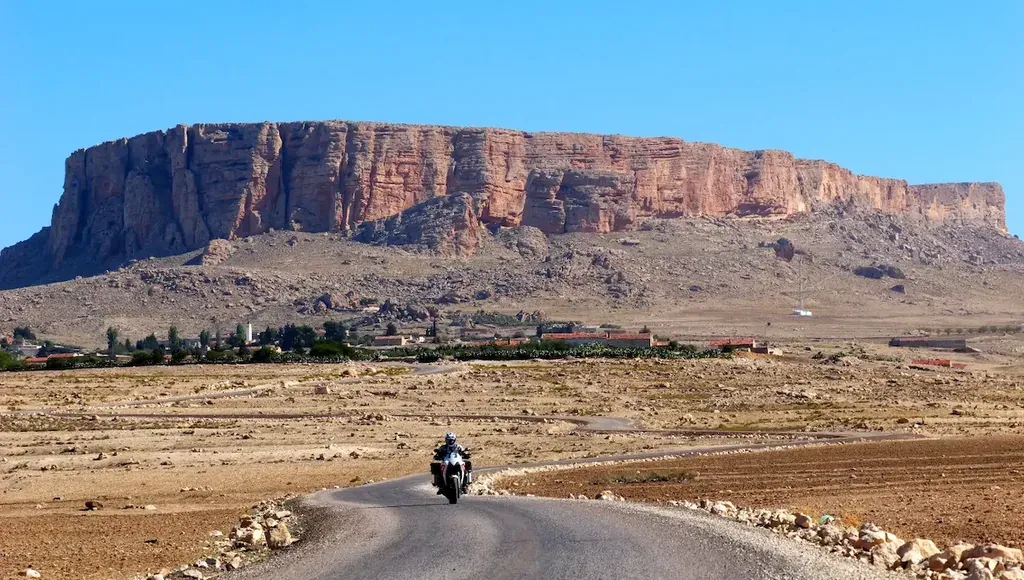
Perched on a plateau in north-western Tunisia, within the delegation of Téboursouk, Dougga (ancient Thugga) owes its preservation to its distance from the major cities. In 1997, Unesco listed it as the best-preserved Roman town in North Africa. Its theatre, Capitol, Libyco-Punic mausoleum and temples trace layers of Libyan, Punic, Numidian, Roman and Byzantine history.
Dougga: where is this remarkably well-preserved site?
Unesco listed it in 1997 as the best-preserved Roman town in North Africa.
Picture the road that leaves Tunis heading north-west and climbs gently until the landscape opens onto a plateau: there, deep in the countryside, Dougga awaits, also known as Thugga. The site lies within the delegation of Téboursouk, far from any urban bustle, tucked away like a secret the Tunisian countryside has kept well.
The town clings to a slope that rises towards the north and ends, to the east, at the cliff known as Kef Dougga. Allow a few kilometres from Téboursouk, the modern town: enough to feel you have entered another world, yet little enough to make it a day trip.
Why has Dougga withstood the passage of time so well?
It was in 1997 that Unesco added Dougga to the World Heritage List, describing it, in its own words, as "the small Roman town that is the best preserved in North Africa." That recognition transformed how this plateau in north-western Tunisia is seen: it is now a global reference point, the kind of place you recommend to any friend curious about Roman archaeology.
What strikes visitors on site is just how much history it holds: the Libyan, Punic, Numidian, Romano-African and Byzantine layers can be read one after another, in monuments that have remained remarkably intact.
Which monuments tell the story as you walk the site?
As you walk the site, a single thread guides the visit: the Libyco-Punic mausoleum, the Capitol, the theatre, then the temples of Saturn and Juno Caelestis form the stages that have made Dougga famous. Linger at the theatre: it ranks among the best preserved in Africa, and its cavea, the tiered seating, is still clearly visible.
This route alone speaks to the depth of the place. From the dolmens to the Byzantine fortifications, every stage of ancient African history is on display here, from the Libyco-Punic mausoleum to the Capitol and the temples of Saturn and Juno Caelestis.
What does ancient history reveal in the stones of Dougga?
Long before it became Roman, Dougga was already inhabited. The oldest evidence found on the site is a dolmen necropolis, attesting to human presence dating back at least to the Neolithic. The founding of the town itself reaches just as far back in time.
But Dougga’s story does not end with Roman splendour. Like many ancient cities in the region, it experienced a gradual urban decline from late antiquity onward. Life there grew quieter, activity contracted, yet the town was never entirely abandoned. Later, its population was even relocated to a new village, named New Dougga.
As you take the road back towards Téboursouk, then Tunis, what stays with you is that sweep of time crossed in a single walk: from the dolmens to the Byzantine stones, by way of the Libyco-Punic mausoleum, the Capitol and the theatre. Give yourself this day without rushing it: sturdy walking shoes, plenty of water, a hat and a willingness to wander are all it takes for Dougga to tell you, at its own pace, everything it has lived through.
Also on La Sultane
Testour: A Guided Tour at the Heart of an Andalusian Town