Barbarossa — born Aruj Reis — was a 16th-century corsair born in Mola, on the island of Lesbos, who became one of the most striking figures in the maritime history of the Mediterranean and North Africa. Proclaimed sultan of Algiers after his victories over the Castilians, he is recognised as the founder of Al Jaza'ir, before dying in 1518 defending Tlemcen against the Spanish. This article retraces his career as a corsair, the legacy carried on by his brother Khair-Eddine, and the confrontations that the Spanish-Ottoman rivalry — from Charles V to the Battle of Lepanto — brought to bear on Tunisia and Algeria.
The Fate of Prisoners Under Barbarossa
The Ordeal of the Captives
In Barbarossa's time, prisoners of the corsairs faced a grim reality. They would try to pass themselves off as poor, thereby lowering their ransom. Once they reached the ports, these captives were sold as slaves. Their life in the penal quarters was marked by exhausting labour. On the galleys, they wore heavy chains. Faced with this harsh existence, many attempted to escape. For those recaptured, the punishments were severe.
The Response of the Christian Societies
In the face of this situation, Christian societies rallied. With the backing of King Francis I, they sought to free these captives. In 1635, one of these societies pulled off a remarkable feat, freeing or exchanging 37,720 slaves. Among them, Saint Vincent de Paul, captured by Tunisian corsairs, shared his painful experiences and his escape.
Barbarossa's Impact on the Mediterranean
The Intervention of the Spanish Forces
Barbarossa's menacing presence alarmed Europe. In response, the Spanish intervened in North Africa as early as 1505. They seized important ports such as Melilla and Oran. But the Turks, firmly established since 1453, put up fierce resistance.
Barbarossa and Khair-Eddine: Corsair Brothers
At the heart of these battles, Barbarossa and his brother Khair-Eddine shone. They turned Tunis into a formidable base of operations. Under their rule, Algiers became a powerful kingdom. But in 1518, Barbarossa's death marked a turning point. Khair-Eddine then took up the mantle, with the support of Constantinople.
Charles V's New Expedition
Charles V's Offensive Against Khair-Eddine
To drive Khair-Eddine out of Tunis, Charles V launched an ambitious crusade. He successfully captured La Goulette, despite its robust defences. At Tunis, Charles V's forces won a significant victory over the Turks. At the same time, an uprising of 10,000 Christian slaves broke out. They seized control of the Kasbah and turned the cannons against Khair-Eddine, who was forced to flee. After the Spanish took Tunis, the city suffered excesses and massacres in 1535. Yet as soon as Charles V departed, revolts erupted in various Tunisian towns, notably in Kelibia, Sousse, Monastir and Sfax. Spanish efforts to suppress these insurrections came to nothing, and their presence was ultimately confined to Oran.
The Battle of Lepanto
In 1571, Philip II, successor to Charles V, made history by crushing the Turkish fleet at Lepanto, a small Greek port. This historic victory checked Turkish expansion in the Mediterranean. The Spanish fleet, returning to La Goulette and Tunis, met little resistance. However, once the Spanish army withdrew, the Turks quickly regained control of La Goulette and of the Spanish forts of Saint-Jacques, Bab Bhar and Tunis. The Spanish, despite fierce resistance, were captured or killed. Their leaders were sent into slavery in the East, leaving Tunisia and Algeria under Turkish domination. Morocco, for its part, retained its independence throughout these conflicts.
An Extraordinary Destiny: Aruj Reis, Barbarossa
The Early Days of Aruj Reis
Aruj Reis, better known as Barbarossa, was a feared and respected corsair. Proclaimed sultan of Algiers after his victories over the Castilians, he is recognised as the founder of Al Jaza'ir. His nickname of Baba Aruj, earned after rescuing Muslims fleeing Spain, underscores his humanity. He died defending Tlemcen against the Spanish in 1518.
Barbarossa's Maritime Legacy
Barbarossa, born in Mola, Lesbos, was the son of Katarina, a Christian convert to Islam, and of Yakup Reis. Together with his brothers, Khayr ad-Din and Ilyas, he led maritime campaigns across Anatolia, Syria and Egypt. In 1503, they established Djerba as their principal base. Their renown grew rapidly as they captured ship after ship, including two papal galliots near the Island of Elba. Their reputation spread further with their humanitarian actions, notably ferrying Muslims fleeing the Spanish Inquisition to North Africa. The Barbarossa brothers became legends of the sea, capturing 23 ships in less than a month.
La Goulette, Barbarossa's Strategic Base
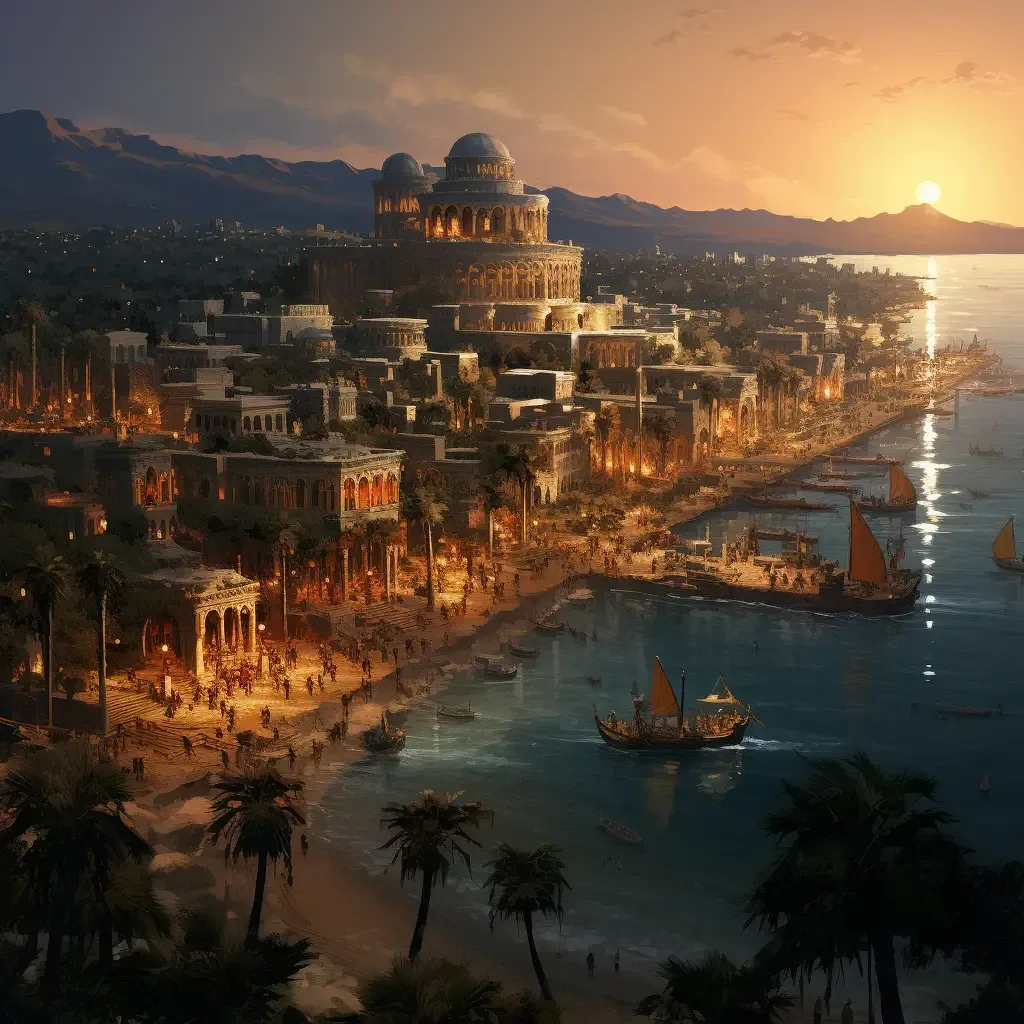
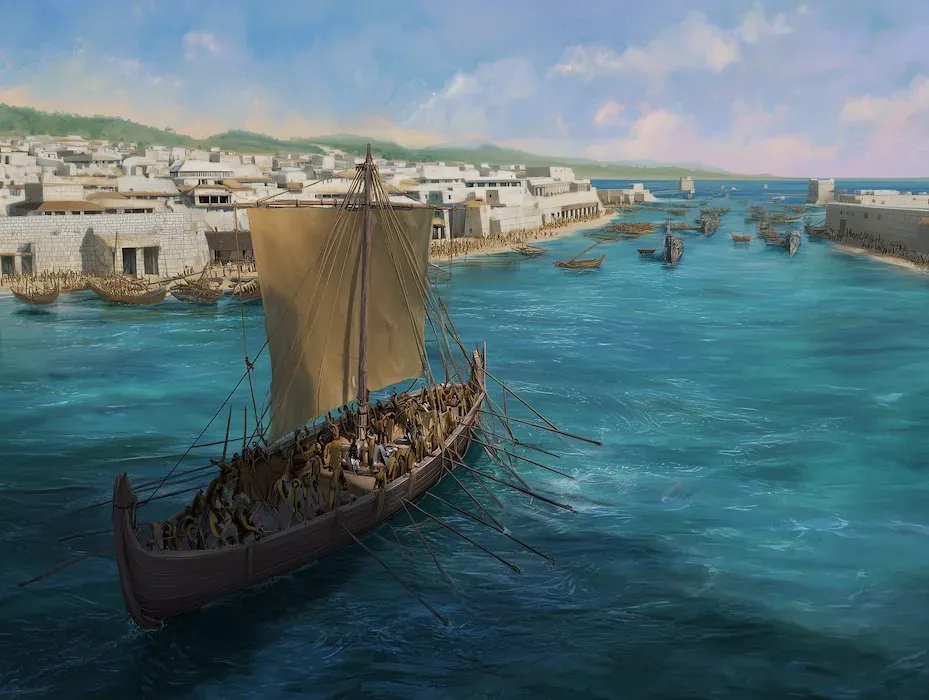
At La Goulette, Barbarossa and his brothers set up key infrastructure: three additional galliots and a gunpowder works. This base soon became a focal point of their maritime operations.
In 1513, they captured four English ships sailing towards France. They pressed on to Valencia, seizing four more vessels. Near Malaga, a Spanish galliot likewise fell into their hands. The years 1513 and 1514 saw the brothers engage in several successful clashes against Spanish squadrons, demonstrating their supremacy at sea.
After transferring their base to Djijelli, east of Algiers, in 1514, they launched a major offensive. Armed with twelve galliots and backed by 1,000 Turkish soldiers, they laid waste to two Spanish fortresses at Béjaïa. When the Spanish attempted a counterattack under Miguel de Gurrea, Barbarossa and his brothers struck back by seizing Ceuta, then reconquering Jijel in Algeria. Their campaign extended to Mahdia in Tunisia, as well as to the coasts of Sicily, Sardinia, the Balearic Islands and Spain, where they captured three great vessels.
In 1515, they captured several ships off Majorca. Acknowledging his successes, the Ottoman sultan Selim I presented him with two galliots and two diamond-encrusted swords. In 1516, with the support of Kurtoglu, they besieged the fort of Elba, then headed towards Liguria, where they captured twelve vessels and damaged 28 others.
The Mystery of Barbarossa
Barbarossa was not content with maritime conquests; he immersed himself in Tunisian culture, adopting its languages and customs. He devoted himself body and soul to defending Tunisia, sparing it destruction and pillage.
Although Barbarossa played a crucial role in the history of Tunisia, many aspects of his life remain shrouded in mystery. His turbulent journey left a profound mark on the country — a legacy that, oddly, many Tunisians know only vaguely.
Barbarossa Timeline: Historical Milestones
| Year | Event |
|---|---|
| 1503 | Aruj Reis and his brothers establish Djerba as their principal base. |
| 1505 | The Spanish intervene in North Africa and take Melilla and Oran. |
| 1513–1514 | Capture of several ships (including four English vessels) and victories against Spanish squadrons. |
| 1514 | Settlement at Djijelli; seizure of two Spanish fortresses at Béjaïa, then of Ceuta and Jijel. |
| 1515 | Capture of several ships off Majorca; the Ottoman sultan Selim I gifts two galliots to Barbarossa. |
| 1516 | Siege of the fort of Elba, then campaign in Liguria (twelve vessels captured). |
| 1518 | Death of Aruj Reis (Barbarossa) defending Tlemcen; Khair-Eddine takes up the mantle. |
| 1535 | Charles V seizes La Goulette and Tunis. |
| 1571 | Battle of Lepanto: Philip II crushes the Turkish fleet. |
| 1635 | A captive-ransoming society frees or exchanges 37,720 slaves. |