By 2050, green hydrogen projects could consume a quarter of Tunisians' water needs, according to official reports, in a country said to have already entered water bankruptcy. The electrolysis process, and the desalination it requires, place heavy demands on this resource, while nearly 100 gigawatts of renewable infrastructure would be needed: all without the hydrogen produced benefiting the local market, since it is destined for export.
What is green hydrogen, and why does it demand so much water?
Tunisia will not use this green hydrogen itself: it will be exported to Germany and other Northern European countries.
Green hydrogen is a clean, sustainable fuel produced through the electrolysis of water. That technical definition, simple as it sounds, already contains the whole question of the water these projects consume.
The process separates hydrogen from oxygen using electricity drawn exclusively from renewable sources such as solar or wind power. These projects also rely on desalination, meaning water is used twice over: once as the raw material for electrolysis, and once as a resource that must first be produced to feed the process.
How much water and energy will these projects really consume?
According to reports and studies from official bodies, green hydrogen projects will consume, by 2050, a volume of water equivalent to a quarter of Tunisians’ needs. The finding is all the more troubling given that Tunisia is said to have already entered a phase of “water bankruptcy,” with the share of water available per inhabitant falling year after year.
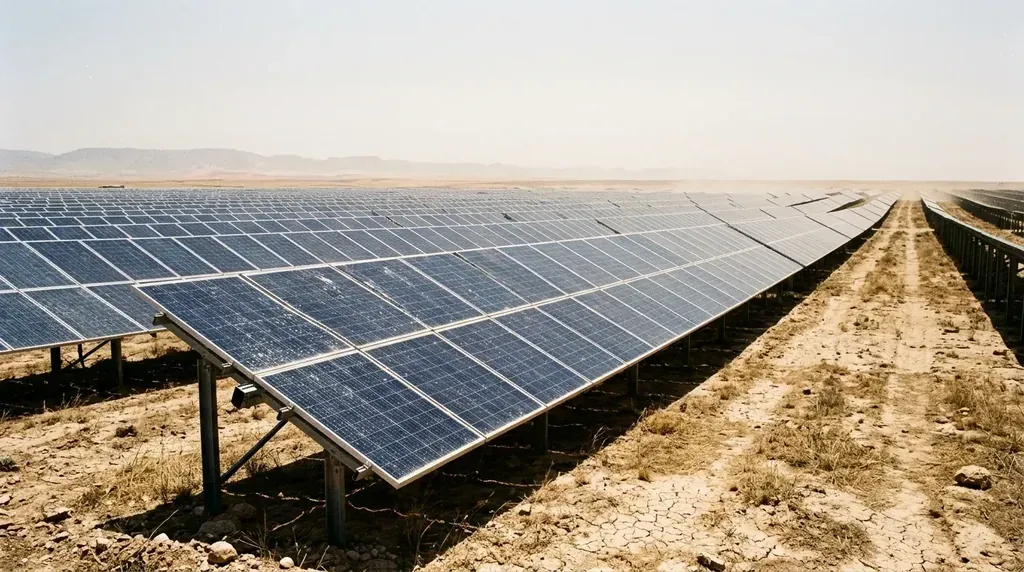
These same projects call for the deployment of renewable infrastructure with a capacity of nearly 100 gigawatts, almost twenty times the country's current energy output.
Will Tunisia benefit from its own green hydrogen?
Tunisia is now presented as one of the most promising sites in the Mediterranean to become a regional hub for producing and exporting green hydrogen. That promise raises a simple question: will the local market benefit from this production?
The answer, as things currently stand, is no. Tunisia will not use this green hydrogen itself: it will be exported to Germany and other Northern European countries. Production is therefore geared toward external uses, far removed from the energy needs of the very country that produced it.
Where will these projects be built, and at what cost?
The planned projects are to be built in southern Tunisia, notably in Gabès and Tataouine. This placement puts the green hydrogen strategy at the heart of a region already grappling with water scarcity.
As for financing, the supervising authority estimates that around €117 billion in resources will be needed to build the planned infrastructure. These funds will be raised through loans and credit drawn from public finances, according to the same source.
Is a national dialogue needed before going any further?
Green hydrogen projects raise a question of process as much as resources. Their high cost invites scrutiny of how they are being approved and adopted, even before their consequences for water are measured.
That is precisely what Elyes Ben Ammar suggests: rather than rushing to rubber-stamp these projects, it would have been better to open a national dialogue, or failing that a national consultation, before any official approval. A stage of collective consultation that would make it possible to weigh the necessary trade-offs together.
Between the water it consumes and the energy it demands, Tunisia's green hydrogen adds up to an equation with several unknowns: a scarce resource mobilised for a production that will, for the most part, head to Germany and Northern Europe. Gabès and Tataouine will carry this bet, worth the announced €117 billion, in a region where water scarcity is already an acute concern.
Also on La Sultane
After the World Cup: the FTF, mirror of a Tunisian crisis
Glam & Goodies Mini Market: the pop-up shining a light on Hammamet’s creators
Harry Styles crosses the Berlin marathon finish line in under three hours
Chery Arrizo 8: the new premium saloon causing a sensation in Tunisia