From the heart of Tunis to its bustling souks, artisans keep age-old crafts alive—yet these traditions are under threat as fewer young people take up the mantle. Here’s how you can help ensure these treasures don’t vanish, and how a bold new generation is reimagining them for today’s world. A heritage to cherish, wear, and pass on.
Why are these crafts at risk?
For decades, these trades were seen as a last resort, weighed down by stubborn stereotypes. In the collective imagination, craftsmanship was often linked to academic failure—a path chosen by default, not a skill to celebrate. The result? Workshops closed one after another, leaving ancient techniques on the brink of oblivion. Today, only a handful of passionate artisans remain, driven by a deep love for their craft but with no one to carry it forward.
The decline is also economic. Younger generations, drawn to cheaper mass-produced goods, have turned away from these unique creations. At the Souk des Chaouchias, for instance, the number of artisans has plummeted from 120 in 1981 to just thirty today. Without demand, master craftsmen struggle to pass on their knowledge, and entire strands of our heritage risk disappearing with them.
How are Tunisian creators reinventing these traditions?
Since 2011, a wave of Tunisian designers has been drawing from the country’s rich heritage to craft contemporary pieces. The sefseri (traditional wrap), for example, now features intricate embroidery and tassels while staying true to its roots. Designers like Hend Guesmi and Cyrine Faillon of Mademoiselle Hecy are transforming ancestral skills into accessible collections, showcased at events like Tunis Fashion Week.
Between Tunis and Paris, brands like Lyoum, founded by Sofiane and Claire Ben Chaabane, blend local and modern influences. Their vision goes beyond clothing—jewellery, accessories, and ready-to-wear become canvases for celebrating Tunisian craftsmanship, steering clear of clichés. Heritage is no longer just decoration; it’s a living source of inspiration.
Which labels and collectives champion uncompromising ‘Made in Tunisia’?
The ‘Tounsi’ label, once seen as elusive, now stands as a benchmark for artisans committed to authenticity. Collectives like Be Tounsi work to promote it, showcasing local craftsmanship that marries tradition with modernity. Their goal? To elevate Tunisian craftsmanship far beyond its borders while ensuring impeccable quality.
Designers like Latifa Hizem of Ashkan praise this movement. According to her, it not only helps preserve ancient techniques but also gives young talent much-needed visibility. A trend that’s winning over a new generation of stylists and artisans determined to embed ‘Made in Tunisia’ in a both aesthetic and ethical approach.
Where and how can you buy pieces that keep these skills alive?
We recommend starting with online platforms that spotlight Made in Tunisia. Local creators offer accessories, clothing, and decorative objects reimagined by artisans. These spaces, often run by enthusiasts, let you discover one-of-a-kind pieces while directly supporting workshops. A smart way to shop, wherever you are.
In Tunisia, some boutiques and artisan markets collaborate with designers to modernise traditional techniques. These places, sometimes featured by engaged bloggers, curate pieces that blend authenticity with contemporary style. A way to honour artisans’ work while adding unique touches to your home or wardrobe.
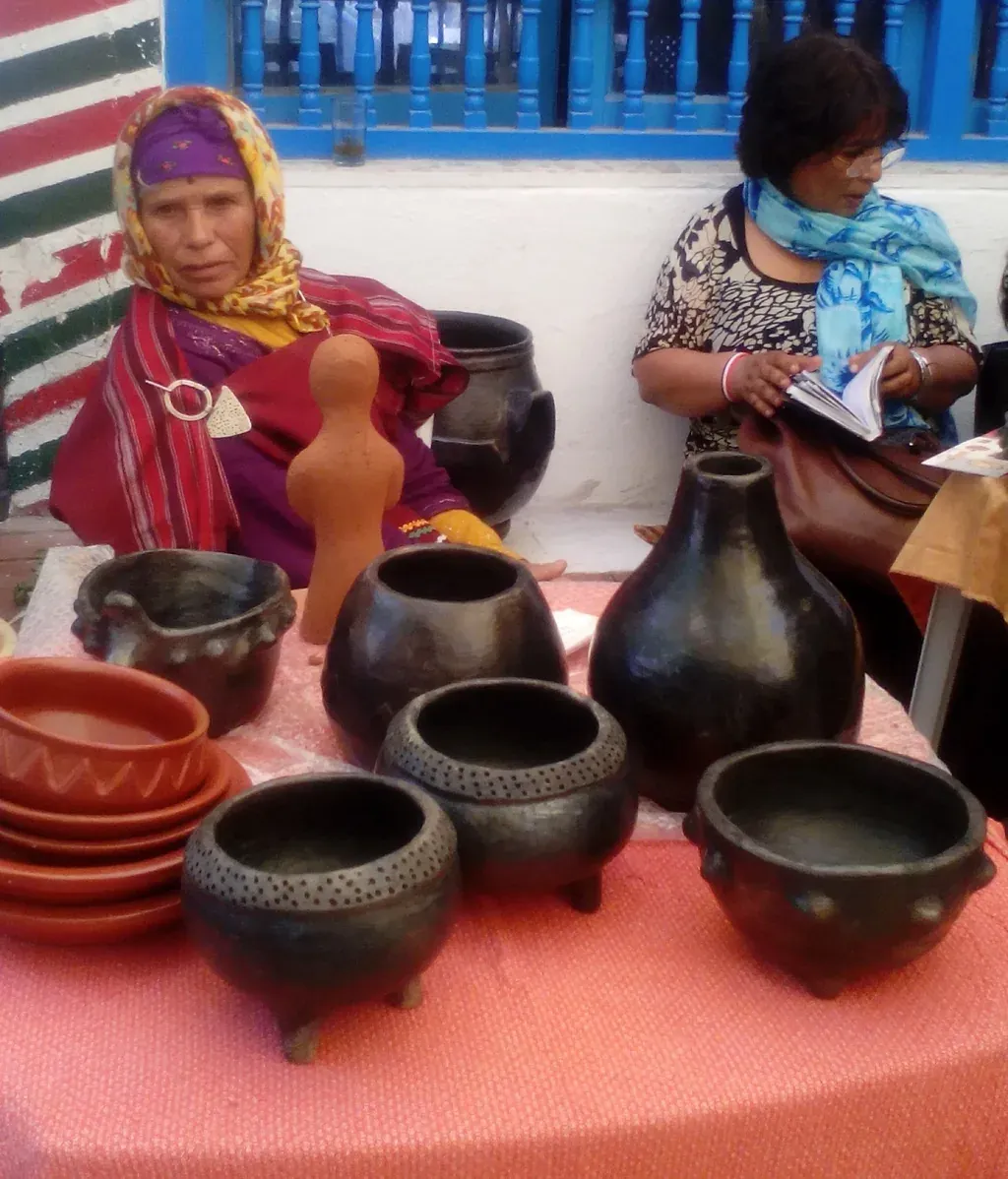
What if the best way to preserve these treasures was simply to wear them, gift them, or admire them? Every purchase from a Tunisian artisan is a vote for the survival of a craft—a way of saying these skills deserve a place in our daily lives. Whether it’s a Sejnane pottery piece, a filigree jewellery from the medina, or hand-embroidered fabric, each item tells a story—ours. Don’t hesitate to give them pride of place: they’re worth far more than their price tag, and their beauty never fades.