HIFU therapy, a process that came from the United States, uses focused ultrasound to treat skin slackening of the face, the neck and the décolleté in depth — without surgery or social downtime, unlike lasers or peels.
Why does the skin slacken over time?
Over time, the skin gradually loses the characteristics that give it firmness, freshness and suppleness. This gradual deterioration is often accompanied by a loss of tone in the cutaneous muscles, at the level of the neck and the décolleté. Yet, while certain processes treat the skin alone, few take into account the underlying muscles, whose condition nevertheless influences its quality.
What is HIFU?
HIFU stands for High Intensity Focused Ultrasound, that is, focused ultrasound waves of high intensity — a technology whose workings recall the sun's rays concentrated by a magnifying glass onto a single point. A handpiece fitted with a transducer thus concentrates around ten ultrasound beams in a repetitive manner, acting at different depths (4.5 mm for the muscles or the fat depending on the area, 3 mm for the deep dermis). Applied to the face, these beams produce minuscule points of coagulation that put the deep tissues (muscles and aponeurosis) and the superficial ones back under tension, in the manner of a mini-lift — making it possible to restore the oval of the face, to treat slackening of the neck and a double chin, or to lift the décolleté and drooping eyelids.
How does a session unfold?
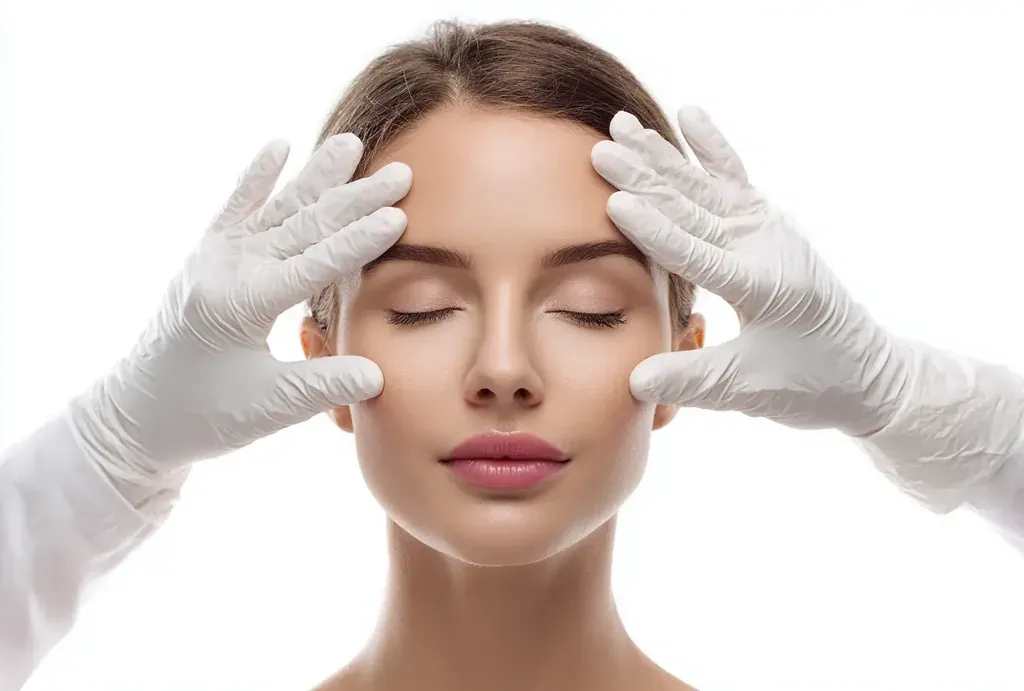
After an assessment, the practitioner marks out precisely the areas to be treated, subdividing face, neck and décolleté into “rectangles” in which a certain number of “shots” will be delivered. An ultrasound gel is applied so that the energy is transmitted correctly; in general, two series of shots at different depths are needed, forming two superimposed “lines” of coagulation across all the treated areas. The micro-vibrations stimulate the skin at its different layers, reaching muscles, fatty areas and lymphatic circulation — draining toxins and encouraging the absorption of active ingredients. Depending on the goal, the session may aim at a mini-lift, at a preventive treatment of ageing, or at the correction of skin imperfections, and can be combined with other techniques to reduce acne and dark spots, tighten pores or stimulate collagen production. It can be carried out on all skin types, at any time of the year, with no need for particular sun protection.
What results can be expected, and what are the contraindications?
The effect is natural and immediate: the skin, slightly pink after the session, may show tingling, subcutaneous sensitivity or slight swelling for a few days, with possible risks associated with the treatment. The lifting effect increases after fifteen days and becomes optimal after three to six months, the time cell regeneration takes. At least two sessions a month apart are necessary; a protocol of three sessions is preferable for the oval of the face. Contraindications remain rare: pregnancy, breastfeeding, wearing a cardiac stimulator (pacemaker) and acute skin diseases.
HIFU therapy thus takes its place in a wider anti-ageing routine, alongside habits that also help to soften wrinkles and to maintain the skin's radiance day to day.