HIFU therapy (High Intensity Focused Ultrasound) is radically transforming the approach to facial rejuvenation. This high-intensity focused ultrasound technology offers an effective alternative to traditional surgical facelifts.
What is HIFU and why is it making waves?
HIFU works like a magnifying glass concentrating the sun's rays. A transducer focuses several ultrasound beams onto precise areas of the face. These micro-vibrations create tiny coagulation points that naturally tighten the deep and superficial tissues.
This revolutionary technique treats the skin and the underlying muscles at the same time. It works at different depths: 4.5 mm to reach the muscles and fat, and 3 mm for the deep dermis.
The unique advantages of HIFU therapy
A complete treatment with no downtime
Unlike lasers and peels, HIFU requires no recovery period. You can resume your activities immediately after the session.
Visible results across multiple areas
HIFU effectively redefines:
- The oval of the face
- Neck sagging
- The double chin
- The décolletage
- Drooping eyelids
How does a HIFU session work?
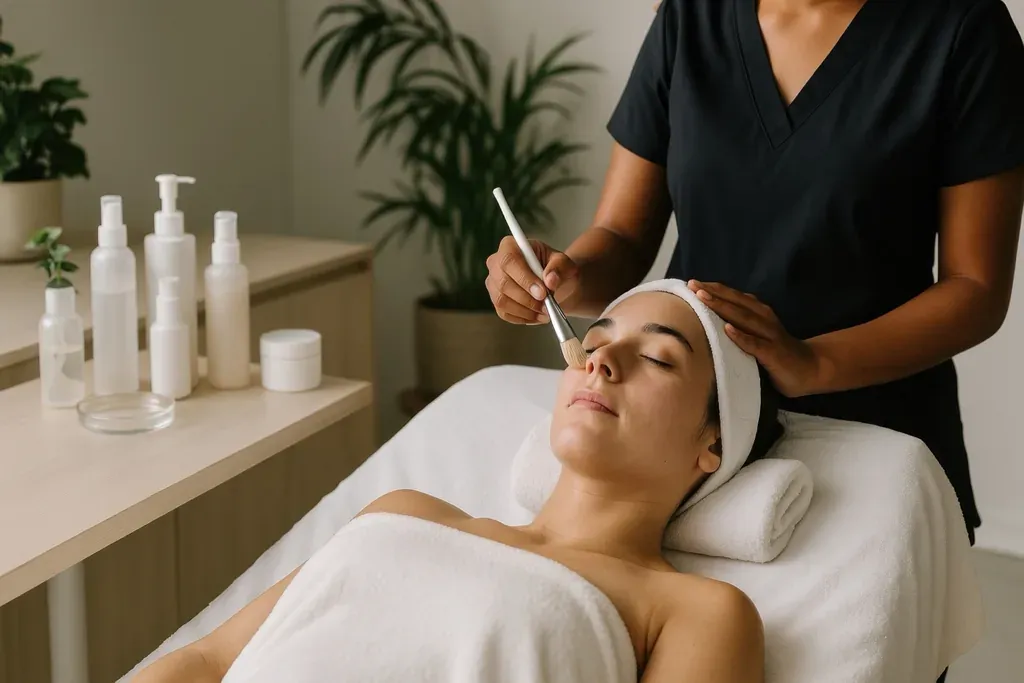
The practitioner begins by carrying out a personalised assessment. They then precisely mark out the areas to be treated by dividing the face into rectangles.
Ultrasound gel helps transmit the pulses. Two series of shots at different depths create overlapping lines of coagulation across all the targeted areas.
Results and effectiveness of HIFU
Immediate and lasting effects
From the very first session, the skin regains firmness and tightness. The lifting effect gradually intensifies over fifteen days and reaches its peak between three and six months.
Recommended protocol
A minimum of two sessions, spaced one month apart, guarantees optimal results. For the oval of the face, a three-session protocol maximizes the benefits.
| Aspect | Detail |
|---|---|
| Treatment depth | 4.5 mm (muscles and fat) / 3 mm (deep dermis) |
| Onset of effects | From the first session, intensifying over 15 days |
| Optimal result | Between 3 and 6 months |
| Recommended protocol | 2 sessions minimum, one month apart (3 sessions for the oval of the face) |
| Downtime | None — immediate resumption of activities after the session |
Is HIFU suitable for all skin types?
This technology is suitable for all skin types, regardless of the season. No specific sun protection is needed after the treatment.
However, some contraindications do exist: pregnancy, breastfeeding, wearing a pacemaker, or acute skin conditions.
HIFU: the innovation redefining facial rejuvenation
HIFU therapy represents a major advance in aesthetic medicine. It combines effectiveness, safety, and comfort to offer a natural lift without the constraints of surgery.