In Tunisia, food waste amounts to roughly 5% of households' monthly spending, a loss estimated at 570 million dinars a year, according to the National Consumer Institute. Platforms such as GetMiam and Gaspych offer local solutions, while a national strategy and an FAO project are being rolled out.
What does food waste in Tunisia actually add up to?
around 5% of Tunisian households' monthly food spending goes straight into the bin
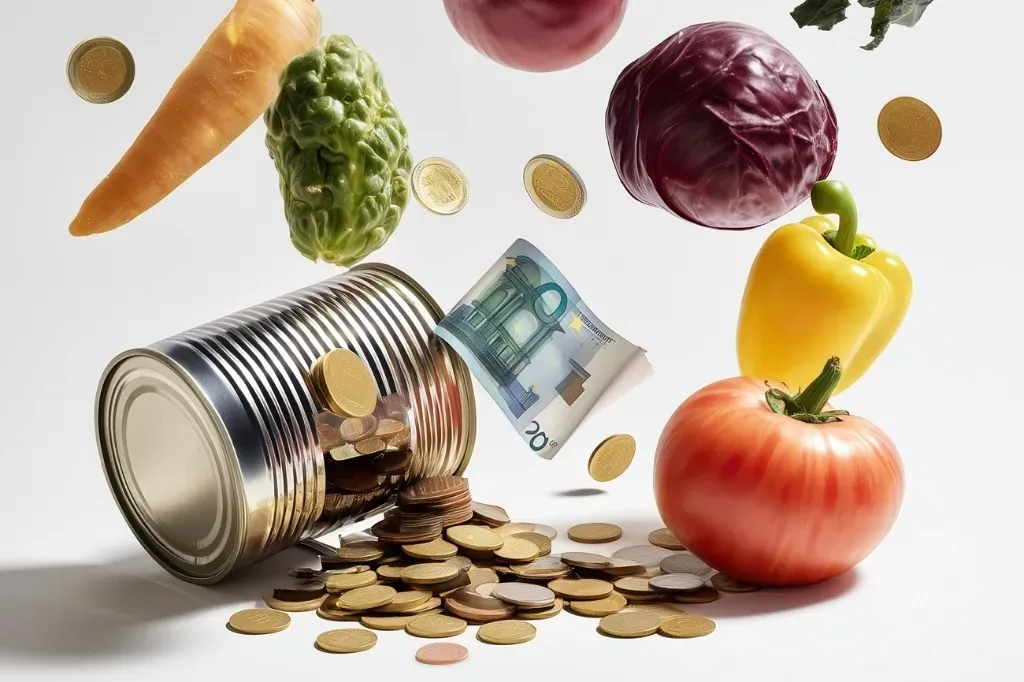
At the national conference on food security and climate change, held in Tunis in May 2024, Darine Doggui of the National Consumer Institute put forward a figure that captures the scale of the problem: around 5% of Tunisian households' monthly food spending goes straight into the bin. Scaled up nationwide, this waste would amount to an estimated annual loss of 570 million dinars, according to the same address.
This figure has not gone unnoticed. According to the FAO, 76% of households in Tunis recognise the scale of the food waste problem themselves. Most families in the capital live with it in their own daily lives.
Bread, cooked dishes, sweets: where does the food go at home?
Bread remains the most wasted food in Tunisian households day to day. According to Darine Doggui, an average Tunisian family throws away 42 kilograms of bread a year, outside Ramadan.
During Ramadan, the breakdown shifts. According to Darine Doggui, families' waste then concerns mainly cooked dishes (66.6%), bread (46%), sweets (20%) and fruit (30%). This ranking suggests rethinking cooked quantities first, without overlooking bread, sweet treats and fruit bought in excess for the month.
Platforms and a national strategy: what already exists in Tunisia?
Internationally, Too Good To Go announced in January 2026 that it had saved more than 500 million meals across 20 countries, alongside its arrival in Japan as its 21st country. But neither Too Good To Go, Phenix nor Karma operates in Tunisia. On the Tunisian side, the GetMiam platform describes itself as a service connecting consumers with unsold stock from bakeries, pastry shops, restaurants and grocery stores, offered at a reduced price in the form of baskets.
On the institutional side, a national strategy to reduce food waste was launched in February 2025 under the aegis of the Ministry of Trade, together with the INC and the FAO. On the ground, an FAO project run with the municipalities of Tunis and La Goulette, launched in 2023 with a budget of $350,000, was extended through a memorandum of understanding signed on 2 May 2025.
Which habits in our kitchens really make a difference?
According to Darine Doggui (May 2024), around 5% of Tunisian households' monthly food spending ends up in the bin. This figure is reason enough to rethink your habits even before special occasions come into play: adjust the quantities you cook to the real number at your table, and give leftovers a second life.
The month of Ramadan shows where the waste is concentrated: cooked dishes (66.6%), bread (46%), sweets (20%) and fruit (30%), still according to Darine Doggui. These proportions point to your priorities: prepare bread and dishes in reasonable quantities, keep fruit for later, and lay out sweet spreads sized to what will actually be eaten.
Households are adjusting their shopping and their portions. Businesses, for their part, are finding ways to move their unsold stock; public authorities are embedding the issue for the long term. At your own level, adjusting a quantity of bread or rethinking the size of a cooked dish is sometimes enough to make a difference: it is these repeated habits, more than the big announcements, that ultimately shape what ends up in the bin.
Also worth reading on La Sultane
Food Waste: The Innovations Transforming Waste
The Tunisian Sea in July: Freedom, Celebration and Mourning