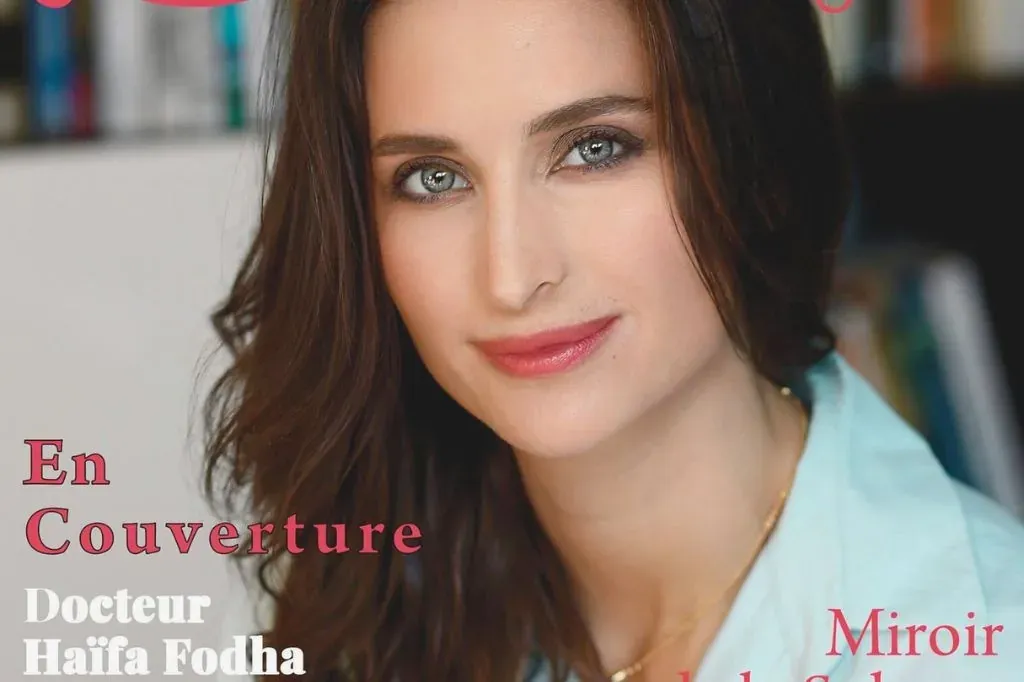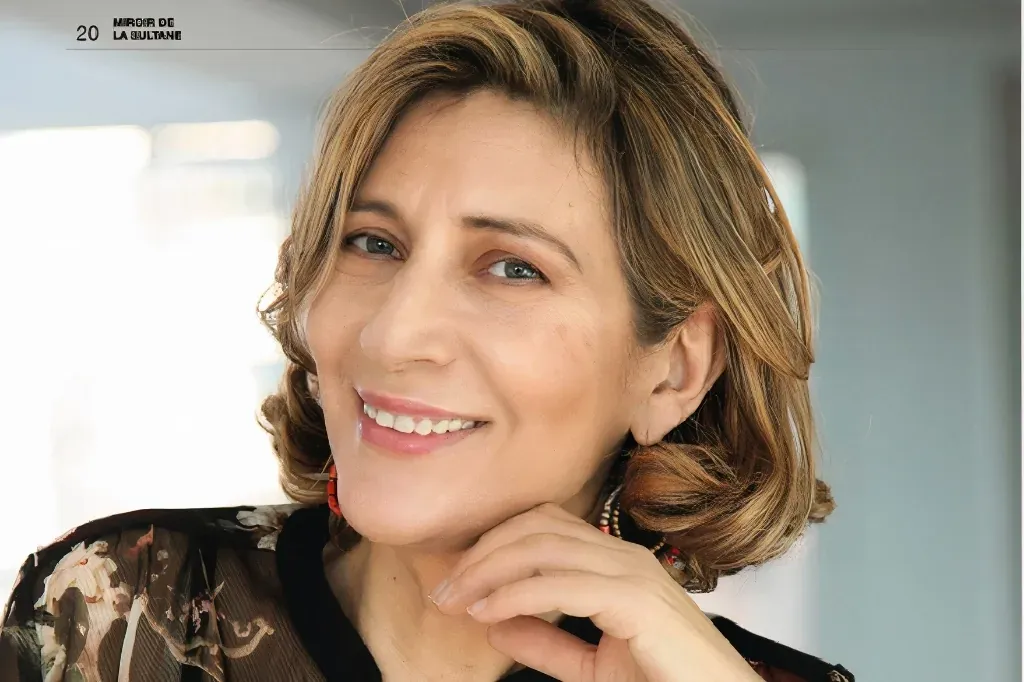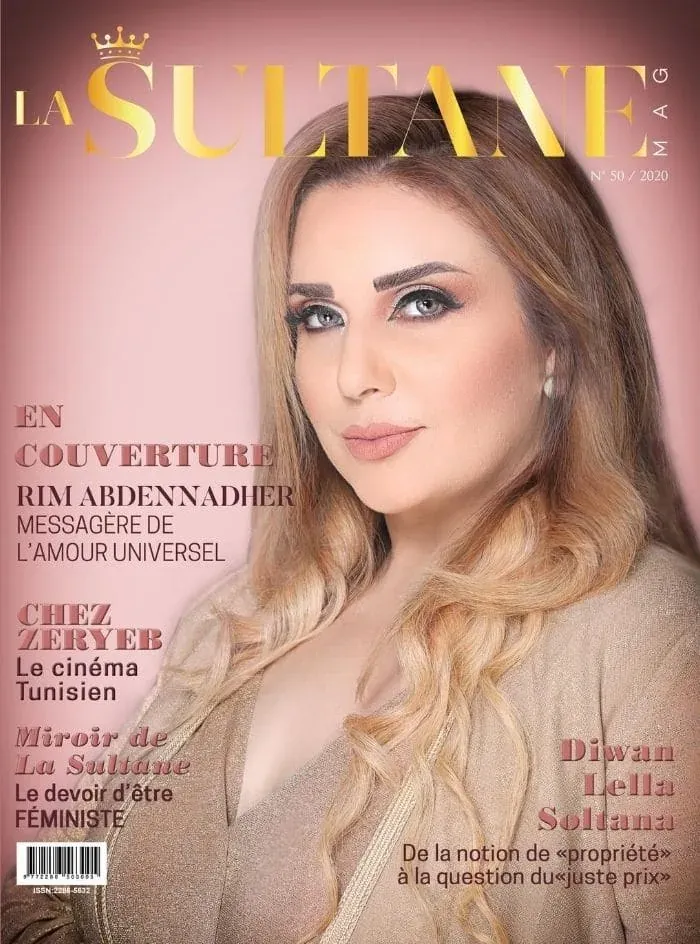
Leila Lakhoua Houimli, a doctor specialising in gynaecology, obstetrics and ultrasound, was on the cover of an issue of La Sultane. Rather than answering our questions one by one, she preferred to speak to us with an open heart — a choice that hardly comes as a surprise from a person so singular. Here are her words in full.
A precocious childhood, between letters and high standards
"I am the eldest of a family of 5 children, born to a close-knit and loving couple of educators. My mother, the daughter of a Zeitounian Sheikh and tutor, was born in the 30s; she was nonetheless more lettered than her 3 brothers and showed such self-denial in the practice of her profession as a primary school teacher and then as a head teacher that she went as far as taking a single week of maternity leave — preferring to take the baby with her to her workplace rather than leave her pupils: she was an exceptional woman. My father, a man of exemplary values, was initially a teacher of Arabic and of education at the Dar Jeld school, at Sadiki, then at the Alaoui secondary school, before leaving to teach in Belgium during my secondary school years. Raised in such a milieu, I was lettered very early on. And so, at 3 years old, I would recite by heart one of the longest poems of Élia Abou Madhi, Ettalessem.
I started school at the age of 3 and a half. The youngest pupil in my classes, I was at once boisterous, attentive and curious about everything, as interested in scientific subjects as in languages. Very early on, my parents taught me to tell merit and privilege apart, to the benefit of the former."
Dance, reading and the sense of being "outside the norm"
"I somewhat lived my youth with a sense of being outside the norm because of my twofold singularity: my red hair and my young age. I was sometimes proud, sometimes pained to be "outside the category". Teachers would spot me at first glance and would fixate on my results… I owed it to myself to always measure up, and proving myself was constantly an imperative. My time was shared between my studies and two activities: swimming and classes at the conservatoire, initially in music, then in dance. I danced until my first pregnancy, and it is likely that the ballet solos, at the theatre or in Carthage, largely helped forge my ability to handle stage fright, which serves me so well today.
I was an avid reader from childhood. Everything passed through my hands: comics, crime novels, mythology, classical literature, fiction, plays, the great philosophies… And, amusingly, anything called Larousse."
Choosing medicine, then gynaecology and obstetrics
"I obtained my Bac with the mention Bien and an offer to join a group intended for pilot training studies in the United States; after some hesitation, and given that I was 16, the offer was declined. Two choices were then open: IHEC or Medicine. The chance of the placement system put me in the second stream. Medical studies turned out to suit my personality perfectly — curious about everything, disciplined, studious and endowed with a photographic memory — and I went through them without obstacles.
During my internship, being a wife and a mother did not stop me from being very attentive to my training, and wherever I went, I was invited to take up that speciality. That is how I nearly opted for dermatology. In the end I chose Gynaecology and Obstetrics: a magical field consisting in the overall management of a woman's health, on the clinical level as much as on that of physical and psychological well-being, throughout every stage of life. Tbibet ensé, "the woman's doctor". I like that way of seeing things: it matters deeply to me to set up a multidisciplinary centre where a woman's health is managed in its entirety."
Family and career, one and the same driving force
"I met my life companion and the father of my children in my 3rd year of medicine. I was 19… We had 3 children. Our motto was: Education. My family life, far from hampering my professional activity, was its support and its driving force. I had my first child at the start of the internship; 7 years later, I had my 2 other children one after the other. Thanks to the support of my spouse, also a doctor, and that of our respective families, raising them did not really pose us any problems."
From residency to setting up at the Palmarium
"My residency began at the Military Hospital of Tunis, then at the Lariboisière hospital in Paris, where I followed my training in general gynaecology for 2 years. Back in Tunis, I joined the Rabta maternity centre, then the Beau Séjour department of the Charles Nicolle hospital for my optional placement in general surgery. I was even offered the chance to change stream and join that school, but for fear of the misogyny of the field at that time (the 90s), I opted for an intermediate solution and chose a hybrid thesis subject encompassing the two specialities, while remaining a gynaecologist.
Top of my year in the end-of-speciality examination, I was assigned straight away to the Mongi Slim hospital as a specialist doctor in Public Health. My career path was all mapped out, since I was in my final year of assistantship and at the gates of the agrégation examination. At that moment I was expecting my 3rd child. His premature birth marked a decisive turning point in my career plan: he had presented respiratory complications, giving cause to fear the worst. Going to see him at the clinic a few days after his birth, I passed a building site — it was the Palmarium being rebuilt. Something clicked inside me, and I made a vow to set up there if my child survived. So it came to pass, and here I am, established there since 1998."
A decisive mentor in the operating theatre
"My first years of practice in the private sector were at the Amen clinic, at the end of 1997. At that time, one of my teachers from Beau Séjour, Professor M.T Khalfallah, had been appointed head of the surgery department at Mongi Slim and was beginning his complementary private practice. He had offered me the chance to assist him in theatre, and that is how, as a gynaecologist established in town, I went on refining my skills in visceral surgery for more than ten years. I owe a great part of my dexterity and my ease in the operating theatre to that period of my life and to that peerless mentor."
"Your children are not your children"
"I think I have successfully passed on this respect for aptitudes in the raising of my children: 2 of them had been directed towards medicine, but having voiced a hesitation, I dissuaded them from setting foot in a demanding circuit without absolute certainty that they wanted it, and left them the choice of their own future. They completed their studies successfully and are respectively a company head in California and a computer programming engineer at a global online retail giant in Seattle. It is for my daughter that the best education was given, for it falls to daughters to educate future generations. Loving the economic sciences, she had her schooling at USC in California.
I think no one goes back. No parent should impose a life plan on their offspring. Our mission is to give them the best of what we are, sturdy wings, and to watch them fly away." On this subject, she quotes a poem by Khalil Gibran that she particularly loves, to the point of gladly printing it out to give to new parents.
Her golden rules
- Always do your best with the capacities you have.
- Love what you do, and do what you love.
- Never believe that a problem stays without a solution: often, the very existence of the problem is what makes us move forward.
"Thanks to a learned mastery of optimal time management, I manage to read, paint, garden, cook, cultivate my mind, do sport, visit my family, and I hope to start travelling again… I have made a vow that not a day goes by without my appreciating every moment of it, good or less good."
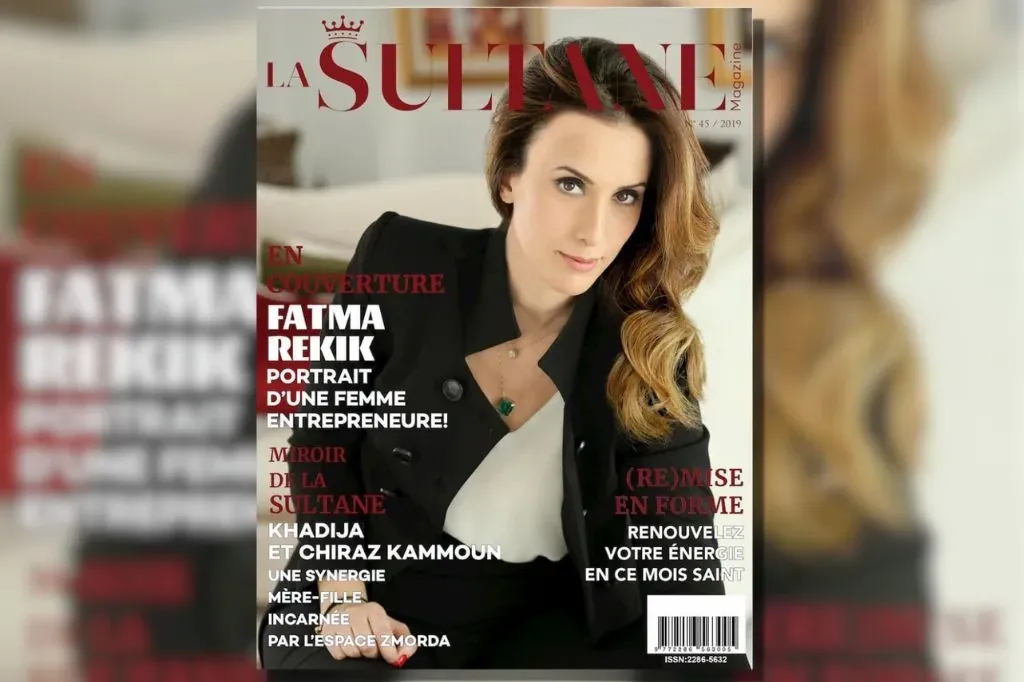
To discover other portraits of the women who make La Sultane, our article on Fatma Rekik traces a path just as singular.