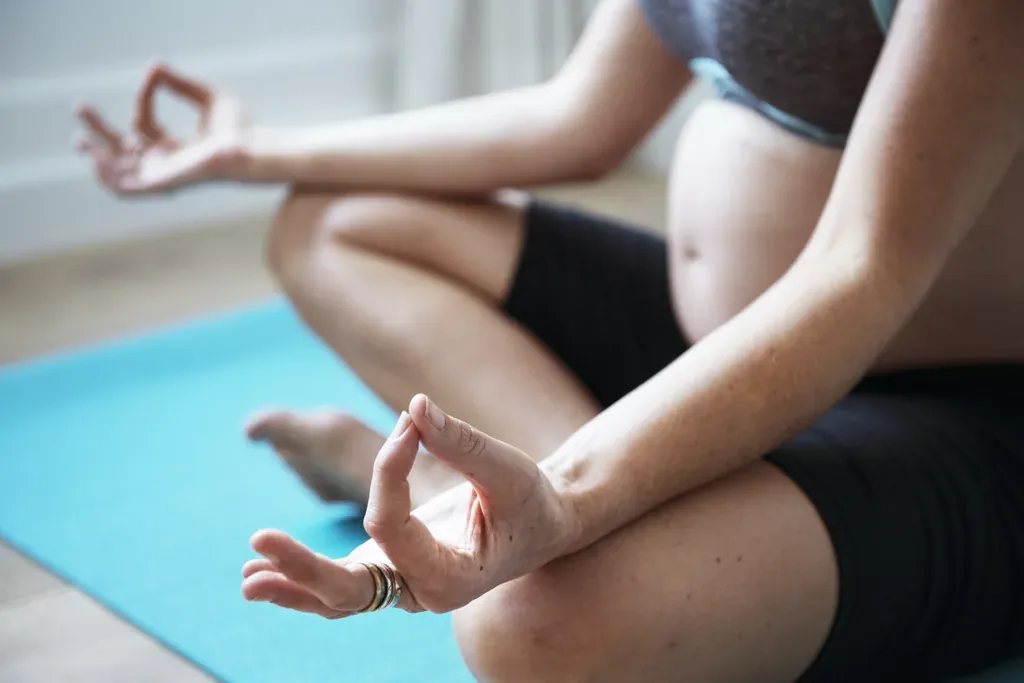
Mudras are choreographed hand gestures that once accompanied meditation. The Sanskrit word "mudra" (from mud, joy, and ra, to release) means "seal." Practiced regularly, they're said to soothe both body and mind and help energy flow more freely.
Where does this fingertip practice come from?
According to Keshav Dev, an Indian yoga master, "each finger is said to have a specific function and power within the body." Ancient Ayurvedic medicine, like acupressure or reflexology, holds that there is a correspondence between the hands and the rest of the body, with the nadis (energy channels) said to gather at the surface of the feet and hands according to this tradition.
According to Vedic tradition, each finger corresponds to one of the five elements: the thumb to fire (Agni), the index finger to air (Vayu), the middle finger to ether (Akasha), the ring finger to earth (Prithvi), and the little finger to water (Jala). Combining the fingers is thus said to bring together the elements that make up the world.
There were originally nine mudras (the mudras of the Buddha), meant to accompany meditation. Thanks to Indian dancers and yogis, their number has since multiplied: there are several dozen known today. It's recommended to choose a single mudra and practice it for 21 or 40 days in a row, morning, noon, and night, for three to five minutes each time, before moving on to the next — standing, seated, lying down, or in motion, breathing deeply through the nose and maintaining gentle pressure with the fingers, without tensing up.
12 mudras to discover
| Mudra | What it's said to bring |
|---|---|
| Atmanjali | Love and peace, a mudra of request and gratitude |
| Gyan/Jnana (palm facing up) | Concentration, an invitation to understand the universe |
| Chin (palm facing down) | An invitation to self-understanding |
| Dhyani | Dispelling illusion, meditation on the void |
| Prana | Support for the eyes and sleep, energizing |
| Shunya/Shuni | Mental calm in meditation, purified hearing |
| Shankh | Strengthens the voice, recommended for singers and speakers |
| Yoni | Stability and concentration, recommended for pregnant women |
| Surya | Healthy weight loss, physical strength |
| Ganesha | Breathing and heart function |
| Lotus | Opening the heart, compassion, comfort in times of loneliness |
| Ksepana | Detoxification and stress release (not to be prolonged) |
When and how to practice mudras
- During your yoga practice, alongside the asanas.
- During meditation.
- In a doctor's waiting room, on public transport, in front of the television...
Activate your hands before you begin, by shaking them out or lightly tapping your fingers against one another.
Vedism is a civilization brought to ancient India by a people who came down from the plateaus of Iran, after the decline of the cities of Mohenjo-daro and Harappa. This people built their power on complex rites blending words and gestures, passed down orally from master to disciple. The invention of writing would later allow these texts to be gathered into the Rigveda. (Source: Wikipedia)
By Houda Chouk