"All grown-ups were once children — although few of them remember it." — Antoine de Saint-Exupéry
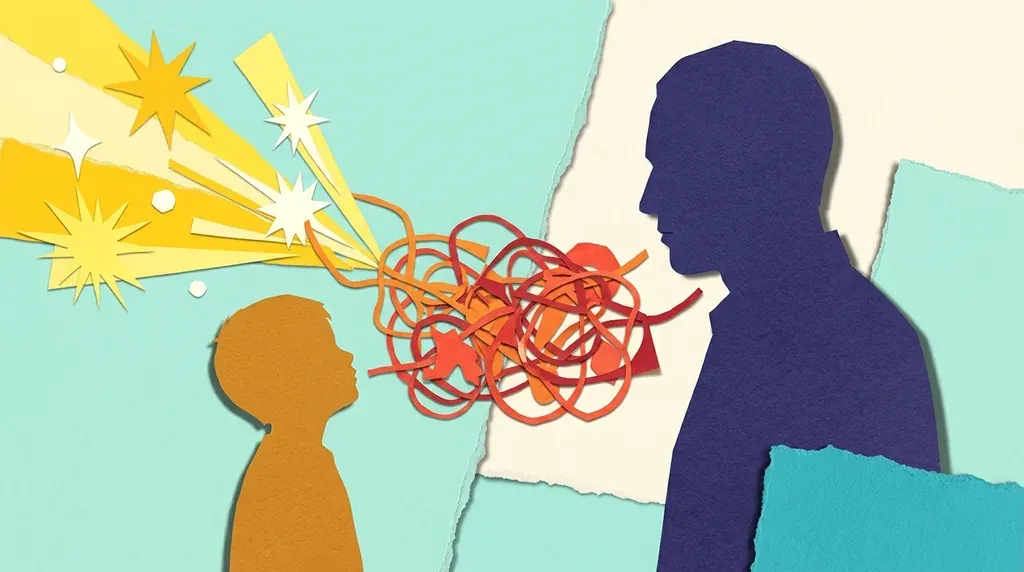
"He's become unbearable!", "Communicating with him is impossible now!", "He shuts himself in his room for hours, he refuses to be with us!", "He disobeys constantly, he's aggressive, I don't recognize him anymore!": these are the exasperated words of parents of teenagers, spoken again and again. They describe a situation that seems alarming — and yet the adolescent crisis is a natural and necessary stage of development. Often it overlaps with the parents' own midlife crisis, which drives family tension higher. Managing it means first understanding it, then supporting it: preparing the ground, listening without judging, offering guided freedom and caring communication, and calling on a trusted third party or a specialist when needed.
But what if the adolescent crisis were actually reassuring? What if it were concealing another one?
At 3 or 4, parents interact with their child easily: they play, carry them on their shoulders, choose their activities. After 12, the child grows physically and takes on different behavior. They show a drive for autonomy, assert themselves and develop a critical eye toward their parents. Parents, until then comfortably settled into their role as models, find themselves thrown off balance. Instead of celebrating their child's emancipation and identity-building, they are generally unprepared for this surge of sudden transformations.
What really happens during adolescence?
Adolescence, beautifully captured by Françoise Dolto with "the lobster complex," represents the physical and emotional metamorphosis a child goes through from the ages of 12 to 14. Like the lobster during its molt, the teenager sees their body grow and must rebuild a new shell to fit their size.
Before forging this new armor, they feel lost, vulnerable and touchy. They become easy prey, searching for an identity, a style, a place within their circle of friends and their family. They discover their sexuality and develop fears about it.
New questions hammer at their mind: "Will the girls like me?", "Will the boys like me?" Various strategies then take shape. One teenager will play the "self-assured" card, while another will fumble, follow the group or withdraw into isolation.
Neither child nor yet adult, the teenager no longer has their usual place within the family. Their parents no longer appeal to them, because the parents represent the major obstacle standing in the way of their freedom and embody incomprehension. The teenager feels alone and misunderstood.
Why are parents and teens in crisis at the same time?
If we look closely at the mechanism and timing of puberty, we see that it generally coincides with the parents' 40s and 50s. This period corresponds to the midlife crisis.
Parents start thinking about menopause or andropause, doubting their sexuality, fearing the loss of their own parents. This pattern of worry looks strikingly like the one playing out in the teenager's mind and body.
In the end, the adolescent crisis is not one-sided. It presents itself instead as a crossroads, a convergence of turbulence that sometimes pushes family tension to its peak.
How can you be proactive in the face of the adolescent crisis?
Faced with this transition, not all parents react the same way. Two stances emerge, with opposite effects on the teenager.
| Prepared parents | Parents in denial |
|---|---|
| Anticipate puberty and explain to the child the physiological and psychological change to come | Refuse any change and settle into a kind of denial |
| Withstand provocation and accept criticism without seeing it as a personal put-down | Constantly reproach the teenager for their behavior |
| Stay glad to see their child grow emotionally | Reject the idea of cutting the cord and losing their grip |
| Welcome the changes and provide guidance with kindness and effectiveness | Hinder the support, especially when the parents disagree about parenting |
Prepared parents: supporting with serenity
Some parents anticipate their child's puberty. They prepare them by explaining the physiological phenomenon that will come with psychological changes: a seemingly "unexplained" and "inexplicable" unease, mood swings, withdrawal or unusual aggression, excessive touchiness.
These prepared parents stay glad to see their child grow emotionally. They know that a repressed adolescence risks surfacing in adulthood, which could cause great family damage. They don't react spontaneously to the first behavioral symptoms, they withstand provocation and accept criticism without seeing it as a personal put-down. They welcome the changes and support their child while guiding them with kindness and effectiveness.
Parents in denial: the consequences
Other parents, caught up in the whirlwind of daily life, unconsciously refuse to leave their comfort zone. They reject the idea of cutting the cord and losing their grip on their child. These parents refuse any change and settle into a kind of denial. The situation worsens when the parents disagree about how to raise their child: this discord can only hinder support for the teenager during this delicate period.
These parents constantly reproach their teenager for their behavior. It's like blaming the butterfly for no longer being a chrysalis.
Preparing the family ground
We therefore encourage parents to prepare the ground within the family. It's worth shedding all the taboos that could hinder effective communication with the teenager.
Give them a margin of freedom without becoming permissive. Don't let them do and say everything, but give them the chance to experiment with calculated risks. If parents don't provide the dose of freedom and reassurance needed to build self-esteem, the teenager may look elsewhere. They could then be tempted by harmful and dangerous practices: fast driving, questionable company, drug use.
When should you ask for help?
Parents often find themselves in uncomfortable situations. They juggle work and home, raising other younger children, sometimes caring for their own aging parents. Suddenly shifting into psychological concerns is a delicate phase to navigate.
Some parents turn to a third party: a family member the teenager trusts, with whom they share a bond of affection and closeness, or a specialist. Some may consult on their own, discreetly; if needed and with the teenager's consent, the specialist will then involve them. In other families, turning to a specialist becomes the subject of an open discussion with the teenager, who expresses the wish to be helped.
Be careful: never corner the teenager into seeing a life coach or a psychologist. They would feel like the problem person, which would lower their self-esteem. Let's remember that this is a family behavioral dynamic whose management falls to the parents.
Our practical tips for handling the adolescent crisis
Listen attentively
Despite their need for independence, your teenager needs you to listen to their concerns, wishes, expectations and stories.
Show unconditional love
Show them through your gestures and words that you love them unconditionally. Save displays of affection for private moments, as showing them in front of their friends would embarrass them.
Respect their privacy
Accept that they shut themselves in their room for hours. Knock before entering their personal space.
Do activities as a family
The teenager no longer feels like spontaneously sharing their activities with their parents. So plan moments of togetherness that will make them want to experience more.
Stay open to questions
Your teenager needs to understand the world around them, to understand themselves and to feel reassured. By answering their questions genuinely, they will be reassured that they can count on you.
Get informed before any decision
Before making a decision or starting a discussion, make sure you know the subject well: academic path, sport, hobbies.
Be a good example
Despite appearances, the teenager remains strongly influenced by their parents' words, behavior, attitudes and outlook on life. Behave according to what you teach your teenager.
Communicate with kindness
Maintain open and caring communication, even in conflict. These conflicts remain normal and useful for figuring out our children's needs.
In short
The adolescent crisis, far from being purely a problem, is a natural and necessary stage of development. With preparation, patience and kindness, parents and teenagers can go through this period together and come out of it stronger.