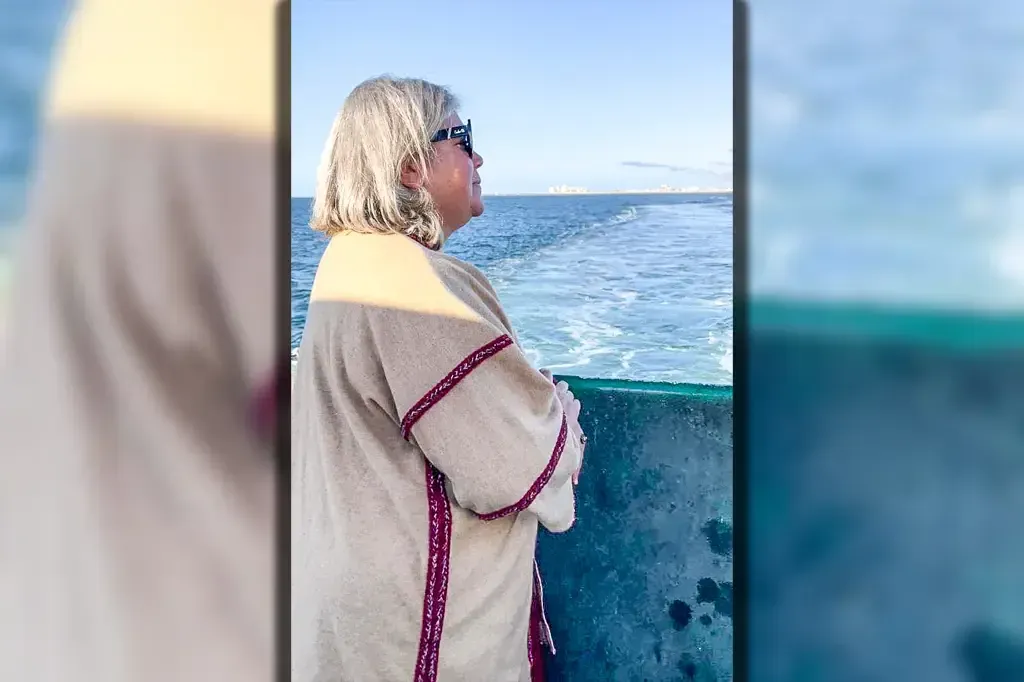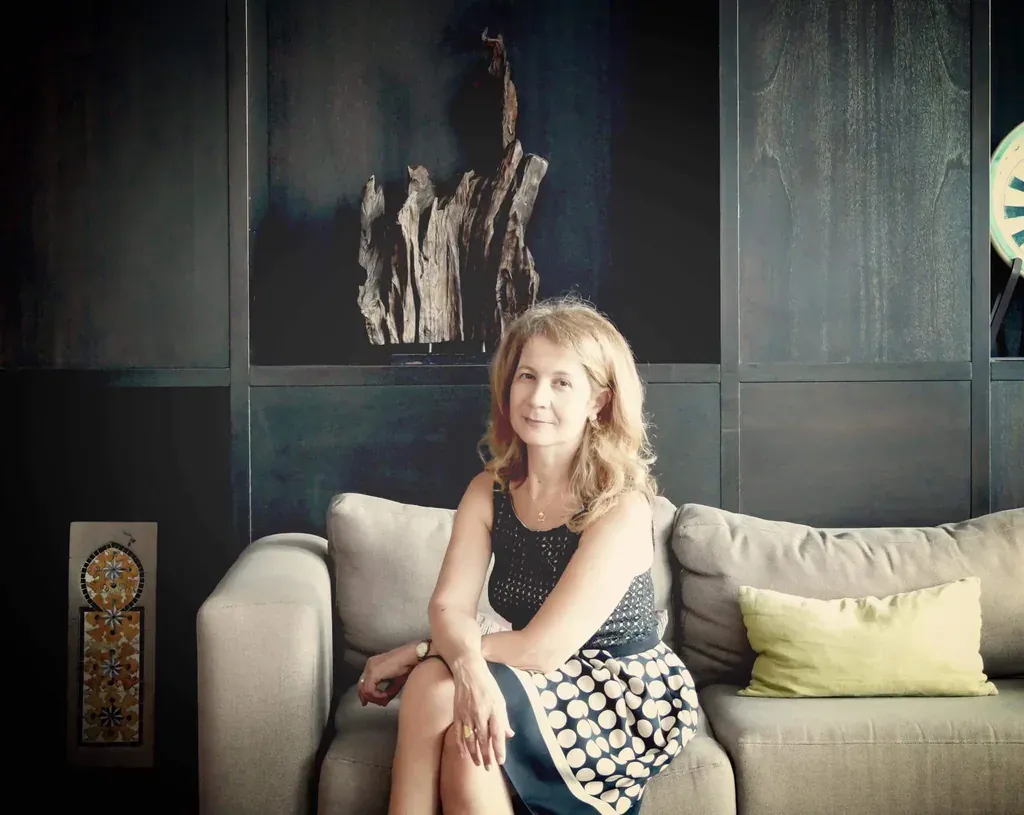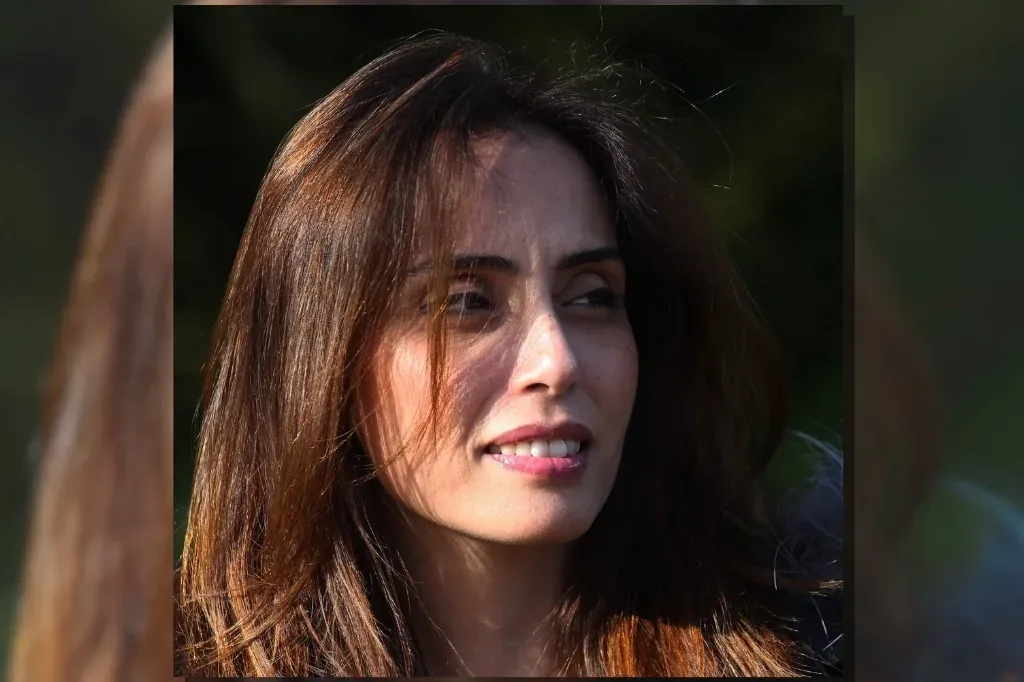
Olfa Terras, who started the 3ich Tounsi movement, was on the cover of issue 44 of La Sultane. Former president of the Rambourg Foundation, she looks back on eight years of work in the non-profit world, on her decision to build a separate citizens’ movement, and on the future she sees for young Tunisians.
Olfa Terras, you resigned from the Rambourg Foundation and handed the torch to someone else. What did the experience teach you? If you had to keep a single lesson, which would it be?
Olfa Terras: I have not been President of the Foundation since last summer. I handed that heavy responsibility to Shiran Ben Abderrazak, a brilliant young man. Shiran understood the spirit and the aims of the Foundation perfectly. He loves what he does, and I am deeply grateful to him and to the whole team.
Those 8 years at the head of the Foundation did not just teach me a great deal, they changed me. I met thousands of children and young people who are the beating heart of this country, and their own journeys, often hard and painful, showed me how completely human beings have to come first. What goes unsaid often speaks louder than words. Some looks tell you everything. I see it when we renovate schools. I saw it at the exhibition L’Éveil d’une Nation (“The Awakening of a Nation”), where elderly visitors held me in their arms, eyes wet, in front of the 1861 constitution. Every visit to the Palace was charged with that.
I see it when I go to Jbel Semmama, where we built a cultural and sports centre and hundreds of children play in the playground, play football or basketball on the multi-sport pitch, make music, act. When they roar with laughter at a Charlie Chaplin film in the cinema room, with their parents beside them. In the messages I get from the Foundation’s scholarship students, and in the smiles of children in the hundreds of schools where we run cultural activities across the country. If there is one lesson to keep from this experience, it is this: to bring people together and give them the desire and the strength to move in the same direction, they have to feel they are at the heart of a noble and just cause, and that they are taking an active part in it.
What did you do next? Tell us about the projects you have given yourself to these past months
Olfa Terras: I left the Foundation to create a movement called 3ich Tounsi, which has no connection with the Foundation apart from me. I don’t want to blur the lines. The Foundation will carry on its work on education and culture, which to my mind are the fundamentals. 3ich Tounsi, for its part, is a movement concerned with public affairs. I think this was a step that imposed itself on me. I didn’t go looking for it. It found me, so to speak.
3ich Tounsi was born of a dream millions of Tunisians share: to be done with an unjust system that makes us miserable, and to rebuild a Tunisia that is prosperous and reassuring. Today more than ever, we feel the need to live calmly, safe from disorder, insecurity and corruption. Between November 2018 and February 2019, the 3ich Tounsi movement ran a vast public consultation across the whole of the country.
On the ground, by telephone and on social media, we talked with Tunisians about their problems, their needs and their own solutions for Tunisia. With more than 400,000 participants, this consultation is the largest ever carried out in the history of our country. It will feed an emergency plan that will speak for us, one we have called “La Feuille de Route des Tunisiens”, the Tunisians’ Road Map.
You are a mother of 5, so in some way alive to the challenges young people meet in Tunisia. What future do you see for the under-25s? What should be done for them?
Olfa Terras: Young people in Tunisia are in revolt. They are angry. Some show it, others have dropped out altogether, and that is where the danger lies. How do we give hope and confidence back to a disillusioned generation, because this is a question of trust too. A young person of 25 today was only 17 the year of the revolution. He watched his country sink into chaos, widespread corruption, poverty and insecurity during the very years when he was building his future and needed hope and a bright horizon most. He was pushed aside, forgotten by a political class too busy fighting for power instead of fighting for him and his future. He will not forgive them for it.
If there is one fight to lead today, to my mind it is to convince these young people that their future and their fate are in their own hands, and that they can change the rules of the game. The days when age alone conferred legitimacy are over. They are the present and the future. They have to wake up to their own citizenship, because they have always been kept away from it. They are not the problem, they are the solution.
You came up through the Tunisian system yourself. Do you recognise yourself in what you see around us?
Olfa Terras: I think most Tunisians no longer recognise themselves in their own country today, because we don’t like what we see. We are responsible for that reality, and we have to change it. It takes courage, firmness and determination. But we will get there, I am convinced of it. A people pulls together and works miracles in moments of great danger. We are a great people, whatever the self-flagellation you hear here and there, and which saddens me.
How do you manage to hold family life and professional commitments together?
Olfa Terras: I do what every mother in the world does: I make the impossible possible! There is no magic formula. We all know we have only one option, which is to hold the two together. So we do it. Each of us in her own way, and in the end we manage. That is the magic of women!