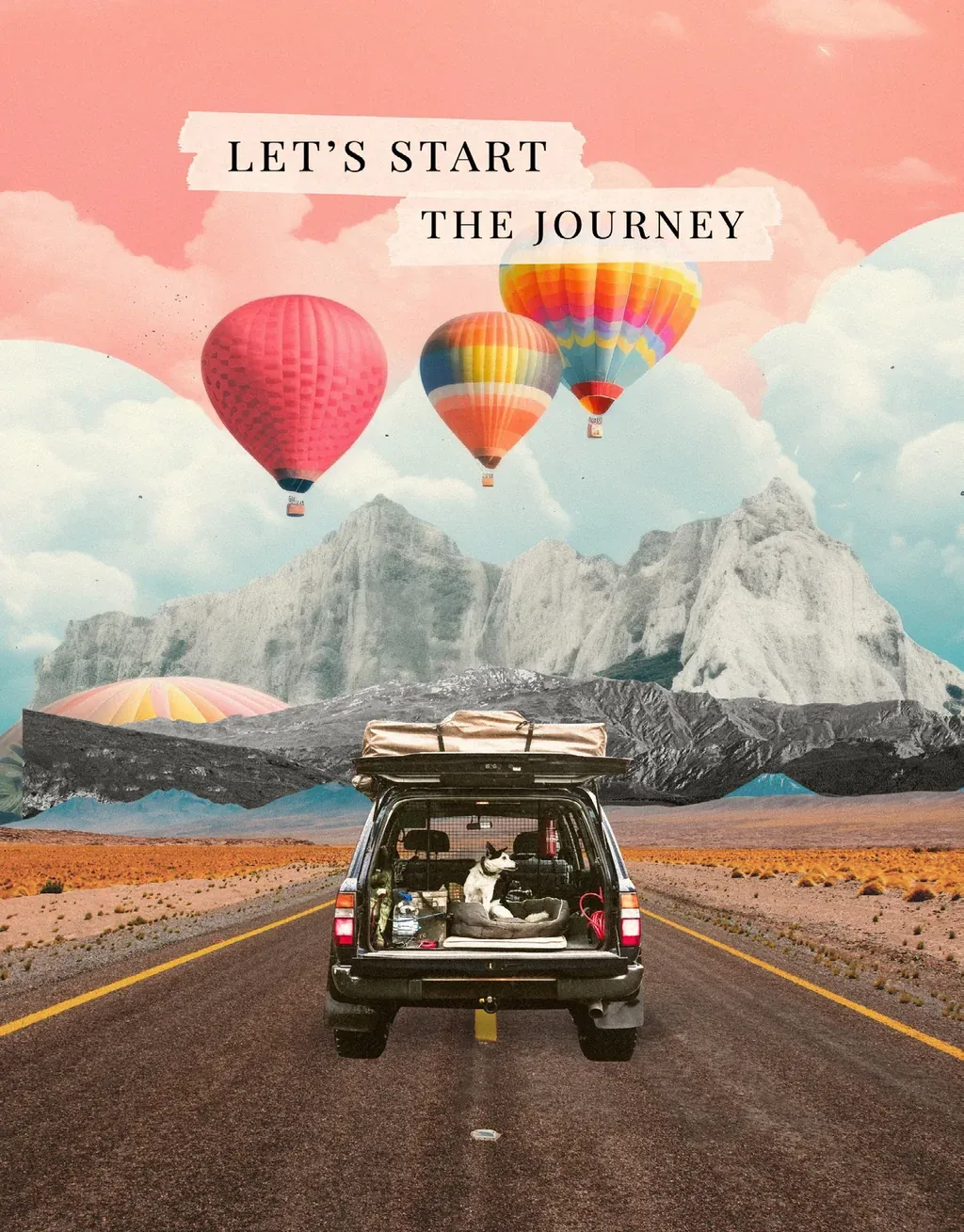
The psychological benefits of travel are far more than a simple geographical shift from one place to another; they represent a deep transformation, an inner journey that goes well beyond merely discovering new landscapes. From the moment you pack your bags, carefully preparing everything you'll need for the trip, travel offers a chance to change how you see, to open your mind to new cultures, new ways of thinking, and new ways of seeing the world.
The psychological benefits of travel: the quest for self
Exploring the unknown
Travelling is like an endless book. Every chapter is a new discovery: a new city, a new face, a new culture. All of it nourishes the mind and awakens curiosity. Isn't that exciting?
Rediscovering yourself
By exploring the unknown, we discover ourselves. We step back from our own lives, we reflect, we grow. It's a magic mirror that shows us who we really are.
The psychological benefits of travel: travel as therapy
Reducing stress
According to a study published in the Journal of Travel Research, holidays can have a positive impact on mental health by reducing stress and anxiety. Stepping away from the work environment and daily responsibilities encourages relaxation and mental recovery.
Improving mental health
Researchers have observed that travel promotes better mental health by allowing individuals to relax and recharge, which reduces stress and anxiety.
Education through travel
The Erasmus programme
A UNESCO report highlights the importance of international educational exchanges. These programmes allow students to immerse themselves in a new culture, gain intercultural understanding and develop language skills. The Erasmus programme in Europe is a concrete example, letting thousands of students each year complete part of their studies in another European country.
Intercultural learning
These educational programmes give students a unique opportunity to learn and grow in an intercultural environment, enriching their academic and personal experience.
Connecting with roots and heritage
Strengthening cultural identity
According to a study by the University of Toronto, trips to one's country of origin can help immigrants and their descendants build a connection with their heritage culture. This can strengthen cultural identity and foster a sense of belonging.
A sense of belonging
Travelling to one's country of origin helps strengthen cultural ties and build a stronger sense of belonging, essential for individual identity.
Voluntourism
Helping local communities
Voluntourism, which combines travel and volunteering, is a growing trend. A study by the London School of Economics showed that these experiences not only help local communities, but also encourage a deeper, more empathetic understanding of global issues.
A positive impact
Voluntourism experiences have a dual impact: they help local communities and personally enrich the volunteers, fostering a broader understanding of societal issues.
Travel and social media
The influence of social media
While travel isn't simply about the photos for Instagram, a study by Cornell University explored how social media influences travel decisions. Study participants admitted that sharing their experiences online was part of the enjoyment of travelling, even if it wasn't the main reason for their trip.
Sharing experiences
Social media plays a crucial role in sharing travel experiences, influencing other people's decisions and creating a space for sharing and discovery.
The psychological benefits of travel: a personal odyssey through solo travel
Self-discovery
Travelling alone allows for deep introspection. Without friends or family present, the individual is confronted with themselves, with their thoughts, and with their reactions to the unknown. A study by the University of Maryland showed that solo travel fosters creativity, independence and self-confidence.
Building self-confidence
When you're alone, you have to rely on yourself. You develop skills and a confidence that will stay with you for life.
Cultural immersion
The solo traveller is often more open to interacting with local people. Without the "bubble" a group can create, they're more inclined to mix with the local population, learn the language and immerse themselves in local traditions and customs. This can lead to a more authentic and empathetic understanding of the culture being visited.
Challenges and skills
Travelling alone inevitably presents challenges, such as having to navigate a new environment or overcome loneliness. Yet these challenges can be seen as opportunities for personal growth. According to a study published in the Journal of Travel Research, overcoming them can strengthen skills such as resilience, decision-making, and the ability to adapt.
Flexibility and freedom
A solo trip offers unmatched freedom in planning and carrying out a journey. Without having to consider a group's wants and needs, the solo traveller can follow their own whims, explore at their own pace and create a unique, personalised travel experience.
Safety and preparation
It should be noted that solo travel also requires greater preparation and safety awareness. Specialised guides and resources can help the solo traveller plan for and prepare against practical aspects and potential challenges.
Travel visas
The complexity of the process
Travel visas are an essential part of preparing for international travel. They represent the authorisation granted by a country to enter, stay in, or transit through its territory for a set period and for specific purposes. Visa requirements vary considerably from country to country and can be complex.
Inequalities in visa access
Nationals of African countries face major obstacles when applying for travel visas, illustrating a broader issue tied to the restrictions on movement imposed on people from economically less developed countries. Unlike citizens of Western countries such as the United States, Canada, or European Union member states, the process for obtaining a visa can prove complex and costly.
Concrete examples
One concrete example is the requirement for a Moroccan citizen to prove strong ties to their country of origin when applying for a UK visa, in order to minimise the risk of overstaying illegally. Such proof can include property deeds, detailed bank statements, and even employment guarantees. By comparison, a British citizen can travel visa-free to many countries, including the United States, for stays of under 90 days.
Waiting times
Processing times for applications can be particularly long. In Tunisia, for example, the wait can stretch over several months for a US visa, whereas a German citizen can obtain a US visa in just a few days.
Economic consequences
Visa application fees, which are often non-refundable if the application is denied, are an additional economic burden for nationals of these countries, where the average salary can be considerably lower. For example, the cost of a Schengen visa for an Algerian citizen can represent a significant share of their monthly salary, whereas the same cost would be negligible for a Swedish citizen.
Global inequalities
These restrictions reflect a global system in which access to international mobility is heavily shaped by nationality and economic status. They illustrate a form of inequality that goes beyond mere administrative formalities and touches on deeper questions of justice, opportunity and human dignity. The repercussions are wide-ranging and help perpetuate a divide between "rich" and "poor" countries, limiting access to education, professional opportunities, and equitable participation in the global community.
Conclusion
Travelling is far more than a simple adventure. It's a genuine quest for self, an exploration of new cultures, and a way to reduce stress. The psychological benefits of travel are undeniable. They allow us to rediscover ourselves, broaden our horizons and strengthen our cultural identity. Whether it's a simple getaway or a solo adventure, every journey is an opportunity to learn and grow.
In short: the psychological benefits of travel
| Benefit | What it involves |
|---|---|
| Quest for self | Exploring the unknown and rediscovering yourself through new cultures and new ways of thinking. |
| Reducing stress | Stepping away from work and daily responsibilities encourages relaxation and mental recovery (Journal of Travel Research). |
| Intercultural education | Exchange programmes such as Erasmus enable immersion in a new culture and the development of language skills (UNESCO). |
| Connecting with roots | Trips to one's country of origin strengthen cultural identity and a sense of belonging (University of Toronto). |
| Voluntourism | Combines travel and volunteering to help local communities and build a broader understanding of societal issues (London School of Economics). |
| Solo travel | Fosters creativity, independence and self-confidence through confrontation with the unknown (University of Maryland). |
This article appeared in a more detailed version in our issue 77.