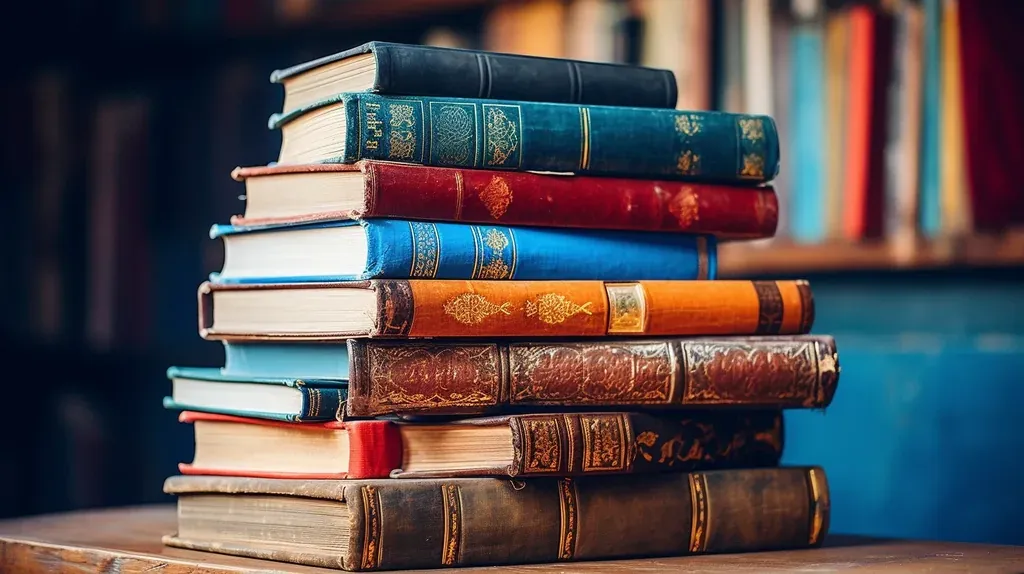
A new generation of Tunisian Francophone writers is emerging, with output that is rich, varied and steady — a far cry from the early days of scarce voices, often limited to poetry collections or autobiographical works.
Why did Tunisian Francophone literature take so long to emerge?
Unlike neighbouring Algeria, where names such as Kateb Yacine and Mouloud Feraoun were already fixtures of French literary memory, Tunisian Francophone writing stayed largely under the radar for decades — with the notable exception of Albert Memmi. Two main reasons are said to explain this: Tunisia was a protectorate rather than French territory proper, unlike Algeria (four départements for 130 years); and before colonisation, the country already had a strong Arab culture, one of the great centres of Arab-Muslim civilisation. Writing in French was therefore sometimes frowned upon.
It took independence, the spread of public schooling and the significant place it gave to French, for a generation of Tunisian Francophone writers to emerge — along with a freer-spirited youth willing to tackle sometimes-taboo subjects in a language seen as one of liberty.
How did France come to recognise these writers?
Recognition came late: France long labelled foreign authors writing in French as “writers of French expression” rather than authors in their own right — even though it was Tunisia's Habib Bourguiba who was behind the creation of the International Organisation of La Francophonie. As globalisation eroded its cultural influence, France is thought to have gradually woken up to the importance of acknowledging this literary heritage.
Who are the writers of this new generation?
Breaking with their elders (Albert Memmi, or the 1970s generation such as Abdelwahab Meddeb and Tahar Bekri), this generation moves away from themes of exile and uprootedness toward individual freedoms, coexistence and citizenship. Names mentioned include Fawzia Zouari (Le corps de ma mère, 2016), Samy Mokaddem, Mohamed Harmel (Les rêves perdus de Leyla, Le Sculpteur de masques), Wafa Ghorbel (Le Jasmin noir), Khaoula Hosni (Le Cauchemar du Bathyscaphe), Hatem Oueslati, Azza Filali and Atef Attia.
These authors bring a genre little explored until then by Tunisian Arabic-language literature: the thriller and the fantastical. Samy Mokaddem, nicknamed the “Tunisian Da Vinci Code” for Dix-neuf (Comar Découverte prize, 2015), weaves together a hidden mathematical equation, a Punic secret and a submerged pyramid. Mohamed Harmel, meanwhile, won the jury's special prize at the Comar d'or awards for Les rêves perdus de Leyla, a ghost story set in the suburbs of Tunis, having already won the Comar d'or for Le Sculpteur de masques.
Why are so many of these writers women?
Most French teachers in Tunisia are women, who are also strongly represented in university language studies. For the Tunisian woman writer, expressing herself in French is also thought to be a way of escaping a patriarchal society, embracing other ideas and gaining emancipation — a language that notably inspired Bourguiba's Code of Personal Status. Khaoula Hosni leaves her mark on the Tunisian thriller genre with Le Cauchemar du Bathyscaphe, while Wafa Ghorbel triumphs in the epistolary genre with Le Jasmin noir, and Wafa Hmissi explores poetry around the symbol of jasmine in Jasmin : pulsation et délire.
Through their writing, these authors explore both post-revolutionary Tunisia — its unrest and corruption, but also its hope — and universal themes, ranging across registers as varied as autobiography, fiction, essay, thriller, horror, the fantastical and even science fiction.
By Firas Messaoudi