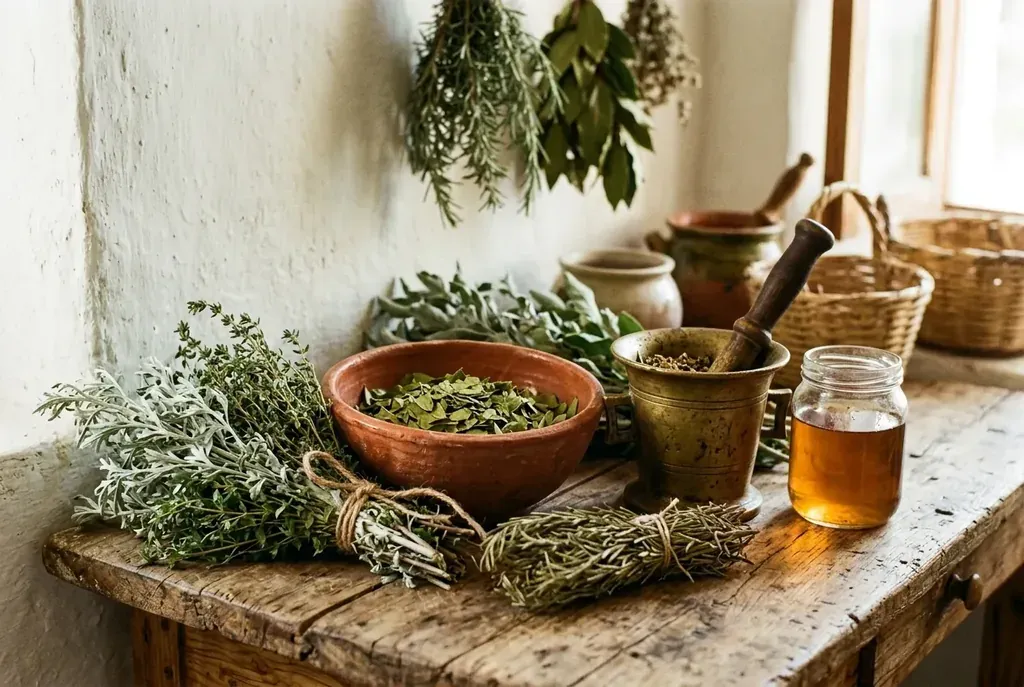
Combining herbs with recognised medicinal virtues: that is the principle behind Chinese herbology, a traditional medicine several centuries old, still used on a vast scale in China although it holds no official recognition, for want of enough clinical studies.
What is Chinese herbology?
Close to phytotherapy, Chinese herbology is a traditional art of combining herbs credited with many medicinal virtues. Clinical studies remain too thin for it to count as an officially recognised medicine, so it sits among the soft medicines, alongside hypnosis, magnetism, acupuncture and massage therapy. None of which stops it being used on a vast scale in China.
More than 50 “fundamental” plants are counted in Chinese herbology today, chosen with great care by a professional herbalist, and they form the base of the blends meant to head off a particular illness. Every part of the plant goes into the mix — leaves, stems, roots, rhizomes, fruit — sometimes with mineral components added, and even products of animal origin. The herbalist alone is qualified to adjust that formula, which they can adapt to the yin and yang conditions of the patient.
Chinese herbology: the precautions to take
A prescription of Chinese herbs is drawn up according to the illness to be treated and the person being treated. That does not mean someone else can use the same blends, even with similar symptoms. There are several ways to take these medicinal herbs: worked straight into food, or drunk as a decoction in the form of a tisane. Some plants taste unpleasant and are taken instead as pills or capsules. Fresh or dried, they are also turned into essential oil, lotions, creams and ointments, or sold as a powder by the herbalist.
These are 100% natural products, yet some of these plants can prove dangerous to health, even in small doses. Advice and supervision from people who know them are essential to avoid any poisoning. Every prescription of Chinese herbs is made according to the specific needs of each patient: it must never be taken by anyone else, even someone with similar symptoms.