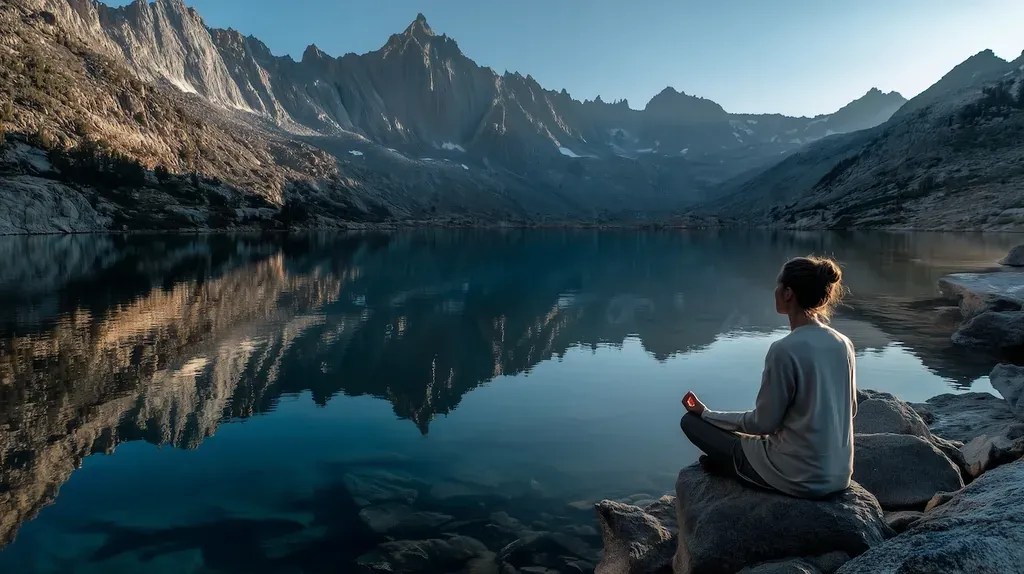
Faced with environmental challenges, an innovative discipline is emerging and killing two birds with one stone. Ecotherapy not only improves our relationship with nature, it also reveals unsuspected therapeutic benefits. This psychosomatic approach has gradually gained recognition in the United States and Europe.
A pioneering discipline born in the 1990s
Ecotherapy, also known as ecopsychology, first appeared in the early 1990s thanks to the American sociologist and historian Theodore Roszak. The discipline rests on one fundamental principle: our wellbeing depends directly on the health of our natural environment.
Ecotherapists champion a simple but powerful theory. In their view, every remedy for our ills is found in nature; we simply need to learn how to communicate with it. Protecting our planet better would therefore guarantee humanity better health and greater longevity.
Convincing scientific evidence
The therapeutic effectiveness of ecotherapy has been the subject of extensive studies in psychology. In 2007, researchers at the University of Essex conducted a revealing experiment on people suffering from depression.
The team divided the participants into two groups. The first group took a thirty-minute walk in the countryside. The second spent the same amount of time in a shopping centre. The results speak for themselves: 71% of those who walked in nature saw their depression ease. Conversely, 22% of those who visited the shopping centre felt more depressed than before the experiment.
Benefits that go beyond depression
These same researchers broadened their investigations to other mental disorders. They offered recreational and sporting activities in a rural setting to people suffering from various psychological conditions. After just one hour of activity, 94% of the participants noted an improvement in their health.
| Protocol (University of Essex study, 2007) | Duration | Result |
|---|---|---|
| Countryside walk | 30 min | 71% reduction in depression |
| Visit to a shopping centre | 30 min | 22% feel more depressed than before |
| Recreational and sporting activities in a rural setting | 1 hour | 94% report an improvement in their health |
These results encourage ecotherapists to make concrete recommendations. They advise city dwellers to treat themselves to regular forest getaways to release everyday stress. This natural prescription offers a remedy accessible to everyone.
A virtuous circle for people and the planet
Ecotherapy reveals a remarkable virtuous circle. Nature improves our mental health, which in turn motivates us to protect it. Everyone can thus help preserve the environment while caring for their own psychological wellbeing.
This therapeutic approach transforms our relationship with the natural world. It reminds us that we are an integral part of the Earth's ecosystem. Our health and that of the planet are inextricably linked.
Ecotherapy therefore opens a promising path for the future. It reconciles personal development and environmental protection in an approach that is coherent and beneficial for all.