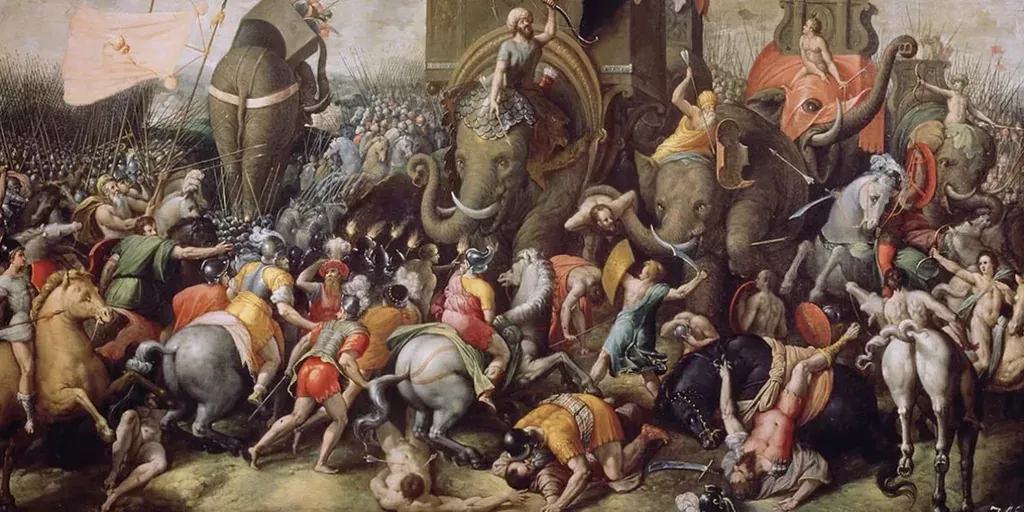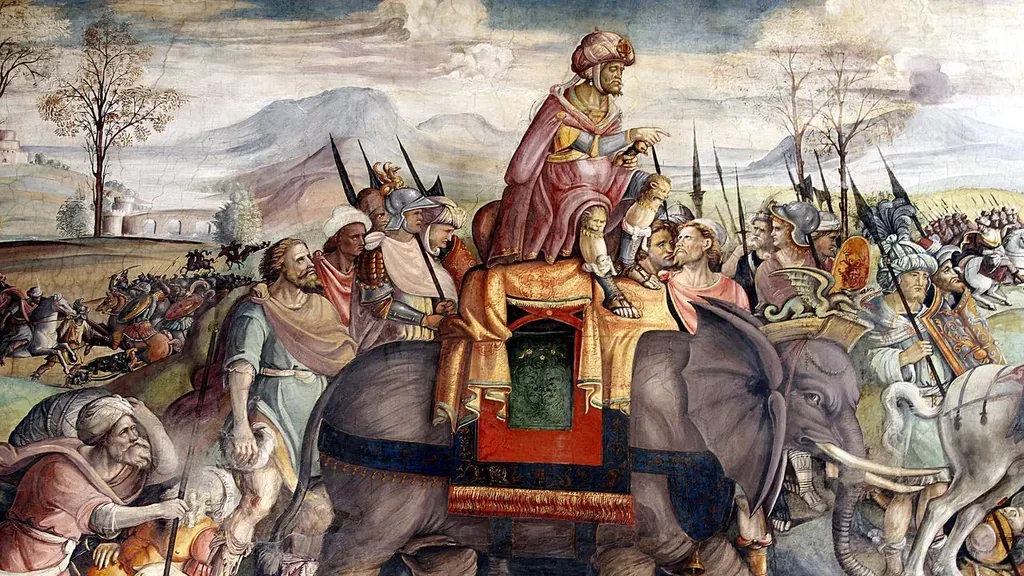
The exploits of Hannibal Barca, over the course of his life, reveal not only a figure of exceptional ability but also a leader endowed with unique gifts. His capacity to inspire unshakeable loyalty and remarkable discipline among his troops — made up of Carthaginians and mercenaries from across the Mediterranean — bears witness to his charisma and to his talent for uniting diverse cultures behind a common cause. Historical accounts stress his closeness to his men: sleeping on the bare ground, sharing their food and their hardships, which set him apart as both a tactician and an empathetic leader. His military strategies remain a reference point in military academies the world over, a testament to his timeless tactical genius.
Hannibal's military genius
Beyond his military prowess, Hannibal was also a shrewd politician and an effective administrator. His return to Carthage after a defeat — at a time when vanquished generals risked crucifixion — reveals his exceptional courage. He managed to protect the vulnerable classes from aristocratic exploitation and to reorganise Carthage's finances, even attempting to repay Rome ahead of schedule, a gesture that, sadly, hastened his downfall through internal political opposition.
Hannibal's leadership and vision
From the age of 25, Hannibal displayed a remarkable ability to lead, commanding soldiers far older than himself during his first campaign. His leadership by example, his clear vision of defeating Rome, and his ability to build a network of support — notably among the Italians, despite being in enemy territory without Carthaginian reinforcements — were key factors in his resilience.
Leadership strategies inspired by Hannibal
Lead by example
Hannibal was a man who succeeded in leading his men by serving as their example. He slept among them and wore no distinguishing mark to signal the superiority of his rank. He always took part in every battle and was always the last to leave the field.
Any leader who wishes to earn the respect and trust of their team should follow this example. Whatever task you would like to see your team carry out, make sure you do it yourself — and do it better than anyone else.
Have a clear vision
Hannibal dreamed of defeating Rome. Despite his youth, he managed to fire up his men, who followed him on the most perilous of ventures. People don't just follow a leader; they also follow a vision that inspires them.
So make sure you have a clear vision to hold your team's attention and motivate them to follow you.
Build a network of support
Hannibal remained undefeated in Rome for 15 years, despite the absence of Carthaginian reinforcements and his presence in enemy territory. How did he manage to hold out so long? Hannibal continually rallied the support of the Italians. His war was not directed against them, but against Rome.
If you're not getting the support you need to carry out an initiative, ask yourself why. Perhaps you're not being convincing or inspiring enough.
| Principle | What Hannibal did | The lesson for today |
|---|---|---|
| Lead by example | Slept among his men, with no distinguishing mark of rank; always in the fight, the last to leave the battlefield | Do yourself what you ask of your team, and do it better than anyone else |
| Have a clear vision | An openly held vision of defeating Rome, which carried his men into the most perilous of ventures | A clear vision holds a team's attention and motivates them to follow |
| Build a network of support | 15 years undefeated thanks to the constant support of the Italians, without Carthaginian reinforcements | When support is lacking, question your own ability to convince and inspire |
What Hannibal's leadership teaches us today
Hannibal Barca remains an emblematic figure of military history and a model of leadership. His strategic approach, his resilience in the face of adversity and his skill in inspiring and uniting diverse peoples are precious lessons for today's leaders. By embracing these principles, leaders can aspire to effectiveness and influence comparable to Hannibal's, each within their own field.