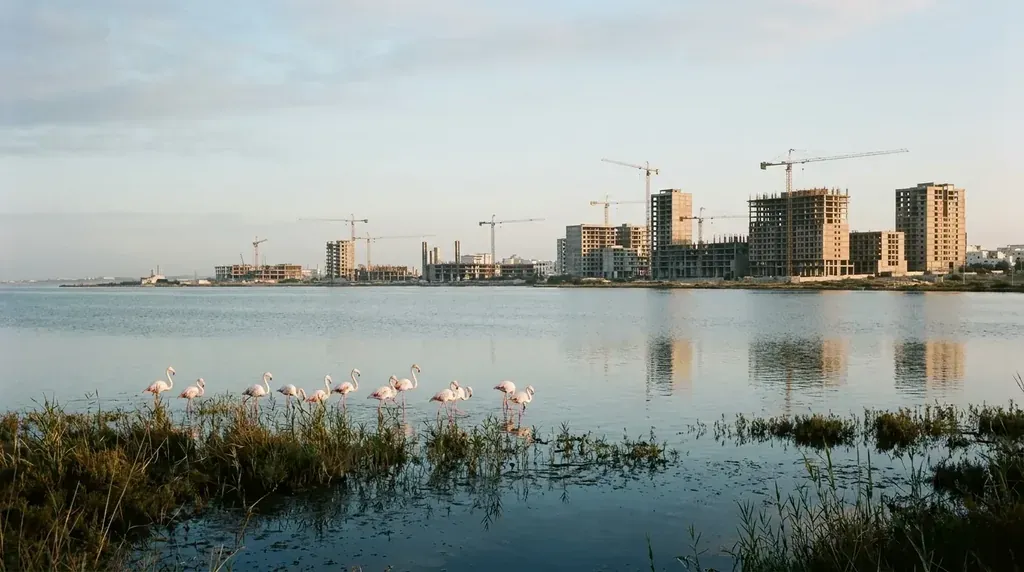
Between 2010 and 2024, the volume of water drawn from unauthorised deep agricultural wells in Tunisia quadrupled, according to the director general of water resources, a strain on groundwater tables that replenish only slowly. In response to these illegal boreholes, the Ministry of Agriculture has announced the rollout of smart meters at extraction points.
Illegal boreholes: just how big has the problem grown since 2010?
water drawn from unauthorised deep agricultural wells quadrupled between 2010 and 2024
The finding comes from an official source. According to the director general of water resources, the volume of water drawn from unauthorised deep agricultural wells quadrupled between 2010 and 2024. Over fourteen years, that kind of growth changes the scale of the problem: the practice has become structural.
This fourfold rise gives a clear sense of scale, without spelling out every volume involved. It frames illegal boreholes as a trend that has been building in agriculture for more than a decade.
Why is this rise such a worry for groundwater tables?
One figure sums up the scale of the phenomenon: according to the director general of water resources, the volume drawn by unauthorised deep agricultural wells quadrupled between 2010 and 2024. This acceleration is playing out entirely outside any regulatory framework, which makes it all the harder for water authorities to anticipate.
Deep aquifers replenish slowly, sometimes over several generations. A rise of this scale in illegal extraction therefore puts pressure on a resource that isn't being replenished at the rate it's being used. It also complicates official water management, since by definition these volumes fall outside authorised channels and their monitoring.
How does the State plan to regain control of boreholes?
Faced with this pressure on groundwater tables, the Ministry of Agriculture has announced a technical response: the rollout of smart meters at extraction points. The stated aim is to know, borehole by borehole, exactly how much water is being pumped, rather than relying on estimates.
The system comes with real-time monitoring of extraction, designed to flag anomalies as soon as they occur rather than during an occasional inspection. What remains to be seen, at this stage, is the timetable and which boreholes this monitoring will actually be installed on.
Smart meters and real-time monitoring will only curb illegal extraction if their rollout extends, borehole after borehole, beyond the announcement itself. Until then, keeping a close watch on the state of groundwater tables remains the only sure response to a problem that, by definition, slips past official channels.
Also on La Sultane
After the World Cup: the FTF, a Mirror of Tunisia’s Crisis
Glam & Goodies Mini Market: the Pop-Up Spotlighting Hammamet’s Creators
Harry Styles Crosses the Berlin Marathon Finish Line in Under Three Hours
Chery Arrizo 8: the New Premium Saloon Turning Heads in Tunisia