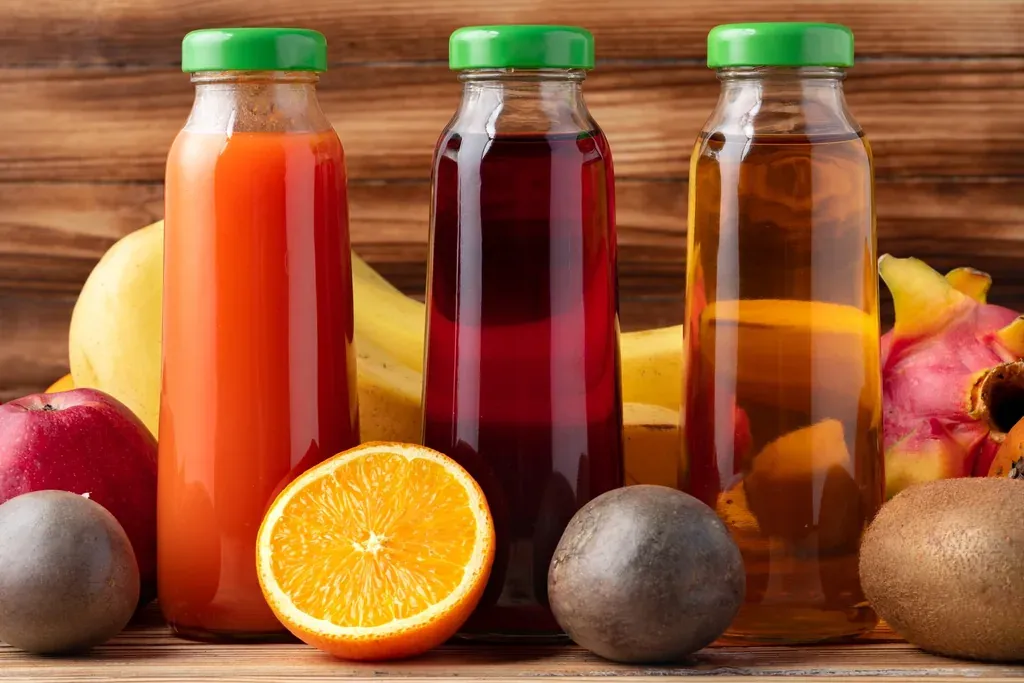
The idea of making juices from fruits and vegetables horrifies more than a few. Yet the benefits of these drinks are undeniable: here's how to get started the right way, from equipment to storage.
Set your preconceptions aside and let your taste buds be your guide. If a drink that's too green reminds you of the supposed blandness of a lawn, you can add celery, cucumber, or apples to soften it. The only rule: have fun, experiment, and find a surprising, delicious combination.
Which Appliance Should You Choose for Your Juices?
To make these recipes, a blender will do at the very least. A centrifugal juicer is a very good choice: unlike a blender, it separates the pulp from the juice. A slow juicer is even more efficient (you get a larger yield), but this appliance costs relatively more.
How Much Juice, and How Should You Store It?
Each recipe generally yields between 230 and 350 ml of juice, depending on the size of the fruits and vegetables used (unless otherwise stated, recipes are based on medium-sized ingredients). It's best to drink your juice as soon as it's made; if that's not possible, store it in an airtight container in the fridge or in a thermos, for no more than 12 hours — the fresher the juice, the better.
Mix Things Up
It's easy to fall into the habit of making the same juice every day. The idea is to vary your healthy drinks as much as possible, using as wide a range of different fruits and vegetables as you can. The recipes are just a starting point: don't hesitate to tweak them, create your own variations, and experiment to find the combinations that suit you. One rule only: have fun.
A freshly made juice keeps for a maximum of 12 hours in the fridge, in an airtight container — the fresher it is, the better.