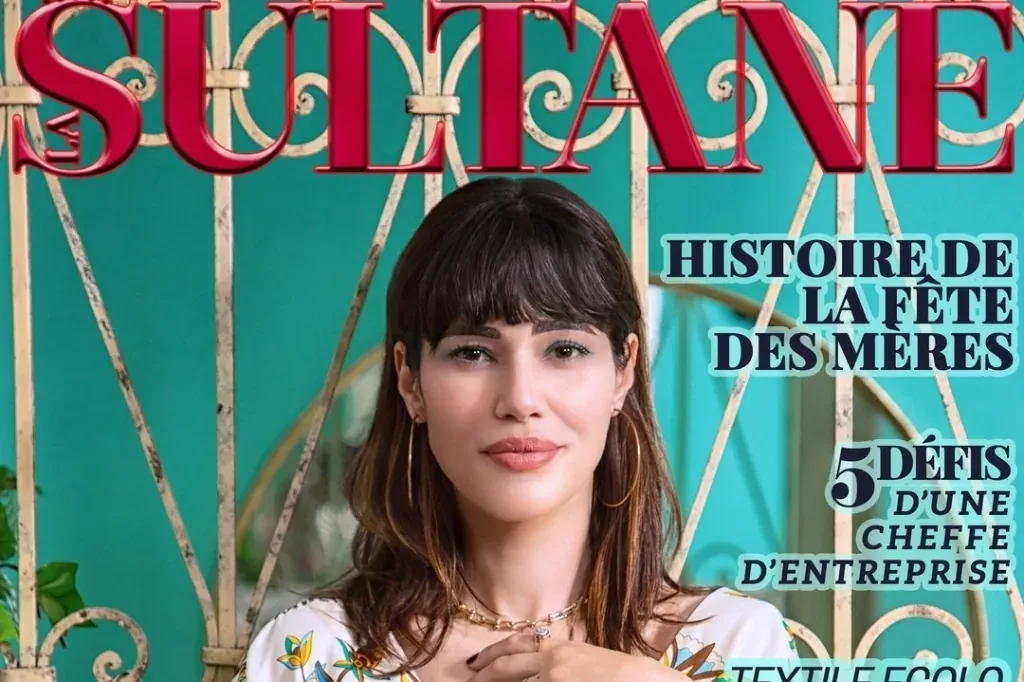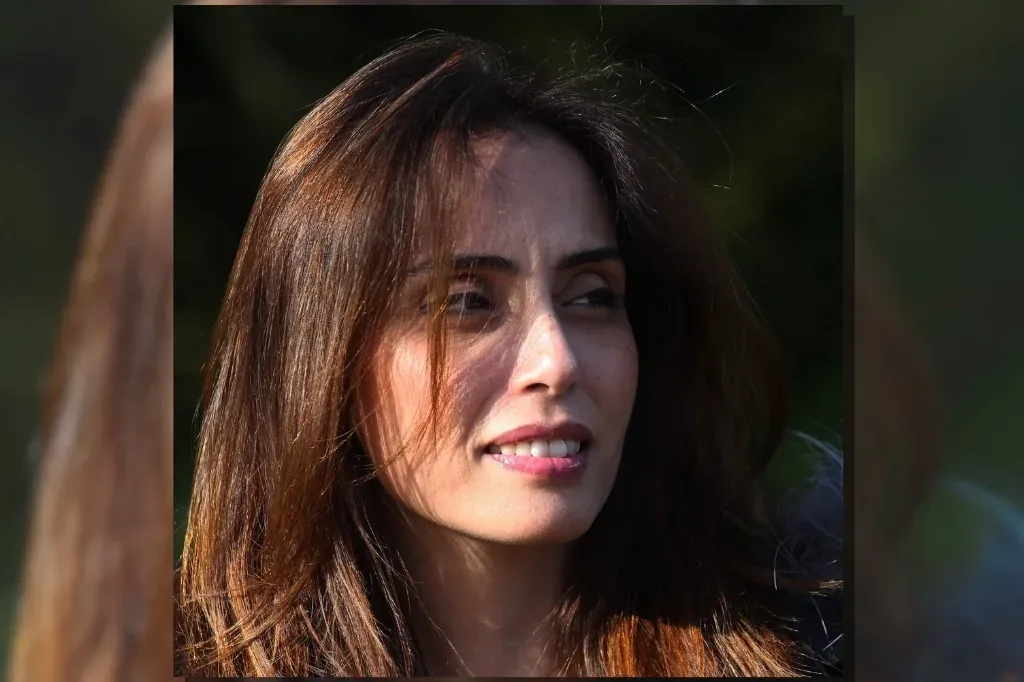
A microbiologist doctor by training, Sonya Ben Behi is also the voice behind "Serial Reader / Liseuse en Série", a bookstagram account and a YouTube channel devoted to reading. In this interview given to La Sultane, she tells of the birth of her project, the difficulties of the literary influencer's trade, and why she chose to speak openly about her depression and her anxiety.
Who is Sonya Ben Behi, the "Liseuse en Série"?
Aged 33, a doctor by training specialising in microbiology — viruses, among other things, she specifies with a laugh — Sonya Ben Behi defines herself above all as a great lover of reading — her favourite activity since she was very small, never dethroned even in adulthood. She met her husband, an author, at the launch of a first book. Today they have an enormous library at home and even got married in their favourite bookshop: in their household, things are not done by halves.
How was the "Serial Reader / Liseuse en Série" channel born?
Sonya launched her YouTube channel thanks to her husband and to her friends Sahar and Yosra — the latter having ended up "locking her in" to push her to film her first video. She first shared written reviews before moving on to the video format, despite problems of self-confidence with her voice and her image: making videos had, she says, a therapeutic effect. The public's positive reception encouraged her to continue, first on YouTube, then through a blog and an affiliated Facebook page, before becoming a "bookstagrammer" on Instagram under the name Sonya Serial Reader.
What difficulties does she meet in this line of work?
Finding day-to-day motivation for a non-profit-making activity, creating content that is both elaborate and accessible to as many people as possible: the challenges are not lacking. Her eclectic tastes in literature and her trilingualism (French, Arabic, English) also make it difficult to hold to a strict "editorial line".
What does she think of Tunisians' relationship with reading?
For Sonya Ben Behi, a single watchword stands out: to democratise reading. She regrets that assiduous readers are still perceived as asocial "geeks" by a part of society — a gaze she has herself weathered from colleagues during her studies and right up to the hospital. Reading should, according to her, become an attractive activity accessible to all, and the media should commit themselves further: programmes devoted to reading and literary columns are cruelly lacking in the face of the hunt for the sensational. She nonetheless keeps her hope in the young people she meets at book fairs and book shows, who read a great deal and talk about it on social media.
How is the book industry faring in Tunisia?
Sonya Ben Behi does not hide the sector's difficulties. Her husband being a co-founder of the publishing house Pop Libris, she knows its constraints at close hand: paper is expensive, which weighs down printing costs, and half the price of the book goes to the distributor — not counting the layout, the cover, the illustration and the royalties. Publishers then struggle to maintain prices that are affordable for a Tunisian reader in an already narrow market. The promotion of the Tunisian book suffers from the same lack of media relay, despite the efforts on social media.
Asked about a link between the absence of reading and the Tunisian social climate, she says she is deeply convinced that the sense of citizenship in a nation is proportional to the number of readers: reading does not only instruct, it teaches empathy, tolerance and the acceptance of the other — values which, according to her, are wanting when cultural poverty sets in, alongside other factors such as precariousness.
Why does she speak openly about mental health?
On her YouTube channel as on Instagram, Sonya Ben Behi has chosen to open up about her experience of mental illness: she suffers from chronic depression and from anxiety, which partly explains her passion for mental health. After several training courses on the subject, she tries to break the taboos and to show people who suffer as she does that they are not alone — and that this does not stop one from living, nor even from being joyful. She observes that mental illness remains stigmatised because it cannot be seen, while suicide continues to take lives and bipolarity or schizophrenia are advancing. She makes an effort to speak about it regularly, including on her difficult days, against the current of "positivity at all costs".
This move towards transparency meets the principles of good emotional hygiene: acknowledging your difficult emotions rather than silencing them.
Which books does she recommend?
For Tunisian readers, Sonya Ben Behi recommends without hesitation Le Sang des anges by Samy Mokaddem, a book to which she herself contributed. Her discovery of the year is Julia, a novel in Arabic by Abir Guesmi. For the Arabic language, she advises the novels of Ahmed Khaled Toufik, and for lovers of Russian literature, any Dostoyevsky — she organises, moreover, an "Octobre Russe" (#octobrerusse) every year to read Russian and Slavic authors. Her closing message: in this troubled period, plunging into a novel remains, she says, the best anxiolytic — and if the distress is too strong, one should not hesitate to talk about it and to ask for help.
To carry this reflection on books that do good further, Bibliotherapy: when books heal the soul explores precisely this therapeutic power of reading, while these 5 personal development books round out a library turned towards greater well-being.