Palestine 2025: How Global Recognition Reveals the Geopolitical Fractures
Written on 22 September 2025 at 11 p.m.
In September 2025, more than 150 countries officially recognise the Palestinian State. But behind this diplomatic gesture, it is the whole balance of the world that is wavering: great-power rivalries, the rise of the Global South and the crisis of Western multilateralism.
The wave of recognitions of the Palestinian State in September 2025 reveals far more than a diplomatic development: it exposes the deep fractures of a world order in full recomposition, between the rise of the Global South, Sino-American rivalry and the challenging of the international architecture inherited from 1945.
This dynamic raises a fundamental question: can we still imagine a unified world order, or must we accept the coexistence of several parallel systems?
A historic recognition that redefines the global balance
This diplomatic sequence, hypothetical but geopolitically credible, reaches far beyond the framework of the Israeli-Palestinian conflict. Indeed, it becomes a powerful analyser of the mutations of the contemporary international architecture. Examining this recognition makes it possible to explore the alternative that will define tomorrow's international architecture.
The architecture of recognition: a shift in the balance of power
The changing geography of power
Roughly 155 States as of 22 September 2025, with new official recognitions. The United Kingdom, Canada, Australia and Portugal on 21 September; France and Luxembourg on 22 September. Others announced at the UN General Assembly (such as Malta). This mapping reveals a striking paradox: the world's numerical majority stands opposed to the economically dominant minority.
Plural motivations: between legal principle, geopolitical calculation and societal pressure
- Normative factors: For many European countries, recognition proceeds first and foremost from a logic of legal consistency with the two-State solution and international law.
- Geopolitical factors: For others, notably in Latin America, according to the Brazilian political scientist Cécilia Baeza, it is a way of demonstrating their diplomatic autonomy in the face of Washington.
- Societal factors: The mobilisation of civil society, of the BDS movements and of public opinion exerts crucial bottom-up pressure. This dimension is often overlooked in purely state-centred analyses.
The strategic isolation of the Western axis
The world's leading economic and political powers, such as the United States, Germany, Italy and Japan, have not taken the step. This opposition reflects a logic of preserving the established order. That is to say, one in which Palestinian recognition is perceived as a challenge to the post-1945 geopolitical architecture.
Palestine as an analyser of a fragmented multipolarity
Diverging interests beneath an apparent consensus
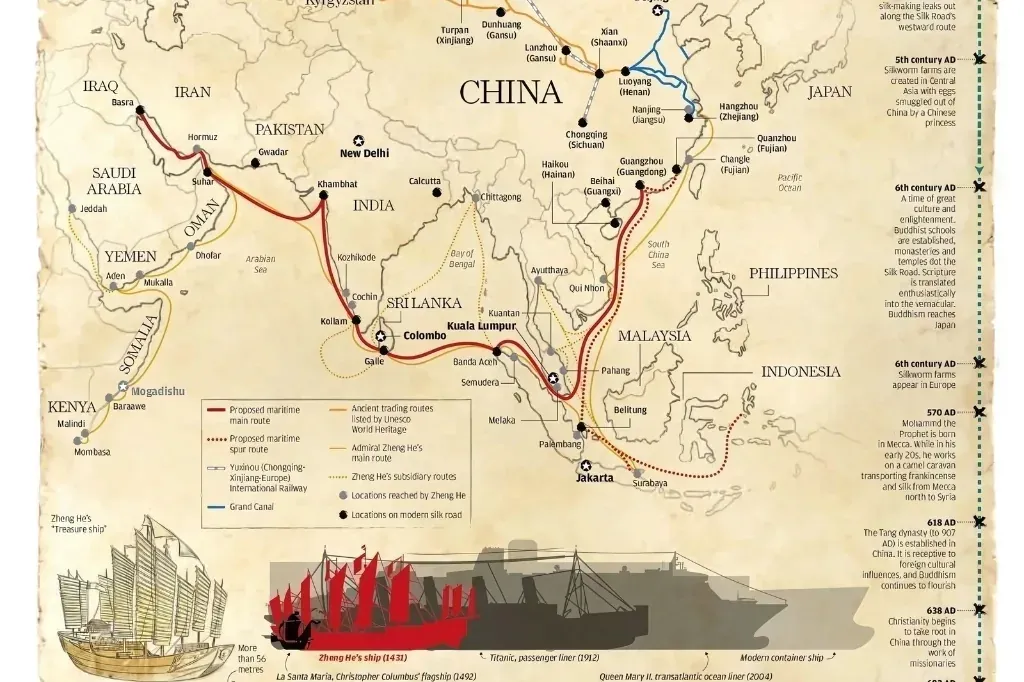
Other powers contest the Western order, but their motivations and objectives differ fundamentally. On the one hand, China favours economic expansion through the Silk Roads. On the other, Russia seeks to rebuild a sphere of influence. Finally, India navigates between non-alignment and multiple strategic partnerships.
The BRICS - an acronym for Brazil, Russia, India, China and South Africa, a group created in 2009 and enlarged to 10 members in 2024 with Egypt, Ethiopia, Iran, the United Arab Emirates and Saudi Arabia - count 10 members. Nevertheless, this expansion reveals the bloc's limits as much as its ambitions. India maintains close strategic relations with Israel, notably in the technological and security fields, illustrating the internal contradictions of this supposedly anti-Western coalition.
The symbolic specificity of the Palestinian cause
Palestine presents unique characteristics:
- a rootedness in post-colonial history,
- a resonance across the Muslim world,
- the perception of a David-versus-Goliath conflict.
Unlike other causes (Western Sahara, Tibet), it enjoys massive transnational popular support, fuelled by social media.
The cracks in the contemporary Westphalian order
The Westphalian order, named after the Treaties of Westphalia of 1648, refers to the international system based on the sovereignty of nation-States and the principle of non-interference.
The UN paradox: centrality and powerlessness
The United Nations reveals a paradox constitutive of the contemporary international system: it is at once the place where the failure of multilateralism becomes manifest and the institution without which no diplomatic action can be legitimised. Palestinian recognition illustrates this contradiction perfectly: a powerful symbolic gesture, but one with no capacity to concretely transform the balance of power.
The emergence of two competing logics
Two camps stand opposed in their perception of international relations: those who cling to the old multilateral system in an attempt to save it, and those who, while belonging to it, seek to circumvent it and are building an alternative world.
Strategic implications: between recomposition and confrontation
The internal fragmentation of the West: diverging national logics
Recognition coordinated through a first salvo (United Kingdom, Canada, Australia, Portugal), followed by France and by further announcements (such as Malta), marks an unprecedented crack within the Western camp.
This "coordination" in fact conceals diverging national logics: pressure from civil society and the BDS movements, electoral calculations linked to diasporas, a desire to set themselves apart from Washington. In France, recognition is also part of a strategy of diplomatic reassertion in the face of criticism of the country's declining influence.
The acceleration of economic bipolarisation
Initiatives such as the New Development Bank (NDB) - a bank created in 2014 by the BRICS to finance infrastructure projects without going through the World Bank - and BRICS Pay - a project for a payment system alternative to the American SWIFT network, still under development - provide member countries with alternatives to the financial systems dominated by the United States. Consequently, Palestinian recognition goes hand in hand with a gradual de-Westernisation of global economic and financial circuits.
The paradoxes of emerging multipolarity
The structural limits of the multipolar project
The BRICS+ - the enlarged BRICS group including the new powers of Africa, Asia and the Middle East - observe the decline of American hegemony and the crisis of the system inherited from 1945. Their interests, however, remain divergent. The BRICS+ alliance could function as a cooperative of the Global South, innovative in self-help, yet reluctant to overturn a world order from which it still wishes to benefit.
The persistence of internal contradictions
Despite their political postures, several countries have maintained key economic exchanges with Israel — Colombian coal, Russian and South African deliveries — revealing that commercial interests often transcend diplomatic positions.
These contradictions do not merely block the multipolar dynamic: they open up several possible trajectories for the international order.
Three forward-looking scenarios
Scenario 1: controlled fragmentation (high probability)
Palestinian recognition falls within a logic of "systemic reformism", in which the emerging powers seek a redistribution of power without fundamentally challenging the international architecture.
Scenario 2: asymmetrical multipolarity (medium probability)
Rather than a clear-cut bipolarisation, the emergence of multiple regional poles (China in Asia, the United States in the Americas, a fragmented Europe, middle powers). Palestine would become one of the many issues of this variable-geometry geopolitics.
Scenario 3: Sino-American recomposition (low probability but high impact)
If Beijing and Washington find a modus vivendi on their respective zones of influence, the "Global South" could find itself marginalised. In that case, the Palestinian cause would once again become peripheral in the face of technological and energy stakes.
Conclusion: Palestine, mirror of a world in transition
The recognition of Palestine in September 2025 reveals that we are moving towards a system in which universalist principles give way to a geopolitics of shifting coalitions.
One often-neglected element deserves attention: Israeli strategy itself. The Abraham Accords - diplomatic normalisation agreements signed in 2020 between Israel and several Arab countries (United Arab Emirates, Bahrain, Morocco, Sudan) under the aegis of the United States - and the strengthened ties with India show that Israel is putting its diplomatic isolation into perspective and turning global recomposition to its advantage.
This diplomatic sequence illustrates the contemporary hegemonic transition perfectly: the old order is weakening without a new one yet being able to impose itself, creating a period of structural instability of which Palestine is only one symptom among others.
This article analyses a hypothetical but plausible geopolitical scenario, based on observable trends in contemporary international relations.