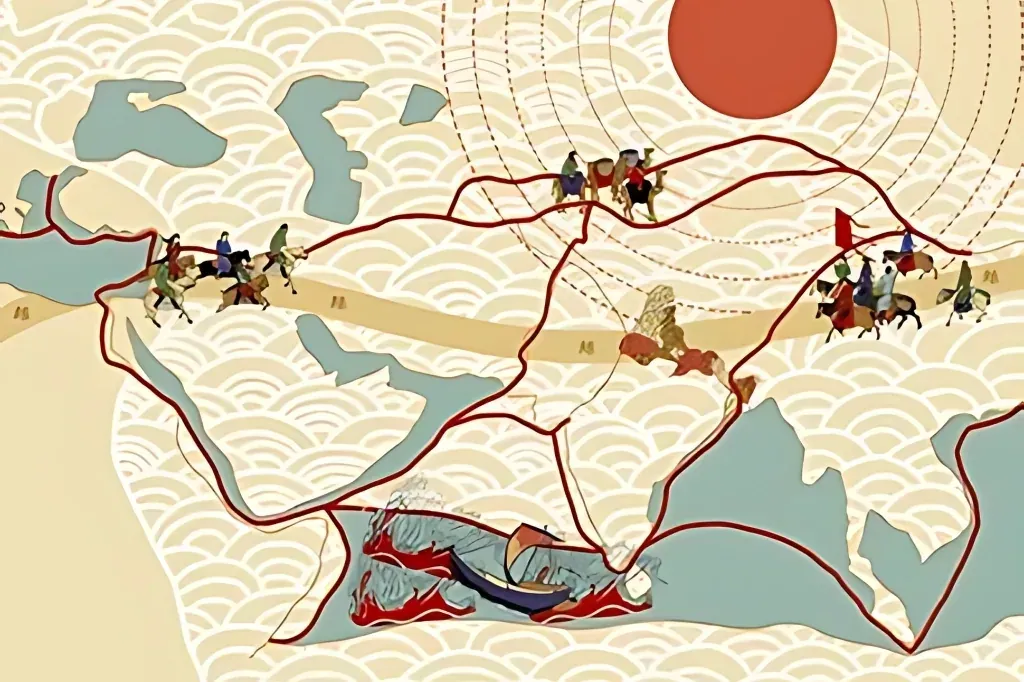
The resource curse describes countries rich in oil, copper or phosphate whose growth lags behind. Economist Richard Auty coined the term in 1993; Tom Burgis counts at least twenty African countries where raw materials account for more than a quarter of exports, without that rent durably funding the state’s coffers.
What is the resource curse?
between 2007 and 2012, barely 2.5% of the $41 billion drawn from the Democratic Republic of Congo’s mines reached the state budget
The natural resource curse describes a paradoxical economic situation: developing countries with abundant extractive resources tend to grow more slowly than countries without them. British economist Richard Auty was the first to use the phrase, in a book published in 1993.
Tom Burgis offers a numerical benchmark for identifying exposed countries: raw materials must account for more than a quarter of their exports. By this measure, he counts at least twenty African countries affected.
How does mining rent slip past the state budget?
The mechanism often begins with the sale of the deposits themselves. By author Tom Burgis's calculations, between 2007 and 2012, barely 2.5% of the $41 billion drawn from the Democratic Republic of Congo's mines reached the state budget, after copper and cobalt deposits were sold off cheap. Mining rent is thus formed before extraction even begins, at the moment the rights are negotiated.
Once mining gets under way, taxation finishes emptying out public coffers. In Zambia, a major copper producer, mining companies were taxed less than their own employees, half a million people. That gap sums up the trap: the state collects less than the workers employed by the very companies it is supposed to tax.
Why does extraction-driven growth stay so fragile?
Economist Philippe Hugon describes these as rentier economies: money drawn from the mines has rarely gone towards building a lasting industrial base. Productive accumulation (the ability to turn extracted wealth into factories, skills and infrastructure that endure) never really got off the ground. Hugon cites two exceptions, Botswana and South Africa, where mining rent has, to some extent, fed something beyond extraction itself.
Felwine Sarr points to another weakness: among African economies that do show growth, most are oil or mineral exporters. That growth then hangs on world commodity prices rather than on any productive base of their own. When prices rise, the economy advances; when they fall, it retreats, with no industrial foundation to cushion the blow.
What happens when rent fails to fund essential services?
When mining or oil rent slips past the national budget, through intermediary structures and transfer pricing, the money that should fund hospitals, health centres and vaccination campaigns never reaches the Treasury. The state shows revenue on paper, but the real flows take other routes, towards shell companies or offshore accounts. The shortfall doesn’t show up straight away: it shows up years later, in the state of healthcare infrastructure.
Journalist Burgis thus links the resource curse to the Ebola outbreak, which struck countries where health services had already been stripped of resources. His point illuminates a mechanism rather than a mere news item: when rent doesn’t fund care, health systems are the first to weaken, with direct consequences for the women and households who depend on them every day.
A simple lesson emerges from these examples: mineral or oil wealth, on its own, says nothing about a country’s fate. Everything hinges on the contracts signed before extraction even starts, on the share of rent that actually reaches the public budget, and on how it is used once collected. Botswana and South Africa, cited by Philippe Hugon, show that another path exists when that rent feeds something beyond extraction itself. Above all, remember this: the question that matters is not whether a country has resources, but who negotiates their price, and where the money goes once it comes out of the ground.
Also on La Sultane
Gazoduc transsaharien : l’Algérie avance seule
L’avenir du travail : Pourquoi la Génération Z détient les clés du changement
L’acumen stratégique : le secret pour propulser les femmes au sommet
Développer son leadership en entreprise : les clés de l’assertivité