Inaugurated on 21 March 2018, the Cité de la Culture in Tunis long crystallised controversy — a project judged pharaonic by some, a symbol of cultural renaissance by others. Now risen from the ground, it hosts shows, festivals and fairs every week, while continuing to raise questions about its cost and its management.
Some called for an end to be put to this project, on the grounds that it was costly for the taxpayer and associated with the name of Ben Ali, the deposed dictator. Others, on the contrary, voiced their wish to see this cité come into being, since it was the people’s money that had served to build it, and not Ben Ali’s. The debate lasted several years and made rich pickings for the media.
The point here is not to have that debate all over again, since the cité is there: its doors are wide open, and Tunisian men and women come in numbers to attend the shows, festivals and fairs programmed almost daily. With the new finance act, the creative cultural industries now count among the priority cultural activities, as they do in Kenya, Nigeria or Turkey.
Culture is set to play a leading role in Tunisian society: the Ministry of Cultural Affairs saw its budget rise by 13.4%, that is 35.64 million dinars more, representing 0.73% of the total state budget (the same percentage as in 2018). The ministry’s draft budget for 2019 was adopted on 4 December by the Assembly of the Representatives of the People: of the 107 elected members present, 98 voted in favour, 9 against, with no abstentions.
Many present this establishment as the long-hoped-for meeting place for Tunisian and foreign artists, called upon to play a significant role in the country’s cultural, political and social landscape. But a few questions remain: what has this cité really brought to the cultural landscape? Is it the long-hoped-for refuge for artists short of means? The ministry promotes cultural decentralisation while presenting the cité, highly centralised as it is, as the means of achieving it — is that not contradictory?
The Cité de la Culture, too closely tied to the memory of Ben Ali?
The Cité de la Culture is an imposing cultural complex of nine hectares, in the very centre of Tunis, on the site of the former Foire internationale de Tunis on Avenue Mohammed V. It is impossible to cross the capital without catching sight of it: some compare it to the Théâtre National de Chaillot, opposite the Eiffel Tower. Called a “Stalinist, aesthetically boring” building by plenty of Tunisians who are nonetheless steeped in culture, it is built on an architectural model blending modernity (new structures and materials) and a heritage imprint (forms and colours).
According to the architect Riadh Bahri, in charge of the project, the cité was to bear the seal of Arab art and culture and to form a space of dialogue between Arab cultures and the other cultures of the world. The space opens on four sides: the West façade, futuristic in its architecture, fronted by a glass geode suspended on sixty-metre columns; the South façade, giving onto the parc des Droits de l’Homme, with a door in local colours and a forty-metre arcade; the East façade, with the vaults separating the different compartments; and the North entrance, whose design represents the seven major arts.
A refuge for culture
The whole is organised around a central atrium space with an opening roof, constantly open to the public. The “tower of culture”, at once a landmark and an observatory, offers from its 60 metres a panoramic view over Greater Tunis. Inside, the cité has three theatres (opera house, 1,800 seats; theatre of the regions, 700 seats; theatre of young creators, 300 seats), two cinema screens (350 and 150 seats), a 100-seat auditorium, a national museum of modern and contemporary arts, a national museum of puppet art, a house of the novel, a house of poetry and an institute of translation.
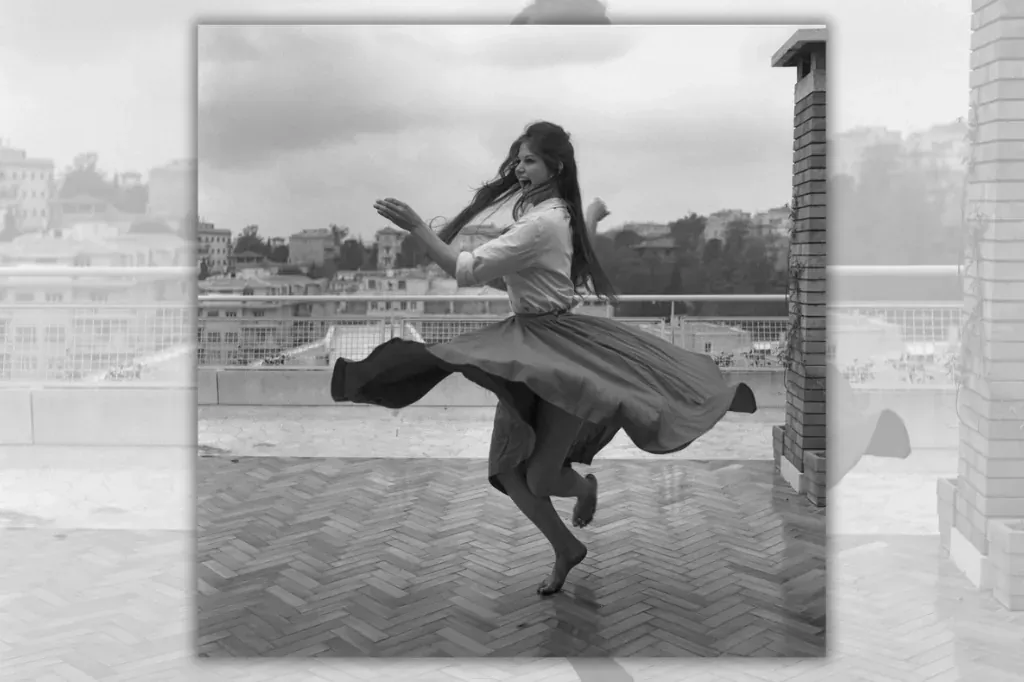
Institutions such as the Ballet de Tunis, the Centre national des arts dramatiques or the Centre national du cinéma et de l’image and its cinémathèque — inaugurated by Claudia Cardinale — carry out their activities there, with a cycle of five to six auteur films programmed each week.
The cité of hope
The cité also has ardent defenders, who see in it the symbol of the renaissance of a nation through its men and women of culture. Families can go there to the cinema or the theatre in a secure setting, without worrying about parking (four car parks with 460 spaces in all, 160 of them indoors, plus a bicycle park), pending the construction of restaurants and refreshment bars, which will bring still more comfort.
The modern and contemporary dance hub, or the Orchestre de l’Opéra de Tunisie under the leadership of Rachid Koubba, have allowed young artists to blossom and to unfold their talent. The contemporary art museum has hosted exhibitions such as “Winter Garden”, devoted to the “Micropop” movement (28 November-12 December), with works by Japanese artists such as Mahomi Kunikata or Ryoko Ayoki. Tributes are also paid there, such as the one to Habiba Jendoubi, a pioneer of the puppet arts, by entrusting her with the direction of the Festival de la marionnette — not forgetting the Festival des régions, which brings to Tunis troupes from Kairouan, Le Kef, Gafsa or Nabeul.
Poor management?
The cité is still looking for its way: an absence of artistic coherence and of visual identity, exhibitions sometimes taken up again without citing their original organisers. Its very location embodies a centralisation that contradicts the stated objective of cultural decentralisation, leaving events in the interior regions to depend above all on personal initiative.
There are also the questions of subsidies — whom are they intended for, and by what criteria? — and of the cost of maintaining so imposing an edifice, when that money could serve to build cultural spaces that the interior regions sorely need. As with other major Tunisian festivals, internal dissent already exists around the programming, hence the value of appointing those in charge for a fixed term, to keep the bureaucracy from slipping back into old habits.