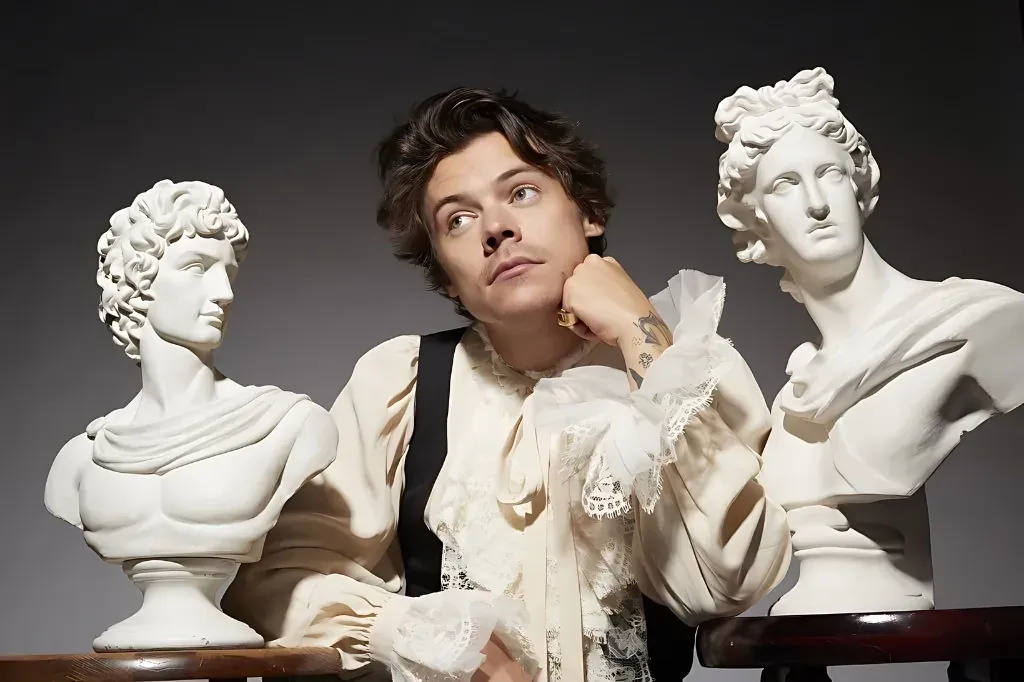
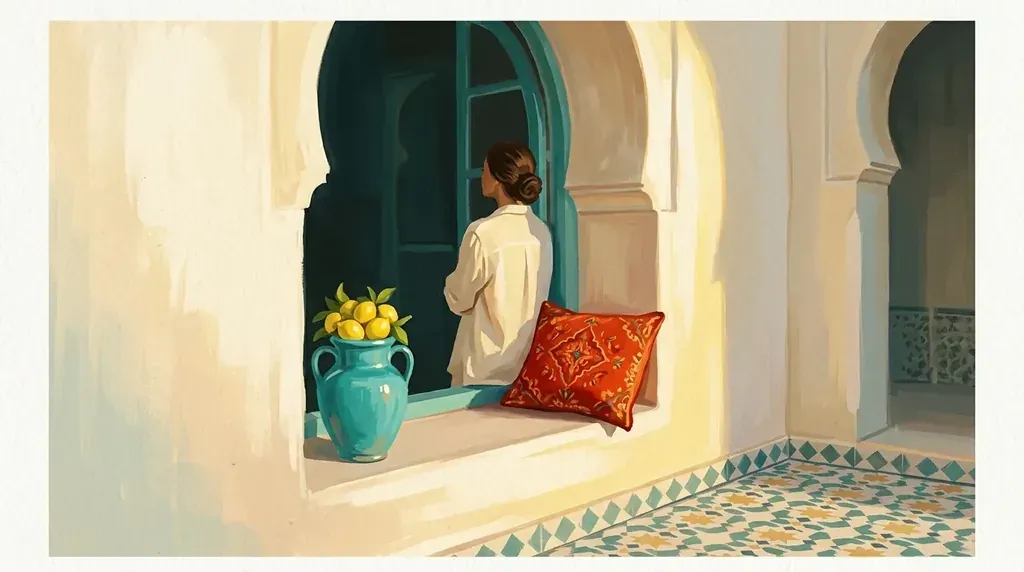
Dark academia is a dark, erudite aesthetic born in the classroom, where a passion for some noble art rubs shoulders with murder and secrets. Descended from Jane Eyre and The Picture of Dorian Gray, and popularised by Dead Poets Society, it exploded on Tumblr and Pinterest throughout the 2010s.
So what exactly is dark academia?
“This is something we absolutely need to be mindful of.”
The setting is the classroom, and that's where it all begins: you meet a character unlike anyone else, a little apart from the rest of the class. In this closed circle, no one settles for average: everyone nurtures a devouring passion for some art deemed noble, and a thirst for learning pushed to excess, almost to obsession.
But this veneer of excellence hides its cracks. Between tales of murder and secrets whispered in the corridors, the genre doesn’t shy away from darkening the picture, even building full-blown bloody investigations into its plots. It also weaves in queer characters and a thinly veiled critique of our society, enough to make you wonder whether the elitism it depicts is meant to be admired, or gently mocked.
Is the genre really that new?
You’d be forgiven for thinking dark academia was born yesterday, driven by social media and fleeting trends. Yet the genre is far older: its roots stretch back to the 19th century, with Charlotte Brontë’s Jane Eyre, Emily Brontë’s Wuthering Heights, and The Picture of Dorian Gray. These classics were already hinting at the dark, erudite aesthetic that fuels its success today.
On screen, Dead Poets Society (1989), starring Robin Williams, remains one of the genre’s key touchstones. The film gave a contemporary face to a literary legacy born in the 19th century.
How did Tumblr, Pinterest and lockdown accelerate everything?
It all starts in the 2010s, long before dark academia had a name. Vintage makes a roaring comeback. Tumblr, then Pinterest, set the tone with tweed blazers, dusty libraries and silhouettes borrowed from the 1930s and ’40s. It wasn’t until around 2015 that users finally gave this scholarly folklore a name: dark academia was officially born.
But it's in 2020, with the Covid-19 pandemic, that things really take off. "With the lockdowns, an entire generation of young people was denied a conventional education," recalls Nina Gorlier, a school librarian. According to her, the "aestheticisation and idealisation of university life" offered by dark academia became, for many, the perfect escape.
Does Harry Potter belong to the dark academia family?
Does Harry Potter belong to the dark academia family? Nina Gorlier won’t settle it outright: “there’s debate,” she admits. She concedes that “the aesthetic evokes dark academia,” enough to make the question a legitimate one.
But aesthetics alone don't make the genre. For her, "it's missing a critique of society" and characters who are less "black and white." Harry Potter, then, remains a distant cousin of dark academia: close in setting, but far removed in substance.
Polished aesthetic, grey areas: who really benefits from the genre?
Behind the photogenic libraries, the bill can sting. Nora Lake confirms it without hesitation: “This is something we absolutely need to be mindful of.” The pitfalls she has in mind are very real: they erase minorities and dress up an elitist, backward-looking vision of education in elegance. She also flags a classic device of the genre: cynical characters, almost immune to any self-questioning, a narrative reflex she immediately qualifies, “these traits no longer seem as much of a given with the new wave of novels.”
What remains to be seen is who, in all this, is really pulling the aesthetic chestnuts from the fire. Nina Gorlier, who is currently writing her first dark academia novel, chooses to focus on what she sees as the genre’s recent renewal. Nora Lake, for her part, puts her trust in the reader’s judgement: “It’s up to the reader, I suppose, to sort the wheat from the chaff.” Between hollow elitism and sincere renewal, that sorting, precisely, doesn’t happen on its own.
Whether you see it as a refuge for the nostalgic or a mirror held up to our own ambitions, dark academia delivers on its promise: reviving the taste for a book closed for far too long, and for a library where curiosity wins out over endless scrolling. You don't need a tweed blazer to grasp its spirit: just reopen a classic like The Picture of Dorian Gray or Wuthering Heights, and let yourself be swept up in an atmosphere where erudition always flirts a little with mystery.
Also worth reading on La Sultane
After the World Cup: the FTF, a mirror of Tunisia’s crisis
Glam & Goodies Mini Market: the pop-up putting Hammamet’s creators in the spotlight
Harry Styles crosses the finish line of the Berlin Marathon in under three hours
Chery Arrizo 8: the new premium saloon causes a sensation in Tunisia