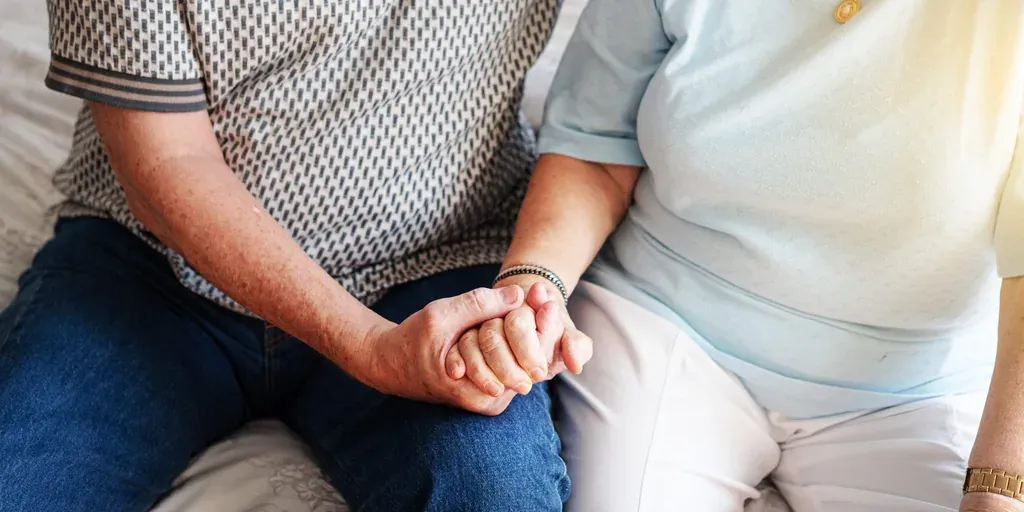
We tend to approach feelings the way we would a mathematical equation, when in reality they are much more like chemical formulas. When researchers at the world's leading universities investigate the question, they uncover answers that hold true across couples in love.
The Formula for Love
Researchers agree on a number of common factors behind the birth of romantic feeling, among them: similar values and personality traits, geographic proximity, approved physical or personality criteria, reciprocated affection, needs being met, strong physical attraction and emotional arousal, approval from one's circle, the tone of voice and posture of the person we love, availability for a relationship, the chance to be alone together, and an element of mystery in the other person.
Breaking Down the Key Factors
Geographic Proximity
Being in each other's orbit greatly helps romantic feelings develop. If you're not meeting the person of your dreams, it might be worth reconsidering the places you frequent. A 1950s study conducted in Columbus, Ohio, looked at 431 couples who married after meeting on the same university campus: 54% of the couples surveyed lived within 16 blocks of each other at the time of their first meeting, 37% were separated by just 5 blocks — and the greater the distance between residences, the fewer the marriages.
Geographic proximity encourages encounters, but something else is also at play: repeated exposure. Repeated exposure to something makes us grow fond of it, and ends up amplifying an existing feeling (the same holds true for dislike). Love at first sight, more common among men than women, occurs in 11% of first meetings — hence the importance of first impressions. But it is repeated exposure, not repeated meetings, that determines how a relationship evolves.
Personality
We love people who are kind and caring, who make us feel good, who make us laugh, and to whom we appeal. We're drawn to charismatic, self-assured individuals — grounded people who don't need to prove anything because they have solid self-esteem. Conversely, a low level of self-confidence breeds a sense of insecurity, which generates low intimacy and high conflict — the person unconsciously projecting their own flaws onto the other. This is how, for instance, couples made up of one dominant and one submissive partner come about. To build a harmonious couple, you must always start by doing deep work on yourself.
Emotional Arousal
Many romantic relationships begin during the most turbulent periods. Losing a loved one or going through a breakup heightens emotional sensitivity and clouds our understanding of our real feelings: this is known as misattribution of emotion, and it can often be mistaken. We risk falling in love with someone simply because they triggered strong emotional arousal, or because the situation we're living through is intense — which partly explains Stockholm syndrome. One study even found that couples who had watched action or horror films felt more connected leaving the theater than they did beforehand. A movie alone, of course, isn't enough to spark a romantic relationship.
Reciprocity
This is probably the least subtle point in this formula for love, true of all social interactions, and amplified by the modern use of social media and its 'likes.' Out of natural — not necessarily unhealthy — narcissism, we like people who like us. This is why sincere compliments (as opposed to flattery) touch us so deeply, and why the most vulnerable people, lacking the discernment to tell sincerity from smooth talk, are unfortunately more easily manipulated.
Physical Appearance
There's always a trigger for interest, very often a first physical impression: overall appearance, eye color, hair length, how put-together someone's clothing is, their smile. But over the long run, once that first impression is confirmed, other factors take over and even come to dominate: sense of humor, kindness, intelligence, resourcefulness, helpfulness — which partly explains why love is said to be blind.
Similarities
Contrary to popular belief, opposites do not attract in love. According to a study published in the Journal of Personality and Social Psychology, people are unlikely to develop friendships or romantic relationships in the absence of shared values, similar life principles, similar political views, similar social or professional backgrounds, and shared hobbies and biases. Couples made up of people who resemble each other (in behavior, temperament, attitudes) thus have a better chance of staying together over the years.
54% of the couples in a study conducted in Columbus lived within 16 blocks of each other at the time of their first meeting: geographic proximity remains one of the most decisive factors behind the birth of love.