Tunisian malouf is a learned Andalusian-Arab music, inherited from Kairouan and enriched by the Andalusian refugees who arrived in Tunis. Organised into noubas (vocal and instrumental suites performed in a precise order), this living tradition is still passed on today at concerts, weddings and Tunisian evening gatherings, far from the dusty image sometimes pinned on it.
So what exactly is malouf, behind this intimidating word?
Spot these abyat and you'll hold the thread of the piece.
The word may sound intimidating, but it points to something very much alive: malouf is one of the pillars of traditional Tunisian music. It's a distinctive form of Andalusian-Arab music, learned in its construction, yet by no means reserved for scholars. Behind this single name lies a far richer whole than any simple folk label could suggest.
This heritage has two quite distinct faces. On one side, the secular repertoire, known as hazl (the music of evening gatherings and shared pleasures). On the other, the religious repertoire, the jadd, tied to Sufi brotherhoods and a more spiritual dimension. Within these two strands, several song forms stand apart, among them the mouachah, the zadjal and the shghul, each with its own colour.
Where does this music we assume is purely Tunisian actually come from?
Let's go back to the late eighth century. Kairouan, then the Aghlabid capital, was cultivating a musical art comparable to Baghdad's. Around 830, the musician Ziriab, travelling from Baghdad, made a long stop there.
The second turning point came in the thirteenth century, under the Hafsid dynasty. Driven out of Spain by the Reconquista, some 8,000 Andalusian refugees arrived in Tunis, their musical repertoire in tow. This Andalusian contribution merged with the traditions already in place. That blend laid the foundations of what is still heard today.
How do you actually listen to a nouba (and how do you tell the instruments apart)?
Forget the idea of a single piece playing on a loop: a nouba is a suite, a sequence of vocal and instrumental pieces performed in a precise order, all built on the same mode that gives it its name. The abyat (verses) open proceedings: two poems sung in classical Arabic, before the remaining sections (in Tunisian dialect, in classical Arabic, or in a mix of the two) take over. Spot these abyat and you'll hold the thread of the piece.
As for the instruments, your ear adjusts quickly once you know what to listen for. First, the Tunisian oud: longer than its Eastern cousin, it carries the melody with a recognisable roundness. Then the rbâb, a two-stringed gut cordophone with a rougher grain, almost like a voice rubbing against itself. Finally the violin, which joined the ensemble later, brings a smoother, sustained note. Three timbres, three characters: once you can tell them apart, malouf stops being a wall of sound.
Who preserved this heritage, and where can you hear it today?
If malouf has made it through the decades without being lost, it's thanks to La Rachidia. This association, devoted to Tunisian music, was founded in Tunis on 3 November 1934 by an elite group led by Mustapha Sfar. Its mission: to preserve Tunisian musical heritage, malouf foremost among it, and then document it. The first attempts at musical notation were down to Mohamed Triki, who finally put onto paper a tradition that had until then passed from ear to ear.
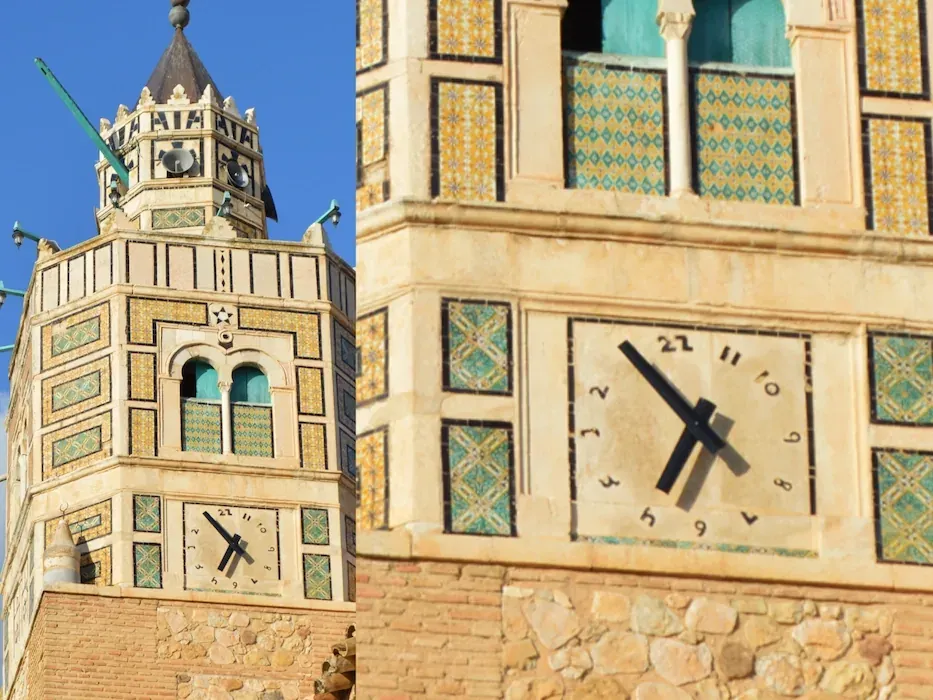
The handover continues: when Tahar Gharsa died in 2003, his son Zied Gharsa took over direction of La Rachidia's musical ensemble, then of its orchestra in July 2006. To hear it alive outside rehearsal rooms, head to Testour, founded around 1609 by descendants of Andalusians. Its International Malouf Festival, launched in 1967, has made it the city of Malouf: on 15 July 2024, singer and musicologist Syrine Ben Moussa opened an edition of it at the Municipal Theatre.
At heart, malouf is nothing like a lecture: it's a music that opens up to you as soon as you know where to place your ear. Next time a nouba rises at an evening gathering or a wedding, forget the intimidation of the scholarly word and have fun instead spotting the abyat, then telling apart the roundness of the oud, the rougher grain of the rbâb and the smoother, sustained note of the violin. You'll find that this heritage, once thought reserved for connoisseurs, belongs to you too, a little more with every listen.
Also on La Sultane
A wave of blockbusters is waiting for you!
Hend Sabri and Dhafer El Abidine: 2 Stars on Netflix
10 things you didn't know about Beyoncé's Single Ladies video