While some women have a finely honed sense of organisation, others feel utterly overwhelmed. The problem is all the more common as today's homes seem to have completely forgotten the need for storage space. Happily, though, the world is full of creative people working in professions we would never even suspect existed. Such is the case with Marie Kondo, tidying consultant, author of the worldwide best-seller The Life-Changing Magic of Tidying Up, and inventor of the KonMari method.
Estimated reading time: 10 minutes
Table of Contents
- First of all, who is Marie Kondo?
- The magic of tidying, according to Marie Kondo
First of all, who is Marie Kondo?
Marie Kondo is a world-renowned Japanese tidying specialist. She was no more than five years old when she discovered a passion for tidying while leafing through homemaking magazines in Japan. Over time, this enthusiasm grew into a genuine calling, one that led her to become a tidying coach in Tokyo and to develop a unique, internationally acclaimed method.
The magic of tidying, according to Marie Kondo
This best-seller is a must-read for every woman who wants to tidy her home effectively and, above all, for good. The idea of reading an entire book about tidying may sound daunting. But rest assured: it did not become a worldwide best-seller by chance. Full of humour, clear explanations and crystal-clear guidance, it makes for a wonderfully easy read. So why not start with a little quiz to see where you stand in relation to this method?
Quiz
- A- True
- B- False
- C- Only if you enjoy it
- A- Not in a million years
- B- Absolutely agree
- C- You have to ease into it gradually
- A- Absolutely, yes
- B- Well no, what's the connection?
- C- Sorry? Could you repeat the question?
- A- Yes, of course
- B- Er… no?
- C- Cheers! I live in a studio flat and this doesn't apply to me
- A- Well, obviously
- B- Well no, by fabric
- C- No way, by colour
According to our expert, the correct answers are: 1C, 2B, 3A, 4B, 5B
Now give yourself one point for each correct answer, and let's look together at what your scores mean.
Results
You're impressive! Your ideas align perfectly with Marie Kondo's own.
At least you can take credit for actually tidying up. The KonMari method will no doubt help you do it even better.
Look on the bright side: you have plenty of room to improve. This article is a great starting point, and the book will work wonders for you.
The KonMari method explained
The goal
For Marie Kondo, tidying for tidying's sake isn't really the point. Instead, tidy in order to live in your ideal surroundings — the kind that reflect who you are and match the person you would like to become.
You should live surrounded only by things that spark joy.
The core principle of the KonMari method
According to Marie Kondo, tidying well means you must:
- Sort, discard, then tidy away
- Keep only the things that spark joy.
The second point is not an easy one to follow, and here is what she tells you to do: take each item in your bare hands (that is, without gloves — and Marie insists on this, believing it essential to truly touch the object). Then ask yourself whether it sparks joy. If the answer is yes, keep it. If not, let it go. When in doubt, get rid of it. Do exactly the same with your clothes. Try them on if you like, and pay attention to how they make you feel.
"Your feelings are the criterion for making decisions." Marie Kondo
The KonMari method in practice
Don't sort room by room, but by category of items
Marie Kondo explains that you tend to store the same category of items in different places around the house. That keeps you from grasping the true volume they take up, and from tidying effectively — you end up repeating the same task in different rooms, and losing a great deal of time. "Rather than deciding today to tidy a particular room, set yourself the goal of dealing with your clothes today and your books tomorrow, for example. One of the main reasons so many people fail to tidy effectively is that they own too much, without knowing precisely the full extent of their belongings."
Gather every item of the same category together on the floor, in one spot, so you can sort efficiently. The KonMari method moves from one category to the next in a very specific order:
Step Category of items 1 Clothes 2 Books 3 Papers 4 Miscellaneous items 5 Items of high sentimental value and mementoes (photos and letters) This order follows a very simple, easy-to-grasp logic. It's hard for anyone to part with the things around them. That is why Marie Kondo recommends starting with what holds little sentimental value and working up towards what matters most to you. This approach gives you time to get the hang of it, and decision-making becomes easier.
Clothes
To begin with, gather all your belongings in one place, on the floor, as explained above. There, you'll not only be able to get a clear sense of the volume of clothes you're keeping at home, but you'll also flush out the ones that were tucked away out of sight.
A word of caution, though. People with attention deficit disorder or attention deficit hyperactivity disorder would do well, during this tidying stage, to seek help from someone able to redirect their thoughts and anchor their focus on the task at hand — an otherwise insurmountable task for those with ADD/ADHD.
Take heart! Others have been through this critical point and come out the other side.
Marie Kondo recommends sorting within the sort, again following a precise order:- Tops (shirts, blouses, jumpers)
- Bottoms (trousers, skirts)
- Clothes that hang (coats, jackets)
- Socks
- Underwear
- Handbags
- Accessories (scarves, headscarves, belts)
- Clothes worn occasionally (swimwear, sportswear)
- Shoes
Take each piece and ask yourself the famous question: does this garment spark joy? Once your sorting is done, you'll be left with nothing but your favourite clothes. Now you can move on to the tidying itself.
Marie Kondo then suggests following the ideal wardrobe layout.
Place heavy, long pieces on the left and light, short ones on the right. So, starting from the left of your wardrobe and moving towards the right, you find your clothes in the following order: coats, dresses, jackets, trousers, skirts and shirts.
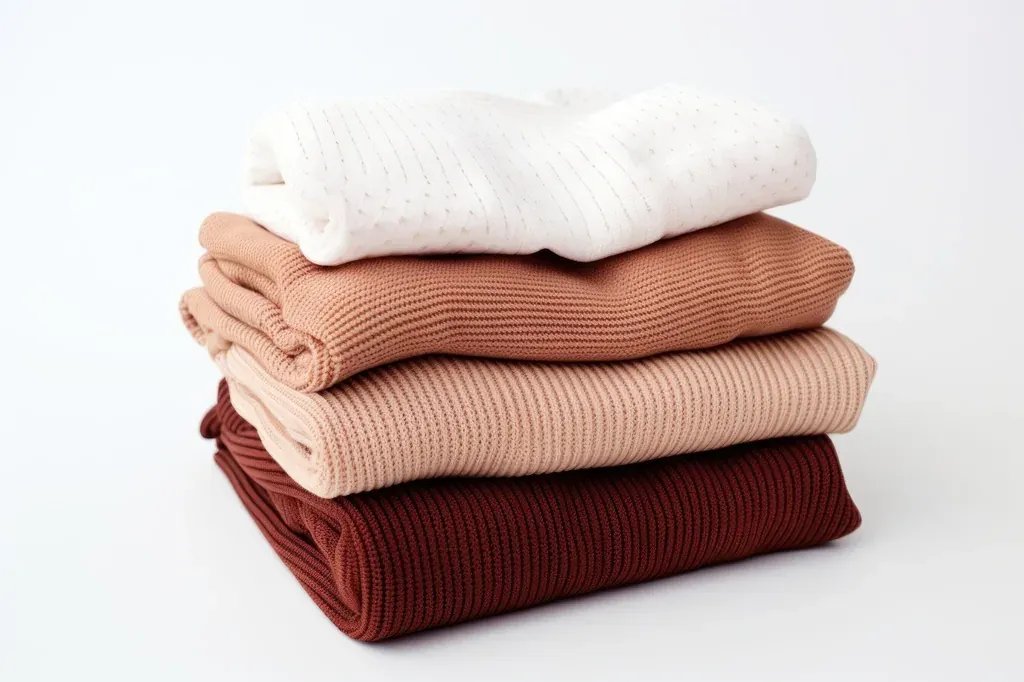
Next comes the turn of the drawers and shelves. Marie Kondo first recommends arranging clothes by fabric rather than by season. You can stop there, or take it further and arrange your clothes by colour, placing the darkest at the front and the lightest at the back. Finally, know that Marie Kondo doesn't store her clothes in stacks — a source of forgotten and crushed items — but upright. She folds her clothes compactly so they can stand up on their own.
And here is how she tells you to do it: "The aim is to fold each garment into a simple rectangle.
Start by folding each side of the garment in towards the centre, lengthwise, then tuck in the sleeves to obtain a rectangular shape. How you fold the sleeves matters little. Next, take one end of the rectangle and fold it towards the other end. Then fold again in two or in three. The number of folds should be adjusted so that, once folded and stood on its edge, the garment fits the height of the drawer."
Books
Follow the same approach: place all your books on the floor and ask yourself the same question, taking each one in turn into your hands. Start with general books, then practical books, illustrated books, and next magazines. Finish, finally, with novels.
Papers
In fact, you should have almost none. Keep only the essentials, filing them vertically in 3 folders corresponding to 3 categories:
- To deal with
- To keep (contractual documents)
- Other
Here is the practical advice Marie Kondo offers regarding those little objects that are forever lying around everywhere:
- Loose change goes in the purse.
- Sew buttons onto the inside of your clothes. Otherwise, throw them out and buy more when needed.
- Part with gifts you've received that aren't to your taste; otherwise throw them out and buy more if the need arises.
- Throw out cosmetic samples, as they go off very quickly.
Items of sentimental value
Marie Kondo invites you to reflect on your relationship with time: "We live in the present. However wonderful it may have been, we cannot live in the past. The pleasure and enthusiasm we feel in the present moment are more important."
That is why she recommends keeping only the photos that stir your emotions and letting go of the rest. Do the same with postcards and letters. Objects given or made by your children meet the same fate. Keep the ones that truly matter and part with the rest. If your children are grown up, asking their opinion can help you make your choice.What not to do
Here are two pieces of advice Marie Kondo gives for living in harmony with those around you:
- You do no one any favours by tidying their belongings for them. Quite the opposite. "Tidy only your own things, and the rest of the family will follow your lead," she tells us
- Passing our things on to loved ones only clutters them.
We'll close with this reflection from Marie Kondo: "Our belongings illustrate, with great precision, the history of the decisions we have made in our lives. Tidying is a way of taking stock of what we truly love. Choosing forces us to face our imperfections, our shortcomings and the foolish choices we made in the past."
Food for thought
According to Marie Kondo, leafing through decorating magazines is no bad thing: it helps sharpen your understanding of your ideal surroundings.