Insomnia, poor appetite, stress, fatigue… your home may be catching some bad vibes. Here are a few Feng Shui tips for arranging your home, room by room, to create a positive atmosphere — for the fundamental principles of this ancestral Chinese art, head over to our dedicated article.
How should you arrange the entryway according to Feng Shui?
The entryway is known as the “mouth of the house”: it's where energy flows in. It should stay uncluttered and welcoming — there's even a color code for the door: red (luck, protection), green (health), black (a water symbol, standing for money). Avoid: a mirror facing the front door (said to push energy back out) and aggressive decorative objects nearby.
What are the rules for the living room and dining room?
In the living room, balance natural and artificial light, pairing bright lighting (for reading) with softer lighting (for relaxing); avoid artwork with aggressive imagery and overly heavy curtains that darken the room. In the dining room, choose a rectangular table (people tend to linger there more than at a round one) and keep the space around it clear, without large furniture nearby.
How should you arrange the kitchen and bathroom?
In the kitchen, white is favored for its immaculate look — cleanliness remaining priority number one — and the person cooking should be able to see who's coming into the room. Avoid pairing red with wood (since fire is already the dominant element) and keep at least 60 cm between “fire” elements (oven, stovetop) and “water” elements (sink, dishwasher).
The bathroom, a room of purification, benefits from staying uncluttered (no forgotten bottles lying around), in pastel tones, with a mirror to visually enlarge the space and good ventilation — since water is associated with wealth in Feng Shui, any leak is best avoided. The same advice applies to the toilet, remembering to close the lid after each use.
What are the rules for the bedroom, home office, and child's room?
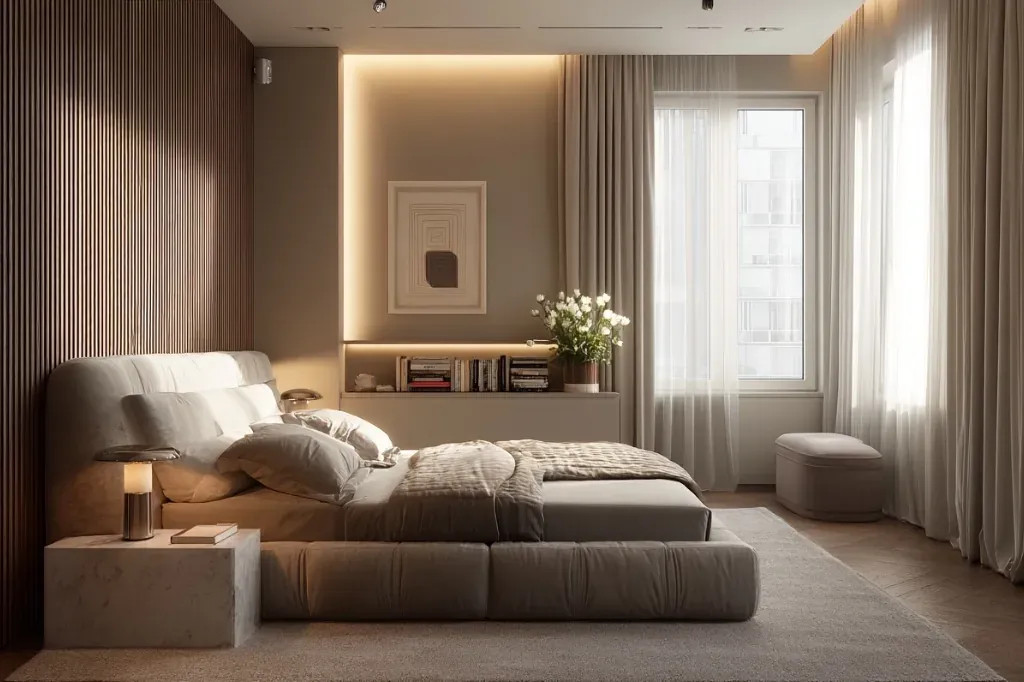
In the bedroom, place the headboard against a wall, away from the door and never under a window; choose soothing pastel tones and banish computers, phones, and work files from the room. The home office, by contrast, should never be in the bedroom — the sight of the bed would encourage you to go back to it rather than focus; good lighting, positioned on the side opposite your dominant hand, is recommended there.
For a child's room, it's best to divide the space into three zones (sleeping, playing, learning) and avoid overly “babyish” patterns that won't grow with the child, as well as excessive exposure to screens and video games.